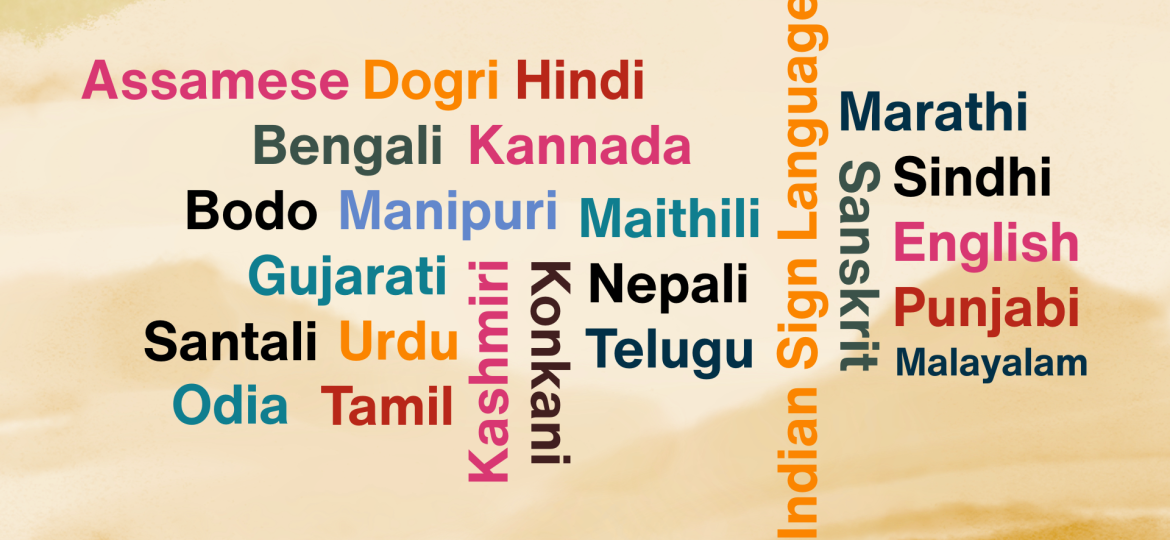
Language can broaden our horizons and yet can also become a cage that imprisons. The names we get called while growing up, the slurs and pejorative labels that stick to us, the insults hiding behind seemingly innocuous words… and yet, the glorious heights of self-actualisation to which some words beckon us, the promises lying within others, it’s all language. Of course, it’s not just changing a word that changes mindsets, but words matter. Words can create universes.
In a fascinating article exploring issues of language and sexuality across the domains of finance, law, education, occupation, health, and AI, among others, Shikha Aleya reveals how language can be discriminatory or expansive and inclusive, and how it can direct and shape a worldview.
And, of course, this worldview can be liberatory or confining. Baul folk music in Bengali, as Taniya Basu shows, sings of a casteless, classless world, spurns rigid binaries, goes beyond meaningless power hierarchies and yearns only for ‘the heart’s beloved’. On the other hand, Annika Amber, drawing on a recent controversy, exposes how the control and regulation of language and the selective censorship of sexual speech perpetuates and ossifies caste, class and gender-based hierarchies.
Language is not just about singing and speech. It is also about signing. Did you know there are more than 300 sign languages in the world? Nandini Mazumder, Ayesha Bashir and Suchitra Dalvie take us into the world of sign language and the intricacies of conveying SRHR terms in different sign languages to deaf and hard of hearing communities across the region.
Nandini Rao reflects on what has changed in the seven years since she last spoke to us about Language and Sexuality and traces the big shifts have occurred since then. Yes, the news is bad. But it is good too – for every new clampdown, there is a new resistance. Resistance, challenge, and peaceful transformation – that’s the name of the game.
Words create worlds. For Abdullah Erikat words were, and are, a blade – cutting, lacerating, wounding. For Taarina Therese Chandiramani, words – spoken and unspoken – are the language of longing, loss and love.
Sometimes, the words take a long time to come. And then, very shyly, they come. In Maya Sharma’s own words: “Even today, for women, naming desire for another woman – especially sexual desire, remains a difficult and often dangerous act in language. This poem is my attempt to express what is often kept unsaid. I’ve turned to cultural metaphors – ambiguous, familiar, and layered – to express longing, a quiet yearning. I have titled it Chahat.” The poem is in Hindi.
Sometimes, the words have to be created. Because their non-existence leads to invisibility, misrepresentation and shame. Imran Khan writes about how the LGBTQIA+ community in India needs more inclusive language, beginning with vocabulary in Hindi and other Indian languages. A vocabulary that is created by the community, is culturally rooted, and reflects lived experience. The article is in Hindi.
We also bring you a Hindi translation of An kush’s article about how it was language that hurt and wounded him but it was also language that allowed him to remake himself and reclaim his queerness. To recover.
That language and words matter, and can create entire universes, is brought home starkly and poignantly yet again by each of our contributors.
For Raghavi S, one of the first members of the trans community to practice as a lawyer in the Supreme Court of India, “language isn’t just a communication tool. It’s survival, affirmation, and resistance.” In a no-holds-barred interview with Shikha Aleya, Raghavi illustrates, with examples from her own life, the power of language to wound, but more importantly, to transform and to heal.
Yes, language has the potential to transform, but when it comes to Large Language Models that are much of what generative AI is trained on, what is the transformation leaning towards? Padmini Ray Murray breaks this down into byte-sized bits that we can understand, in order for us to see who is represented and who gets (deliberately?) left out, and what can possibly be done about it.
Languages different from the one(s) we are accustomed to, bring with them new arrays of queer possibilities – of imagining, of dreaming, and dare we say, of flirting. Cat D takes us on a trip of the sounds and taste of words in many tongues, of the intoxications, frustrations and freedoms they offer. Siddharth Narrain gives us an intimate peek into his ongoing love affair with Spanish conducted across multiple continents.
There is much that sometimes cannot be said; we simply do not have the language for it. We are blessed if, later, we have “all the words that I am rich in now”, as is Malavika Krishna Kumar. However, sometimes fewer words say more. Read Saurabh Suman’s visually textured poem.
In Quick Bytes, Sara Haque tells us why they play with language, borrow words from other tongues, and reinvent meaning.
In Hindi, we bring you two original articles and a translation.
Drawing from personal and collective experience, Anushi Agrawal and Ekta M write about love, desire, sexuality, tradition and caste-bound expectations. Prerna exposes how language (in this case Hindi) and law perpetuate exclusion by forcing people to choose a binary gender category. In translation, we have Fizza’s article on the language of consent clearly demonstrating how words do not exist in a vacuum – context matters.
Words are power. Use yours well.
