With our micro-series Quick Bytes, based on short responses to cue questions, we continue to connect our readers and writers to each other in as many different ways as possible. Our intention is to expand the space of safety, inclusion, and a self-affirming approach, that illuminates the wealth of diversity, and possibilities, that we represent together.
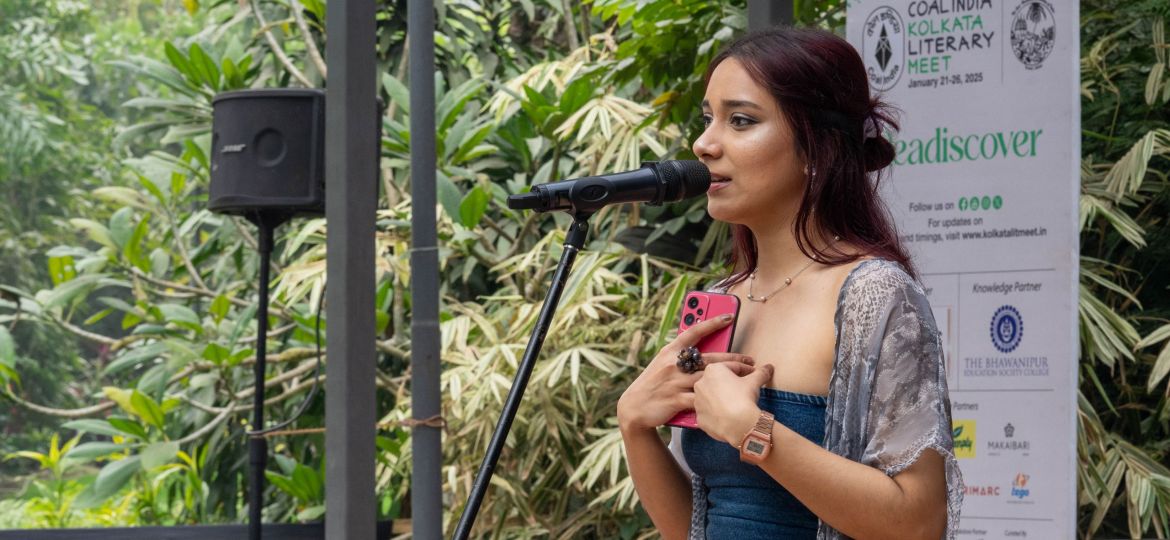
Sara Haque gives us Quick Bytes on Language and Sexuality.
One line to describe me: Currently working with The Queer Muslim Project, I’m a poet first, and everything else later. When my own muse, I’m a pop song sung by the riverbank.
The word sexuality brings to mind: Before I had encountered the word “sexuality”, I couldn’t understand desire. There was a lack in my vocabulary, which primarily came from my mother tongue. Desire existed, but it collapsed into itself, and had no form. Sexuality, then, for me, became the ideation of desire, outwards as well as towards myself. Without it, my ideation of the self was insufficient. Despite our sexuality being a part of the metaphysical, it was through its very conception that my personhood felt more complete. Sexuality isn’t limited to sexual intimacy for me, but is inherently tied to the understanding of my being.
I connect language and sexuality in these ways: Language contours the shape of sexuality. I think about how different languages define and limit desire, and therefore sexuality. In my mother tongue Assamese, for example, there is no noun for “hug”. There is a verb form, xaboti dhora, loosely translated to embracing or clasping someone. But there’s another word, alingon, a noun, with an underlying erotic connotation. Culturally, Assamese people do not practice skinship in a platonic way. Hugs are uncommon even between family members. Therefore, the act of hugging is of a more sexual nature in Assamese. This morphs desire differently as compared to in a language like English, where hugs could be completely platonic, and non-sexual.
Self-affirming in this context for me: Self-affirming would mean not letting language limit our being. Particularly for queer people, our mother tongues fail us with a lexicon that is scarce, delimiting, and often, violent. I lean towards other languages because I want my language to be as expansive as my “self” and my desire. For me that means borrowing words from other tongues, reinventing meaning, playing with the rules of language in poetry. Because my queerness would exist regardless of a language to define it in, I experiment with its form and reshape it for my self-expression. The affirmation then comes from within me.
Something to think about as a last word: Queerness! But not in the limited sense of only one’s sexuality, but queerness of being, of language, of desiring in a radical, alternative way. Queerness intending to move away from the narrow binaries of thought, of feeling, and practicing a life rooted in love and a shared sense of oneness with the living world.
Cover image credit: Rachita S Barak- The Queer Muslim Project