queerness


So what if I’m my own voyeur? — Connections and Disconnections with Desire(s)
Funnily enough, porn played a massive role in helping me articulate my queerness (I am pansexual) and my even queerer desires.
By Ankita Dhar Karmakar
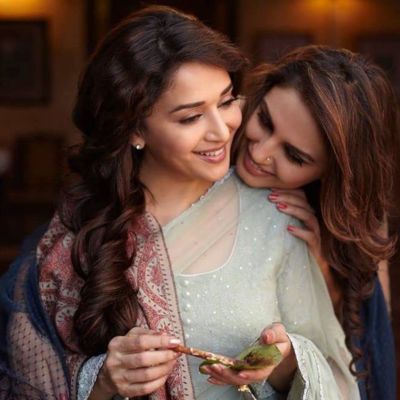
Masculinity, queer representation, and the motifs of movement in ‘Dedh Ishqiya’
The film has all the makings and trimmings of a commercial thriller – a dynamic story, song and dance, an action-packed climax – and at the same time, it is a cinephile’s film.
By Srishti Gupta
Editorial – Spaces and Sexuality
A space can make us feel constricted or liberated, and sometimes even both at the same and at varying times. The combination of spaces that we may be occupying in the moment, as well as those we have in the past, predisposes us to act, feel and experience our sexuality in different ways.
By TARSHI
April 18, 2022
Dancing around each other: Conversations with a Tween
As a generation X-er I grew up in a world that was challenging sexuality but only encountered the instability of gender as an adult in radical new academic texts which were not then yet part of our everyday narratives. My daughter born between Gen Z and Gen Alpha is growing up in a world of gender fluidity and multiple pronouns.
By Shilpa Phadke
March 15, 2022
Refusing the weight in waiting
As a girl, I was made to believe that pleasure was something that existed outside my body, something that I had to seek out, something that was necessarily a product of a partnered experience. I don’t think I was even allowed to want pleasure, especially in its sexual forms.
By Aathira Gopi
March 15, 2022
Brushstrokes – Scribbles
Scribbles: an Escape From the Mundane is a product of my thoughts and emotions when I was struggling to understand my sexuality and grappling with the idea of identifying with the spectrum of gender and sexuality outside the binary, but not being able to put a label on it.
By Nishita Kamdar
March 1, 2022
Editorial – Sexuality and Coupledom
If we are to reimagine coupledom and sexuality, we need to expand and challenge our ideas about togetherness, romance, love, intimacy, desire, sex, attachment, and so on.
By TARSHI
February 15, 2022

Who would we be if we weren’t trying to survive? A Conversation on the Survival Myth
What does it mean to hold space and extend compassion to ourselves and our communities? Rachel Cargle reminds us to ask ourselves: who would we be if we weren’t trying to survive? Similarly, what would care and vulnerability look like if we weren’t trying to survive? The anarchy of queerness constantly and necessarily resists the capitalist engineering of the Survival Myth: one that wants us to endure an isolated life instead of embracing it with the radically transformative joy of togetherness. Caring for yourself precedes, succeeds, and exists alongside caring for the collective.
By Rukmini and Soumya

Editorial: Safety and Sexuality
Safety and Sexuality… in these uncertain times of COVID-19 when most of the world is in some form or other of quarantine, safety has taken on a new meaning all together. People are encouraged to stay home, not step out unless absolutely necessary, practice social distancing, and so on. Is home the safest place to be? What about if home and family are where one feels least safe?
By TARSHI
April 15, 2020
No One Talked To Me About Sex
We need to disturb the institutionalised infrastructure and skew power dynamics even when it comes to something as complex as pleasure. Being aware of our language and the practices of our sexuality and denuding them of socially imbibed constructions will open up a safe space for discussing the diversity of our sexual behaviour.
By Abdullah Erikat
February 3, 2020

Blossoming Into A Garden: Spirituality, Sexuality and All-Consuming Queer Love in ‘Puu’
Puu, an episodic comic (consisting of 92 serialised episodes) created in 2016 by Nabigal-Nayagam Haider Ali – going by Nabi online – is woven together with vast, expansive threads of similar intense spiritual moments and reflections on devotion, faith, and love.
By Rohini Banerjee
Claiming Our Spirituality Differently And Imaginatively
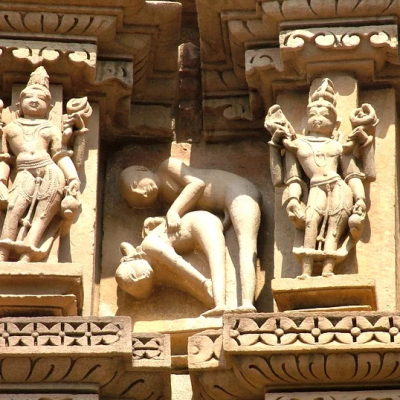
We need to claim our spirituality differently and imaginatively. There are many paths to god. For some it might be religion, or science, or sex, or love, or meditation, or art.
By Andy Stephen Silveira
November 15, 2019
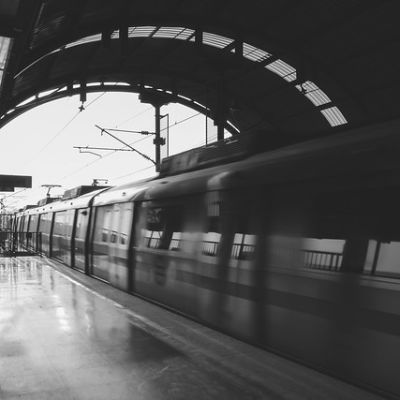
The Metro and Desires
People in the city move from their homes to their workplaces and back to their homes. The production of this everyday rhythm of the city makes people accustomed to the sexual overtones that come with it.
By Manvendra
August 1, 2019
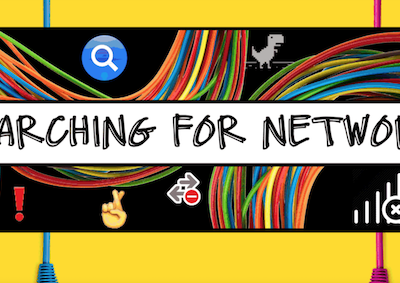
Brushstrokes: Searching for Network
Thus, you take to the Internet, with its vast landscape of possibilities, and it becomes your means of finding queer solidarity, queer friendships, and even queer love.
By Curated Content
April 1, 2019

The Impossibility of Intimacy
Roland Barthes writes in A Lover’s Discourse that we begin to think of ‘love’ as an idea only when our beloved or the object of desire has departed – either when love has failed, or in the absence of the lover – that is absolutely crucial to any theorisation of love.
By Rahul Sen
February 15, 2019