Voices

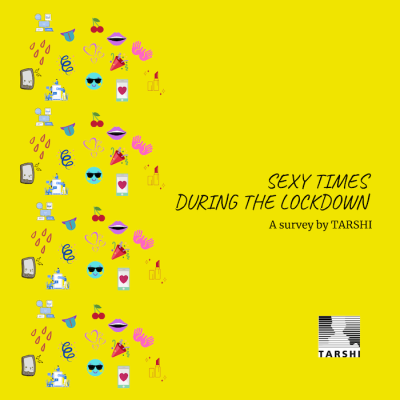
Sexy Times Survey: Preliminary Results
TARSHI has been running a survey (we’re still accepting responses) to understand how people feel about their sexual lives during the…
By TARSHI Team
June 1, 2020
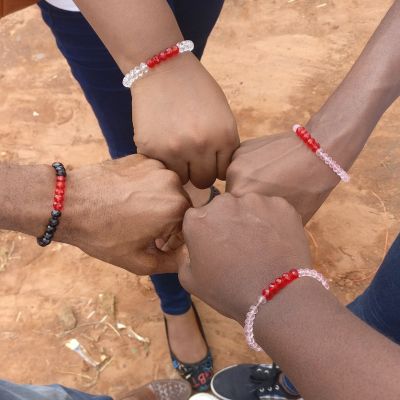
Humanitarian crisis, women and health: A perspective from Nepal
A humanitarian crisis situation has different impacts at the individual and community level and is also differently experienced by different…
By Pabitra Neupane

Desirability and Caste
When the pressure started to mount on Surekha, from all corners, to get married, she thought of reconsidering Kishore’s proposal…
By Disha K R
May 15, 2020

Dating in the Time of Social Distancing
At first glance, dating and social distancing appear to be oxymorons. But, as the last few weeks have shown us,…
By Siddharth Narrain
May 1, 2020

Polyamory: A Desire for a New Self
If not him, there is his brother – Mir, are there any restrictions in love? Mir Taqi Mir, 18th century…
By Aishwarya Singh
May 1, 2020

‘Symptoms’ of a Bride: Listening to the Objects of Gaze
A wedding is a major event in a person’s life. The event comes with many dreams, hopes, expectations and desires….
By Aanchal Bhatnagar

Safe Sex In The Time of Abundance
I want it, I got it. Right? Except, what I often get is some approximation of erotic pleasure, which has more to do with my own conditioning about what good sex looks like, and little to do with my body’s erotic mechanisms. This very peculiar condition is often lumped under ‘sexual frustration’, when it should really be addressed under safety.
By Faustina Johnson
April 1, 2020

Sexuality And Looking Beyond Safety
We all talk of ‘safe’ as some place where we are not in danger. Well, the truth is there is danger everywhere. So, maybe before we even delve into the subject of safety and sexuality, it is imperative that we take a moment to pause and see what safety and sexuality could even mean.
By Asmi
April 1, 2020
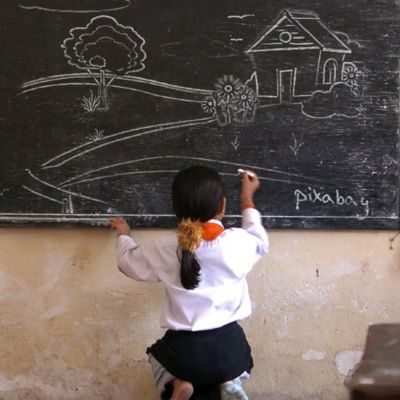
Changing Social Norms Around Sexuality And Safety For Adolescents
To ensure that important discussions about issues of sexuality can take place at home, in schools and between generations, efforts needs to be made to change the norms – especially those related to perceptions of safety. Individuals, institutions, organisations and policies need to work together to include safe spaces for reflections and opportunities for these discussions to become common practice.
By Suniti Neogy

Critiquing the (Hetero-)Canon of Love: Desire and Longing in Contemporary Indian ‘Gay Romance’ Fiction
Undoubtedly, LGBTQ+ literature and writing in India has witnessed an ‘explosion’ in the past two decades, and the trends in contemporary publication promise consistent growth in the future too. However, issues of queer representation in existing literature, and especially contemporary literature, need to be continually invested in, for literature is a key marker of society’s outlook on and reception of such sensitive subjects as homosexuality and ‘queer’-ness
By Anil Pradhan
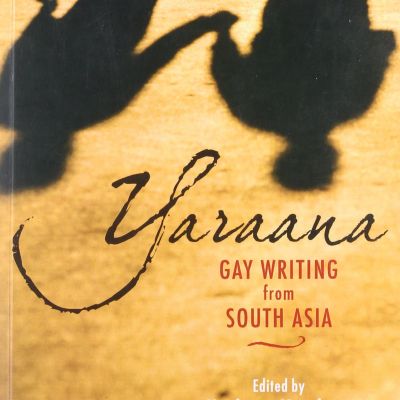
Yaarana: Befriending Queer Literature And Hoshang Merchant
Through our discomfort, shame, and often stubborn refusal to rise above heteronormativity, we unpacked a lot of these negative emotions by critically analysing texts that were neither the Kamasutra nor discourses such as Foucault’s on sexuality.
By Aditi Padiyar
March 16, 2020

Under His Eye: The Women and Unwomen in The Handmaid’s Tale
The Handmaid’s Tale leads one to re-examine these two forms of social hierarchy that women have to navigate: one where they apparently have equal sexual rights as men but have to bear most of the brunt of unwanted pregnancies, reproductive burdens and the like, and the other extreme where their decisions including those about sexual identity and procreation are institutionalised and they are robbed of all agency and autonomy.
By Pooja Priyamvada

The Moment
You held my hand, we hugged each other / I was lost in your love, wanting to go further
By Shilpa Sachdeva
March 2, 2020

Finding Feminism
Standing behind the camera, with a microphone in one hand, I have felt this power imbalance first hand. The camera may humanise the person in front of it more than a text analysis would, but the modes of production remain in someone else’s hands.
By Surbhi Dewan
March 2, 2020

Becoming a Womxn: An Autobiography on Pleasure
Pleasure, in the context of the private, defines the parlance of sexual satisfaction. As a womxn, the private is also the public: how I present and play with my gender, is a way of seeking validation of who I am.
By Neel
February 17, 2020