SRHR


Interview – #covid19 and conversations online: Listening in
We are plugged in to all kinds of data from a variety of sources, through technology, and even a window view of this space is like stepping into a global COVID control data centre. We are standing up to be counted, to be seen, to do, to contribute, to advocate, to remind, to rectify and restore, to strengthen a growing network of support and response to crisis on a scale we have neither been able to process or measure.
By Shikha Aleya

Interview – Suchitra Dalvie
Getting to know who I really am has been a game changer. Prejudice, anger, control and violence all emerge from fear.
By Shikha Aleya
May 16, 2024

I May Have Called You Baby But It Doesn’t Mean I Want One!
Some nights I worry that if birth control for men is indeed released, clinical trials of which were suspended in 2016 as its side effects, incidentally the same as what women have been dealing with for ages, were just not worth it, it would be named Fuckboi.
By Anjali
August 14, 2020
Hello?! Every Body in the R(/Z)oom?
Now, what you need is a good enough smartphone and sufficient data – these are the real “superstar” in the love affair between Big Tech and CSE.
By Gunjan Sharma
December 18, 2023
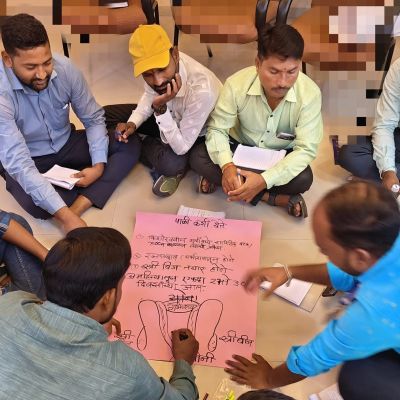
From Compliance to Critique: Localising Masculinity Work Through Feminist Praxis
…we must also address men’s relationships with their spouses, other men, women and children in the community, and importantly, their own emotional selves to transform fatherhood. Therefore, engaging with men as fathers must involve a holistic understanding of their socialisation, emotional world, and position within patriarchal structures.
By Anand Pawar

June 15, 2026
Editorial– Climate Change and Sexuality
Climate change is not only about the climate; it is about our lives, joys, connections, intimacies, pleasures, freedoms, and rights.
By TARSHI
September 18, 2025

Editorial: Risk and Sexuality
In our mid-month issue, we add context to our perceptions of and dealings with risk in our day-to-day lives. Collating and interpreting responses we received on a survey taken by small group of random individuals, Shikha Aleya looks at the transactions around risk foregrounded on the interplay of our location on the axes of gender and sexual identity, disability status, belief systems, and availability of support, amongst others.
By TARSHI
October 15, 2020
Editorial: Representation and Sexuality
We are, all of us, trying to hold steady, and to hold space for each other and for ourselves. And so, instead of trying to put together a collection of ‘all new’ articles, this time we are republishing some ‘ever fresh’ ones on the theme of Sexuality and Representation.
By TARSHI
June 15, 2021
Editorial: Law and Sexuality
In our mid-month issue, Stuti Tripathi considers whether raising the minimum age of marriage for women from 18 to 21years is indeed a one-stop solution to check early marriages. She brings to our attention the many factors, such as family pressure, inaccessible educational and financial resources, traditionally defined roles of women, and gender-based marginalisation that together lead to early marriages and argues that young people need rights not protection.
By TARSHI
September 15, 2020

Editorial: Health and Sexuality
In our mid-month issue, continuing with the theme of Health and Sexuality, we look at how we can expect our doctors, nurses and other healthcare professionals to be sensitive to issues of gender and sexuality if these issues are not addressed in the medical curriculum. Suchitra Dalvie, a feminist obstetrician and gynaecologist, makes a sharp and succinct critique of the training she received as a medical student…
By TARSHI
June 15, 2020

Editorial: Diversity and Sexuality
In our mid-month issue, we have the second part of the Shikha Aleya’s interview with six different people talking about aspects of sexuality and diversity from their own particular space of personal knowledge, as well as work, advocacy, art and activism across diverse fields.
By TARSHI
May 15, 2019
Editorial: Disability and Sexuality
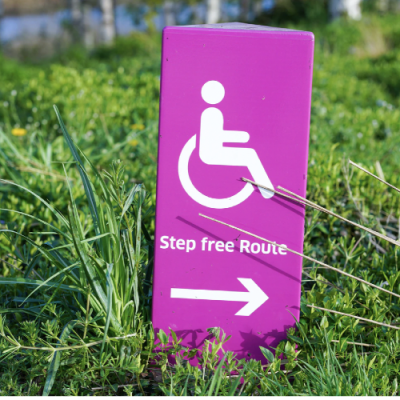
Both sexuality and disability are complex terrains, offering a realm of possibilities that are often made unnecessarily complicated and unattainable by the mental maps we draw of them and the artificial barriers we erect.
By TARSHI
August 16, 2021

Editorial: Data and Sexuality
While we are struggling with the vicissitudes brought on by the pandemic we are also forced to spend more time online, to look for resources in terms of health care or caregivers, to reach out to people and build a communities of care, to take a break, or to try and hook-up online for a while.
By TARSHI
May 15, 2021

Editorial: Anthology Issue
As we move into a new year and a new decade we hope to be moving towards a more just and peaceful world, especially given the troubled times that people all over the world have been and are currently experiencing. And so, in this new year, we wish you lots of SISA spaces through 2020 and beyond!
By TARSHI
January 1, 2020