Voices


Who would we be if we weren’t trying to survive? A Conversation on the Survival Myth
What does it mean to hold space and extend compassion to ourselves and our communities? Rachel Cargle reminds us to ask ourselves: who would we be if we weren’t trying to survive? Similarly, what would care and vulnerability look like if we weren’t trying to survive? The anarchy of queerness constantly and necessarily resists the capitalist engineering of the Survival Myth: one that wants us to endure an isolated life instead of embracing it with the radically transformative joy of togetherness. Caring for yourself precedes, succeeds, and exists alongside caring for the collective.
By Rukmini and Soumya

Caring and care-giving
Just as capitalism has learned how to co-opt feminism into its model, it has done the same to ‘wellness’, so much so it has become an industry of its own. Mental wellbeing, no matter how necessary and important it is, remains a luxury with more than half of our country either unaware of available mental health resources or not in a position to even afford therapy.
By Deepa Ranganathan
July 5, 2021
A ‘Peoples Self-Care’ In-the-Making: Perspectives on the Multiple Possibilities of Existence and Care
But self-care is not a clean and happy procedure, it is not definitively achievable when systematically explored. To understand the scope of self-care we need to see the ‘dark side’ of the landscape, and destroy the versions of self-care that denounce our plurality. In this fight, the only outcome can be a recognition of experiences beyond the wellness narrative structured around the neoliberal agenda. This article is an attempt at foregrounding some aspects of self-care that decentralise the prevalent commodification of it.
By Rukmini Banerjee

MY VAGINA IS DUKHA?
Ageing vaginas in ageing female bodies are joked about. But a vagina shouldn’t have the task of pleasing anybody but itself first. To begin with, we’ll have to love and respect our vaginas in order to pleasure them. Love them just as they are. If they feel a little dry, don’t despair. Use a lubricant or a little coconut oil. If my labia are unshapely, they’re still my labia and respond very nicely to gentleness and tenderness. If I don’t love and respect my ageing body, in need of gentle, loving, patient care, then who will, for God’s sake?
By Nighat Gandhi
July 5, 2021

On Confinements & Coexistence: Perspectives on the Impact of Covid-19 on the Mental Health of Women
Pandemics have a profound psychological impact. They are known to disrupt one’s sense of safety, security, certainty, control, concordance, and…
By Ansha Patel

Probing the Screen: Pleasure in the Virtual World
The virtual world allows me to challenge the hold of patriarchy on my ‘effeminate’ body; in a sense, it allows me to evade the policing of desire that my body shares with another, its flows and slippages, the messy and the unkempt. While virtual sex offers a window to revisit the sensual, it is also not immune to limitations and insecurities.
By Neel
June 15, 2021

Media and the Power of Responsible Representation
It is the winter of 2013, and my father and I are sitting at an awkward distance from each other…
By Rohini Banerjee
June 15, 2021
Finding Feminism
As I began to read about feminist methodology in academic research, it felt like I finally found words to articulate my experience. Feminist methodology addresses problems in traditional forms of scientific and social research, such as giving high regard to objectivity and rationality, and the power equation in the researcher-subject relationship.
By Surbhi Dewan
June 15, 2021
Should I Say I Love You?
Being vulnerable helps boost our self-esteem and self-worth by pushing us out of our comfort-zone. It provides us with an opportunity to overcome obstacles and reach deep down within ourselves to find strength and confidence to keep going even when the odds are against us.
By Shubham Ranjan
April 19, 2021
There I sat down and wept
“Be yourself, Sarah. Awkward smiles, empty silences, weird laughter, and all. It’s just a part of being human. Loving someone physically is never not awkward. Even if it’s a monogamous relationship. It’s only the comfort of familiarity that makes you think otherwise.”
By Anna Lynn
April 19, 2021
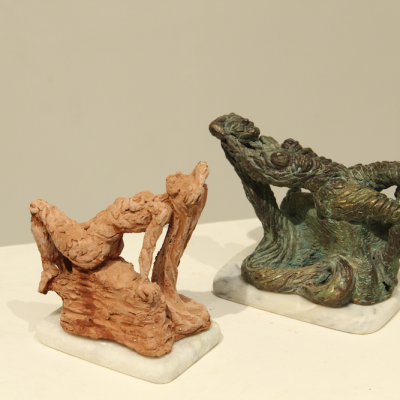
Reclining Vulnerability
Through multiple maquettes, I finally came across (since I myself did not know what the result of the form or figure would be) the Reclining Lady. She represents confident femininity and vulnerability. The feeling one has after taking a bath and sitting in the nude, drying oneself in unabashed nakedness.
By Noella Fernandes
April 19, 2021

Meditations on love (an opinion piece based on the movie Portrait of a Lady on Fire)
I am fascinated by the question of how lovers reveal themselves to themselves and one another over time. In my…
By Rhea Kuthoore

Unboxing Our Darkness: Vulnerability and Transformative Justice
When we are in tune with our authentic thoughts and feelings, vulnerability can be a guide-post in traversing through life, allowing us to forge deep and meaningful connections where we can hold space to mess up and get back on our feet again.
By Anjali

Communication: A Path to Vulnerability
We must all care for ourselves and be discerning about when and where and with whom we show our cards…but those who can hold our emotional and sexual vulnerability are out there, and we can find them and be all of who we are.
By Shilpa Sachdeva
April 5, 2021
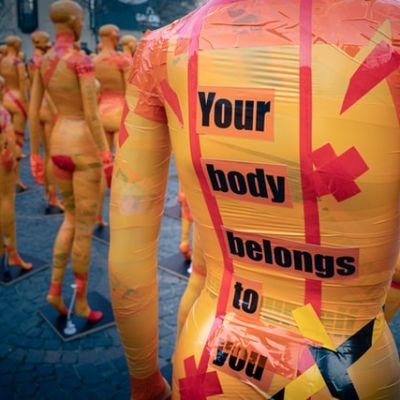
STAY SINGLE. STAY SAFE.
The largest contingent of voiceless, lonely women with limited agency in the subcontinent must be its married women. If they’re fortunate enough to be born and reach adulthood, a woman’s parents and society make sure she becomes an adult brainwashed into self-alienation and self-loathing.
By Nighat Gandhi
April 5, 2021