Social Media


Editorial: Representation and Sexuality
We are, all of us, trying to hold steady, and to hold space for each other and for ourselves. And so, instead of trying to put together a collection of ‘all new’ articles, this time we are republishing some ‘ever fresh’ ones on the theme of Sexuality and Representation.
By TARSHI
June 15, 2021

Editorial: Data and Sexuality
While we are struggling with the vicissitudes brought on by the pandemic we are also forced to spend more time online, to look for resources in terms of health care or caregivers, to reach out to people and build a communities of care, to take a break, or to try and hook-up online for a while.
By TARSHI
May 15, 2021
Editorial – Spaces and Sexuality
A space can make us feel constricted or liberated, and sometimes even both at the same and at varying times. The combination of spaces that we may be occupying in the moment, as well as those we have in the past, predisposes us to act, feel and experience our sexuality in different ways.
By TARSHI
April 18, 2022

February 17, 2026

Ctr Alt Swipe Right: Sex, Sexuality and the Internet in India
The promises of the Internet are, of course, highly contextual. The Internet will mean very different things to a person who has access to their own mobile phone in a city with a reliable and affordable broadband or WiFi connection, as compared to someone who does not have access to a reliable Internet connection or who is unable to go to a shop to exchange downloaded songs and clips through an SD card.
By Siddharth Narrain

Closeted in the Workplace: Identity, Be(long)ing, Consent, and Inclusion
…when both of us speak about the way we engage in our workspaces, we find common contradictions and barriers. How does a queer person navigate these barriers, constantly negotiating when, where and on what terms to engage? To be seen or to remain unseen?
By Vanshika Gupta and Niv
February 18, 2025

Burnout, Boundaries, and Better Self-Care
My self-care journey has only just begun and I have a long way to go. I do have bouts of self-doubt, anxiety, and panic, and I still go through periods of feeling overwhelmed. However, more than anything, I have learnt that self-care, for me, is a subversive act, and caring for myself gives me the strength to challenge the status quo and play my part in social justice movements.
By Devika
July 19, 2021

Brushstrokes: #100DaysofLaundry
But what about the “moments we don’t Instagram”? What about the uglier parts of our physical lived realities? What about the parts of our body, our identities, our sexuality we don’t perform on social media, but are still an intrinsic part of who we are?
By Curated Content
September 4, 2018

A ‘Room’ of One’s Own – Sexuality, Self-expression, and Safe Spaces on Clubhouse
In theory, the concept of the app is a great one – it provides women, queer people, and people belonging to oppressed castes the tea-stall, cigarette-shop type of public spaces for conversation that are available to upper-caste cis het men. The relative anonymity acts like a safe cover, and the app affords a certain autonomy and agency to marginalised people to regulate the kind of conversation that goes on in rooms moderated by them.
By Srishti Gupta

A small slice of Gender & Sexuality feels like this!
Here’s to some quiet time listening in to what people are saying, and consuming, on the Internet, particularly on social media, on the subject of gender and sexuality.
By Shikha Aleya
November 19, 2024
A pandemic, self-care, and collective care: Experiences from TARSHI
The pandemic has put us through interesting times, to say the least – of reflecting, learning, realigning, thinking about what really matters, a time to pause and care for ourselves with kindness. At TARSHI, we’re just delighted to have been able to do the same – while also sharing something of what we’ve learnt with you.
By Vani Viswanathan
A Guide To Affordable Mental Health Care For The Queer Community
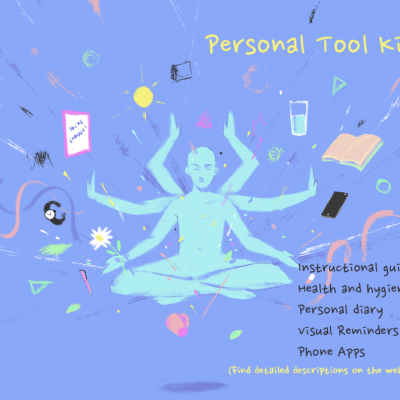
In a country like India where both mental health and non-binary identities are topics that are neglected despite being essential parts of an individual’s identity, it can be quite challenging to navigate through issues regarding the same. Accessibility to affordable and quality mental health services is a serious difficulty that the queer Indian population faces.
By Curated Content