SISA spaces


So what if I’m my own voyeur? — Connections and Disconnections with Desire(s)
Funnily enough, porn played a massive role in helping me articulate my queerness (I am pansexual) and my even queerer desires.
By Ankita Dhar Karmakar
Singlehood and the sexuality of a woman who seemingly knows it all and yet, is confused
Why is it always so hard to find a place for intimacy and why do we have to lie and cheat our way into getting it? Everything related to non-committal sex was always so taboo, shrouded in secrecy, and eliciting raised eyebrows, that it turned me off.
By Sanjukta Basu
Shouldn’t The World Be Big Enough?
We live in a world where resilience is celebrated and given priority over attempting to resolve factors that force one to be resilient. Campuses shouldn’t aim to merely be inclusive of diverse individuals – they must strive to not only affirm them but also celebrate them.
By Mythili Menon
April 18, 2022
Should I Say I Love You?
Being vulnerable helps boost our self-esteem and self-worth by pushing us out of our comfort-zone. It provides us with an opportunity to overcome obstacles and reach deep down within ourselves to find strength and confidence to keep going even when the odds are against us.
By Shubham Ranjan
April 19, 2021
Sexy Crip Desires
Many disabled people in India live with their parents and any expression of sexuality is suppressed as a rule within the confines of their homes. Sexual desires of persons with disabilities are seldom a priority issue for families or civil society. More is said through silence than words. Be grateful that you are alive. Isn’t that enough?
By Abhishek Anicca
February 4, 2023
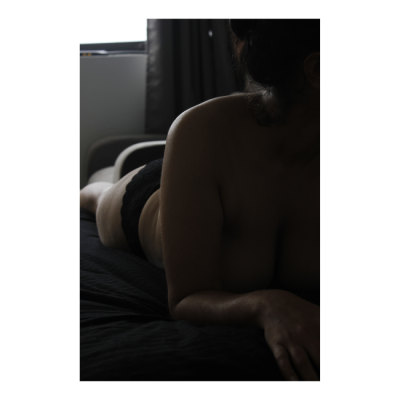
Sensuality and Friendship, and the Power of a Loving Gaze
But we always, always know that when it’s the two of us, a label or a word isn’t needed or necessary. We both get each other.
By passionfruitdrizzle and edamame
October 15, 2025

SELF-CARE AND MASTURBATION – LET’S GIVE IT THE FEMALE PERSPECTIVE IT DESERVES
Our body is home. We exercise, we eat right. We adorn it with jewels and tattoos. We live well and breathe easier if our home (our body) is clean, fed and rested. Come home to yourself. Masturbation is one of the easiest ways home.

Screens, Swipes and Ephemeral Intimacies
The convergence of technology and romance opens up a complex network of possibilities…
By Himani Bajaj
March 17, 2026

Safe Screens, Safe Relationships – Ground Realities from Meri Trustline
Digital abuse is not merely a technical or legal issue, but an emotional and social experience.
By Salman Mujawar
Rewind 2022
Thanks for being part of our 2022, full of exciting activities and reflection on Sexual and Reproductive Health and Rights (SRHR) and wellbeing.
By TARSHI
January 3, 2023
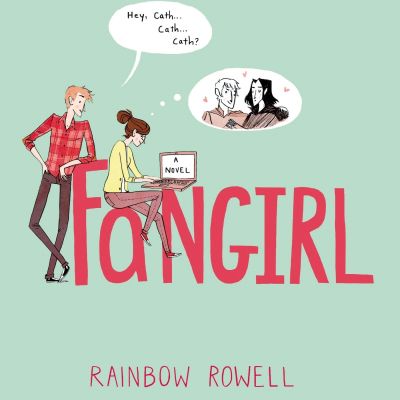
Review: Rainbow Rowell’s ‘Fangirl’, and Everything it Gets Wrong About Fandom
With the shifting nature of perceptions around fandom, the discourse around Rainbow Rowell’s Fangirl has witnessed an interesting shift. While earlier, the book found almost unanimous acceptance, in recent times, it has completely faded into irrelevance.
By Rohini Banerjee
Review: I see you
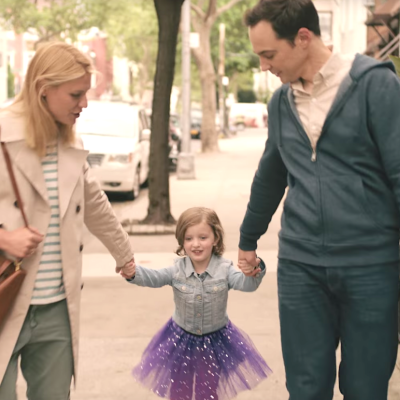
My friend’s son, too, likes wearing tutus and frilly skirts. Every time they go shopping for clothes, he heads to the girl’s section and picks out the frilliest outfit. At check out, invariably the cashier asks if the pretty outfit is for his sister and he confidently says it is for him. Often he wears these outfits to school. His confidence comes from his mother’s acceptance of him and her understanding of his gender expansiveness. It helps that she is a sociologist, but there is a constant pushback from society including from his peers at school who bully the little boy. But it is the constant support from his mother and family that allows him to remain confident and thrive whilst being different.
By ElsaMarie D'Silva
June 15, 2021
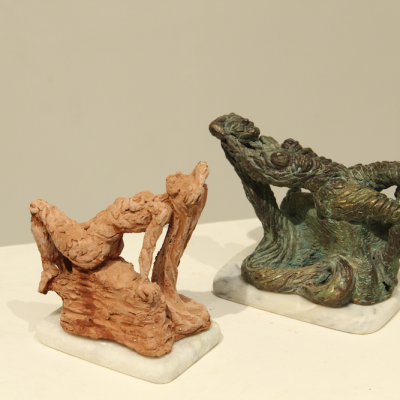
Reclining Vulnerability
Through multiple maquettes, I finally came across (since I myself did not know what the result of the form or figure would be) the Reclining Lady. She represents confident femininity and vulnerability. The feeling one has after taking a bath and sitting in the nude, drying oneself in unabashed nakedness.
By Noella Fernandes
April 19, 2021

Reclaiming Being Single Against Emma Watson’s Self Partnered
Emma Watson spoke to British Vogue about the incredible amounts of stress and anxiety that follows, “…if you have not built a home, if you do not have a husband, if you do not have a baby, and you are turning 30, and you’re not in some incredibly secure, stable place in your career, or you’re still figuring things out…”
By Feminism in India
February 15, 2021
Rainbow Rowell’s ‘Fangirl’, and Everything it Gets Wrong About Fandom
With the shifting nature of perceptions around fandom, the discourse around Rainbow Rowell’s Fangirl has witnessed an interesting shift. While earlier, the book found almost unanimous acceptance, in recent times, it has completely faded into irrelevance.
By Rohini Banerjee