SISA spaces


अपना और दूसरो का ख़्याल रखना
मां बनने के बाद से आत्म-देखभाल पर मेरे नज़रिये में बहुत बदलाव आया है। एक अभिभावक की भूमिका निभाते हुए और उसकी चुनौतियों का सामना करते हुए अपना ख़्याल कैसे रखा जा सकता है?
By Deepa Ranganathan
May 16, 2024

Whatever it takes…walking life as single women
What I am proposing here is to look at being in a relationship and being single together because what is important here is the idea of ‘be-ing’ as opposed to the stereotypes and perceptions attached to our relationship with ‘the One’ or to singlehood.
By Gurpreet Kaur
February 1, 2021

Navigating love, loneliness and singlehood
I believe that queer friendships and intimacies are sheer resistance, which not only swallow the despair and pain that might be perpetrated on gender-nonconforming people by their families, but also recognise all the lies about love that have been sold to us.
By Anonymous
February 1, 2021

Words, a blade!
These are their words, their vision,
a blade that left a cut in my veins
By Abdullah Erikat
June 17, 2025
With Love: A Special Issue on Sexuality, Mental Health, Wellbeing, and Self-care
The intricate connections between sexuality, mental health, wellbeing, and self-care have been some of the core themes that In Plainspeak…
By TARSHI
Why singlehood is meaningful: Three voices
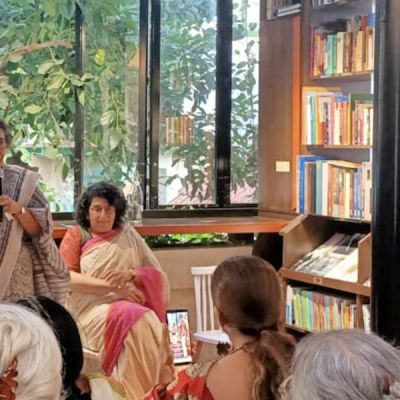
By the end of the evening, the room was suffused with the celebration of singlehood, rather than any explanation or apology for it. It appeared that the solitary life was envied and extolled by those who have opted out of it as well as many who haven’t.
By Curated Content
February 15, 2021

Where do we begin?
The connection between mental and emotional wellbeing and stigmatised identities is perhaps most easily understood and therefore a good entry…
By Shikha Aleya
September 19, 2022

When the Waters Rise, We Stay Rooted
The skills, networks, and resilience we’ve built over years aren’t just stories from the margins; they’re tools the whole system can learn from.
By Satbhan Singh
August 19, 2025

April 15, 2026

When Rights Aren’t Enough: Exploring Sexuality Education in India’s National Law Universities
Without explicit attention to desire, intimacy, and emotional negotiation, legal concepts remain abstract rather than practicable.
By Prerna

When Communities Fight Back – Climate Tech for Sexual Rights
… technology, when designed with love and local wisdom, can transform both climate adaptation and sexual health outcomes.
By Lakshmi Pillai Gupta
September 18, 2025

What we don’t talk about when we don’t talk about kink
I realise that a lot of men want (and need) to dominate women not because it is mutually pleasurable but because it reinforces patriarchal hierarchies. The taboo around kink, as a larger space of exploration, and BDSM, as a part of it, only furthers the violence, intensifying the apparent mystery of these subjects.
By Trijita
March 17, 2023

What Polyamory is and what it could be
Practicing polyamory comes with the struggle of breaking down value systems and non-acceptance that may lead to ostracism not only from the heterosexual world but also from the queer and trans community. Claiming oneself as queer depends not only on how one identifies, but also, in society’s eyes, on who one’s partner is; being single does not qualify and neither does being polyamorous as the latter is considered ‘non-serious’.
By Abhiti Gupta
February 15, 2022

What is this thing, the workplace?
We need to expand the way we look at work, the workplace and the human being, understanding our approach to sexuality, society and each other.
By Shikha Aleya
August 20, 2024

WHAT I LEARNED ABOUT SELF-CARE AND WELLBEING AS A SEXUALITY RIGHTS ACTIVIST
Wellbeing and sexuality for me therefore entailed thinking through and dealing with violence, understanding and acknowledging it as not the entirety of one’s experience, and going through a process of healing.
By Arpita Das