Sexuality

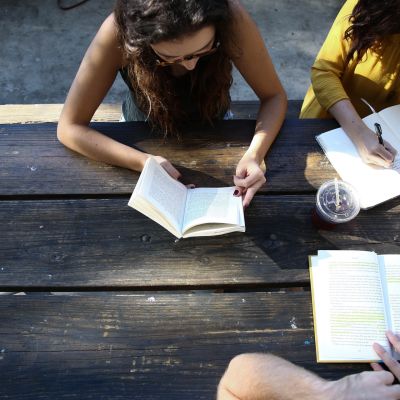
Shouldn’t The World Be Big Enough?
We live in a world where resilience is celebrated and given priority over attempting to resolve factors that force one to be resilient. Campuses shouldn’t aim to merely be inclusive of diverse individuals – they must strive to not only affirm them but also celebrate them.
By Mythili Menon
April 18, 2022
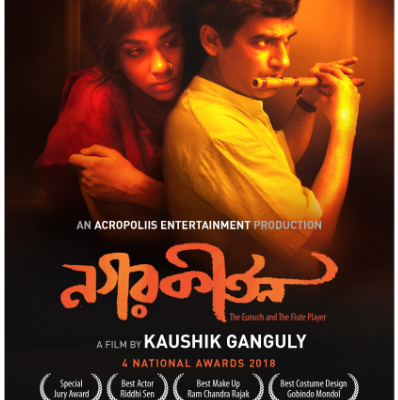
Locating the ‘Nagar’ in ‘Nagarkirtan’: Identifying the feeling of socio-sexual rootlessness in the Transgender community
The plot of the movie narrates the tale of the love that grows between two people who are struggling to survive in a world of rootlessness and are continuing to make a cosy home for themselves. The love between Madhu, who works as a food delivery boy, and Puti, who survives by singing at traffic signals, blossoms while they cross paths everyday at the traffic signal and the look that they exchange appears to us as if each of them is trying to find a home in the other.
By Ria Basu
A ‘Room’ of One’s Own – Sexuality, Self-expression, and Safe Spaces on Clubhouse
In theory, the concept of the app is a great one – it provides women, queer people, and people belonging to oppressed castes the tea-stall, cigarette-shop type of public spaces for conversation that are available to upper-caste cis het men. The relative anonymity acts like a safe cover, and the app affords a certain autonomy and agency to marginalised people to regulate the kind of conversation that goes on in rooms moderated by them.
By Srishti Gupta
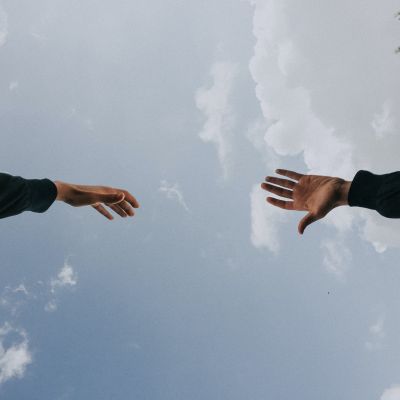
Looking For Someone To Talk To
I would say that growing up in a small village would make it difficult to find love or companionship, but I have since moved to a city and found that it was difficult to find love there, too. It did not stop me from trying, though.
By Wesley D'Souza
April 1, 2022
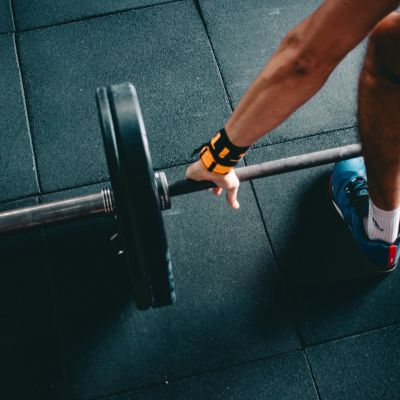
The Gendered Muscle in Gym Spaces
I can recall my experiences in the washrooms of different gyms that I have been a member of. A men’s washroom is an interesting place in terms of how sexuality manifests itself in its various aspects. It was not unusual to see men of various kinds with strange energies in these washrooms.
By Shiva Chauhan
April 1, 2022
Editorial – Celebrating Sexuality
100 issues, 8 years! Thank you, dear readers and contributors! As we planned for this issue to put on our…
By TARSHI
March 15, 2022
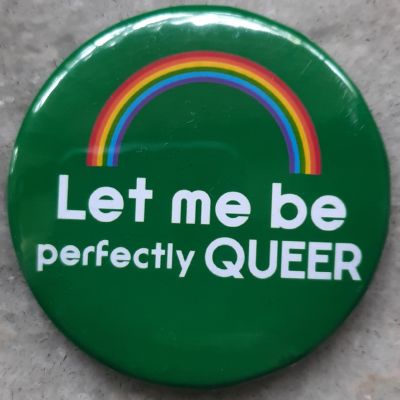
Dancing around each other: Conversations with a Tween
As a generation X-er I grew up in a world that was challenging sexuality but only encountered the instability of gender as an adult in radical new academic texts which were not then yet part of our everyday narratives. My daughter born between Gen Z and Gen Alpha is growing up in a world of gender fluidity and multiple pronouns.
By Shilpa Phadke
March 15, 2022
Refusing the weight in waiting
As a girl, I was made to believe that pleasure was something that existed outside my body, something that I had to seek out, something that was necessarily a product of a partnered experience. I don’t think I was even allowed to want pleasure, especially in its sexual forms.
By Aathira Gopi
March 15, 2022
The Time Machine – 5 In Plainspeak Articles that Celebrate Sexuality in its Diverse Forms!
The In Plainspeak team decided to time travel and re-discover previously published articles that explore the multiple ways in which people find joy and pleasure in their sexualities.
By TARSHI

How We Reimagine and Redefine Freedoms
Every part of life, the world too, is storied. Stories are the thread that hold histories and truths together. Stories are at the core of myth-making. Everything that we know is part of multiple crisscrossing relational storylines that we raise and those that we have no power in raising.
By Curated Content
March 15, 2022
Interview – This is what you bring to the table!
In this write up, we’d like to share a sense of what emerges from a compilation of these responses. This is based on the thoughts and feelings that come through for those of us here at In Plainspeak who have had the joy of reading the original responses as they came in to us. (Some of the quotations that follow have been slightly edited for flow and to help connect themes.) We know that most things in the realm of art, information and ideas lend themselves to a wide range of inferences and insights depending on the individuals making the inferences.
By Shikha Aleya
March 1, 2022

‘A Promise to Stand By’: The quiet feminism of Nathicharami
Nathicharami takes sexuality and sexual desire away from upper-class, Gucci-clad women and makes its viewers acknowledge its existence in the lives of women (middle-class wives and widows, in the case of this film) who are invisibilised, both in the society they live in and as subjects of popular content.
By Srishti Gupta

Of filter coffee, marriage and mixed celebrations of sexuality
Marriage also feels complicated when one approaches it through the lens of feminism. Marriage throws in two people and often their families into a system designed to perpetuate patriarchy, subjugate women, and bind men and women (in heteronormative marriage) into strict roles in the marriage.
By Vani Viswanathan

Negotiating Expression
I am still coming to terms with my own femininity, as with new learnings I find myself regaining many facets of my personality which were lost while trying to ‘act like a man’ and ‘act tough’.
By Ambica Naithani
March 1, 2022
Brushstrokes – Scribbles
Scribbles: an Escape From the Mundane is a product of my thoughts and emotions when I was struggling to understand my sexuality and grappling with the idea of identifying with the spectrum of gender and sexuality outside the binary, but not being able to put a label on it.
By Nishita Kamdar
March 1, 2022