sex


Shifting the Gaze: How women wish to experience desire
This awareness of the status ascribed to women – the status of being the objects of men’s desires – affects every aspect of a woman’s life. Desire then, in particular, becomes an aspect of a woman’s life where navigation becomes tricky.
By Gitanjali
March 17, 2023
March 17, 2023

What we don’t talk about when we don’t talk about kink
I realise that a lot of men want (and need) to dominate women not because it is mutually pleasurable but because it reinforces patriarchal hierarchies. The taboo around kink, as a larger space of exploration, and BDSM, as a part of it, only furthers the violence, intensifying the apparent mystery of these subjects.
By Trijita
March 17, 2023
Sex Question Mark
Looking back, it seems strange, almost sad that he couldn’t contain his anxiety, couldn’t bear the shame of what he did wrong. He must have skimmed over so much turmoil, that he couldn’t accept the reality of harming someone.
By Megha
March 1, 2023

Sexy Crip Desires
Many disabled people in India live with their parents and any expression of sexuality is suppressed as a rule within the confines of their homes. Sexual desires of persons with disabilities are seldom a priority issue for families or civil society. More is said through silence than words. Be grateful that you are alive. Isn’t that enough?
By Abhishek Anicca
February 4, 2023

साक्षात्कार – श्रीनिधि राघवन
ऐसी जगहों की बहुत कमी है जहां विकलांगता के साथ जी रहे लोग अपने यौनिक अनुभवों या यौनिक जिज्ञासा के बारे में खुलकर बात कर सकें। खास तौर पर विकलांगता के साथ जी रहे युवाओं पर हर वक़्त निगरानी रहती है जिसका मतलब है कि वे यौन अनुभवों से वंचित रह जाते हैं और अपनी यौनिकता को समझ नहीं पाते।
By Shikha Aleya
December 12, 2022

Nightmares of Being Chased by an Angry Mob
My foray of offering support in both the fields of sexual wellness and mental health was unplanned to say the…
By Pooja Priyamvada
September 1, 2022
Masculinity, queer representation, and the motifs of movement in ‘Dedh Ishqiya’
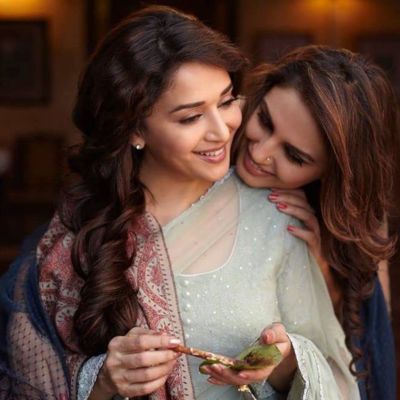
The film has all the makings and trimmings of a commercial thriller – a dynamic story, song and dance, an action-packed climax – and at the same time, it is a cinephile’s film.
By Srishti Gupta

Two Poems: ‘Stepwells’ & ‘In the Dimly Lit Room’
Just like on a misty morning,
we both
sit
without a shred of adornment
on these ancient stepwells
and the call of the hummingbirds
offer us sensations,
imagination,
and our innocence
May 3, 2022
Editorial – Spaces and Sexuality
A space can make us feel constricted or liberated, and sometimes even both at the same and at varying times. The combination of spaces that we may be occupying in the moment, as well as those we have in the past, predisposes us to act, feel and experience our sexuality in different ways.
By TARSHI
April 18, 2022

Dancing around each other: Conversations with a Tween
As a generation X-er I grew up in a world that was challenging sexuality but only encountered the instability of gender as an adult in radical new academic texts which were not then yet part of our everyday narratives. My daughter born between Gen Z and Gen Alpha is growing up in a world of gender fluidity and multiple pronouns.
By Shilpa Phadke
March 15, 2022

The Time Machine – 5 In Plainspeak Articles that Celebrate Sexuality in its Diverse Forms!
The In Plainspeak team decided to time travel and re-discover previously published articles that explore the multiple ways in which people find joy and pleasure in their sexualities.
By TARSHI

How We Reimagine and Redefine Freedoms
Every part of life, the world too, is storied. Stories are the thread that hold histories and truths together. Stories are at the core of myth-making. Everything that we know is part of multiple crisscrossing relational storylines that we raise and those that we have no power in raising.
By Curated Content
March 15, 2022

‘A Promise to Stand By’: The quiet feminism of Nathicharami
Nathicharami takes sexuality and sexual desire away from upper-class, Gucci-clad women and makes its viewers acknowledge its existence in the lives of women (middle-class wives and widows, in the case of this film) who are invisibilised, both in the society they live in and as subjects of popular content.
By Srishti Gupta

Of filter coffee, marriage and mixed celebrations of sexuality
Marriage also feels complicated when one approaches it through the lens of feminism. Marriage throws in two people and often their families into a system designed to perpetuate patriarchy, subjugate women, and bind men and women (in heteronormative marriage) into strict roles in the marriage.
By Vani Viswanathan