intimacy

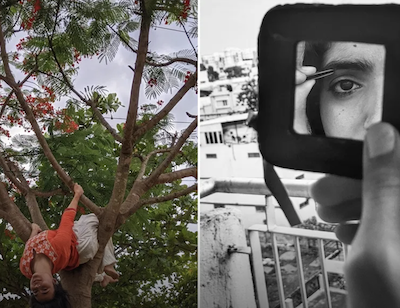
Brushstrokes: Women At Leisure: Photo Essay On Pastime As A Feminist Issue
Inspired to collect photographs of women spending time by themselves and for themselves after a conversation with her mother’s friend, Surabhi Yadav began the project, Women at Leisure.
By Feminism in India
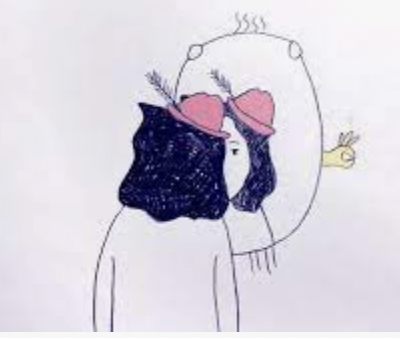
Video: How to be a Friend to Yourself
This thought-provoking, luminously illustrated The School of Life video reminds us of self-compassion being essential to building our own selves up, and being a safe space where we can extend the same love and imagination to our vulnerabilities, insecurities, fears, and doubts as we do to our friends.
By Curated Content
July 5, 2021
Editorial: Representation and Sexuality
We are, all of us, trying to hold steady, and to hold space for each other and for ourselves. And so, instead of trying to put together a collection of ‘all new’ articles, this time we are republishing some ‘ever fresh’ ones on the theme of Sexuality and Representation.
By TARSHI
June 15, 2021
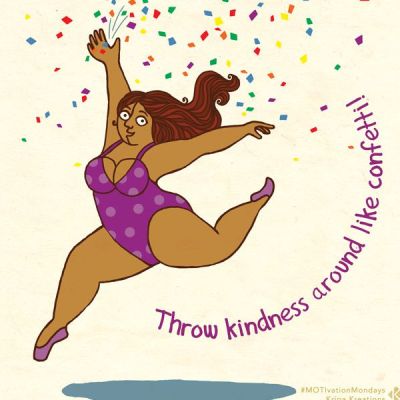
Interview: Kripa Joshi
There have been several recent examples of actors, movies and events being called out because of their lack of representation, like for the Oscars. With social media it is easier to create and distribute diverse art and also to voice the need for diversity. So it needs engagements and awareness in society. Change will happen once enough people demand that change.
By Shikha Aleya
June 15, 2021

From Judy Blume To The Sexy Internet: What Counts As Erotica?
This question of appropriateness is, for me, at the heart of all questions around sexuality. Each of us carries within us our own private benchmarks for which expressions of sexuality we find appropriate, and which ones, in turn, have crossed an invisible line. The ones we believe belong across the border, in the land of the inappropriate, of the too much.
By Richa Kaul Padte

Following Aladdin’s Genie
The lip colour then enters into a rather queer state of existence as it refuses to stand by the label it is expected to conform to. It moves and escapes categorisation. In its queerness, it renders itself as a paradox. At the heart of paradoxes is the understanding that something is what it is also not. Similarly, the colour of this lipstick is nude, but it is also not. It is possible that it is because of this slippery nature of the paradox that my sexuality as my identity too remains slippery, in motion and fluid.
By Muskan Nagpal
June 15, 2021
Probing the Screen: Pleasure in the Virtual World
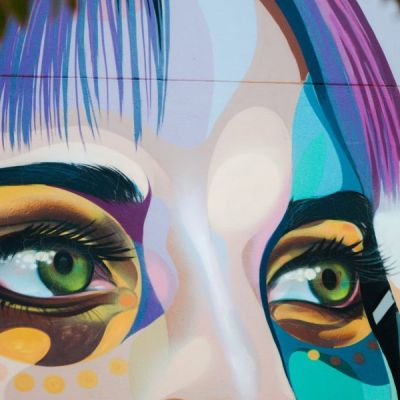
The virtual world allows me to challenge the hold of patriarchy on my ‘effeminate’ body; in a sense, it allows me to evade the policing of desire that my body shares with another, its flows and slippages, the messy and the unkempt. While virtual sex offers a window to revisit the sensual, it is also not immune to limitations and insecurities.
By Neel
June 15, 2021
Review: I see you
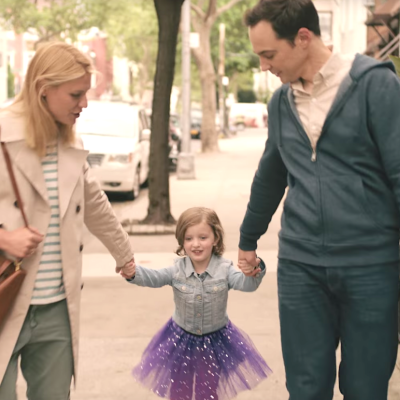
My friend’s son, too, likes wearing tutus and frilly skirts. Every time they go shopping for clothes, he heads to the girl’s section and picks out the frilliest outfit. At check out, invariably the cashier asks if the pretty outfit is for his sister and he confidently says it is for him. Often he wears these outfits to school. His confidence comes from his mother’s acceptance of him and her understanding of his gender expansiveness. It helps that she is a sociologist, but there is a constant pushback from society including from his peers at school who bully the little boy. But it is the constant support from his mother and family that allows him to remain confident and thrive whilst being different.
By ElsaMarie D'Silva
June 15, 2021
On Sexuality, Representation, and Being a Lonely Brown Girl
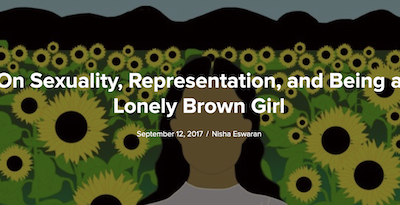
I long for much more than a greater representation of brown women. I long for a complete overhaul of the racial, gendered, and economic systems that structure our suffering.
But I also long for representation of all people, including brown women, who are in love, who are loveable, and who are — in the absence of love — lonely.
By Curated Content
Swipe me left, I’m Dalit
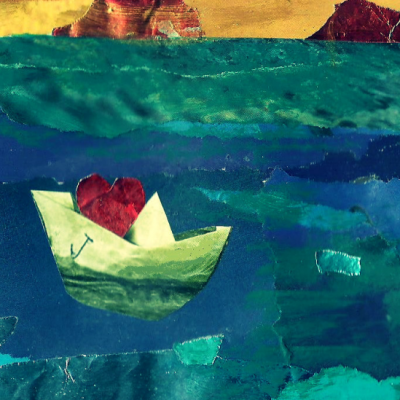
Dalit women are primarily viewed as victims and survivors of various kinds of violence. Reification of the Dalit identity has led to the boxing of our existence whose dimensions are solely defined by the savarna (dominant caste) gaze. Our self-assertions of identity are commodified to create a warped limiting of our lives, creating an image that is voiceless in the minds of our potential suitors. We are not seen as being capable of desire, love or happiness; we don’t exist as individuals outside of violence.
By Curated Content
June 15, 2021

Interview – #covid19 and conversations online: Listening in
We are plugged in to all kinds of data from a variety of sources, through technology, and even a window view of this space is like stepping into a global COVID control data centre. We are standing up to be counted, to be seen, to do, to contribute, to advocate, to remind, to rectify and restore, to strengthen a growing network of support and response to crisis on a scale we have neither been able to process or measure.
By Shikha Aleya
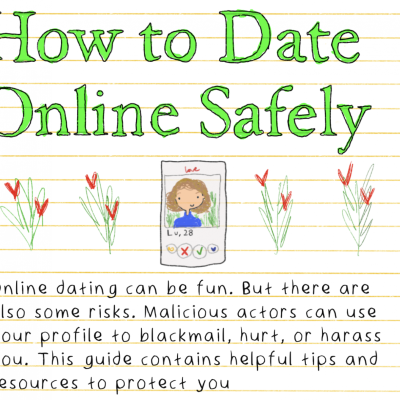
Brushstrokes: Digital security guide: How to protect yourself on dating apps
Online dating can be great fun but it comes with some risks. This quirky and in-depth Digital Security Guide by Access Now on How to Date Online Safely tells us how we can engage with fellow dating-app users while making sure we are safe from harm.
By Curated Content
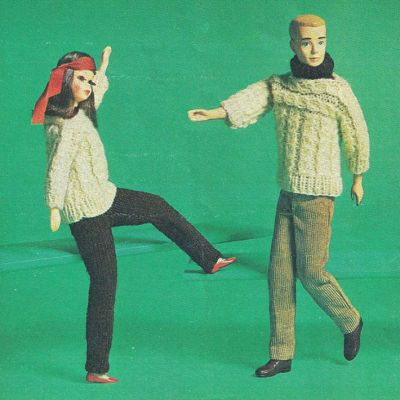
Tinderization of Feeling
To be without intricacies is to be without emotional boundaries, to disregard whoever whenever. Besties save you from your shit. They are your heart, and they transcend any efficiency that the Tinderization Bestie Robot attempts to offer you in its binary fantasy.
By Curated Content
April 19, 2021
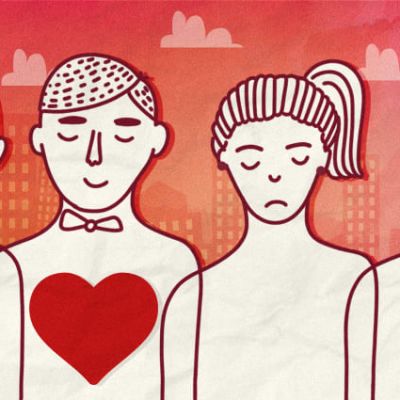
Why Don’t Indian Families Say “I Love You”?
Indian families rarely say “I love you” to each other. Maybe it is an extension of the fact that parents are awkward while displaying any sign of affection to each other around their kids or elders.
By Curated Content
April 19, 2021
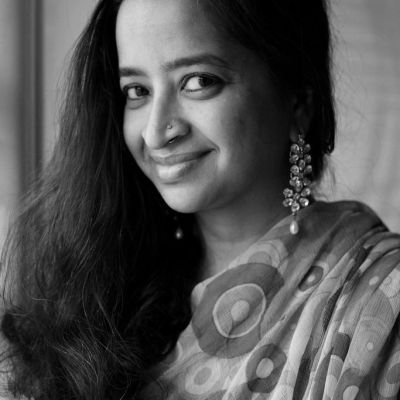
Interview – Indu Harikumar
I was watching something recently that said it was a bad thing to be vulnerable, but I don’t think it is a bad thing. I do see that there is a certain amount of power in vulnerability, it also needs courage, in my experience.
By Shikha Aleya
April 5, 2021