Desire


Interview – Prakash
“I feel that connection is the survival language of the LGBTQIA+ community. The sense of a common struggle makes way for developing quick yet lasting connections among the community…”
By Shikha Aleya
November 15, 2022

So what if I’m my own voyeur? — Connections and Disconnections with Desire(s)
Funnily enough, porn played a massive role in helping me articulate my queerness (I am pansexual) and my even queerer desires.
By Ankita Dhar Karmakar

Editorial – Movement and Sexuality
This issue of In Plainspeak while inviting us to embrace the joys and pleasure in movement, also questions the ways in which movements are facilitated or obstructed, visibilised or invisibilised, and the spaces that we must envision to find freedom in/to movement.
By TARSHI
May 19, 2022
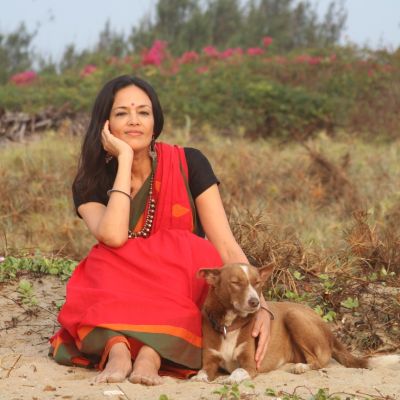
Interview – Tishani Doshi
I’ve essentially thought of movement as a kind of freedom, but one that has the capacity to destabilise you in some way. My most creative moments are when I’m not moving, when I am in fact rooted and still.
By Shikha Aleya
May 3, 2022

Two Poems: ‘Only sometimes’ & ‘No filter’
Only sometimes Sometimes my love is as expansive as the earth itself Patient None of the restlessness of a…
By Carol D'Souza
May 3, 2022

Two Poems: ‘Stepwells’ & ‘In the Dimly Lit Room’
Just like on a misty morning,
we both
sit
without a shred of adornment
on these ancient stepwells
and the call of the hummingbirds
offer us sensations,
imagination,
and our innocence
May 3, 2022
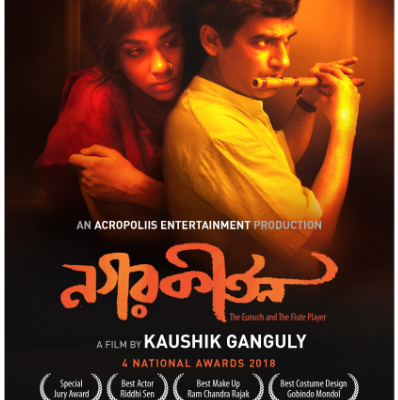
Locating the ‘Nagar’ in ‘Nagarkirtan’: Identifying the feeling of socio-sexual rootlessness in the Transgender community
The plot of the movie narrates the tale of the love that grows between two people who are struggling to survive in a world of rootlessness and are continuing to make a cosy home for themselves. The love between Madhu, who works as a food delivery boy, and Puti, who survives by singing at traffic signals, blossoms while they cross paths everyday at the traffic signal and the look that they exchange appears to us as if each of them is trying to find a home in the other.
By Ria Basu

Interview – This is what you bring to the table!
In this write up, we’d like to share a sense of what emerges from a compilation of these responses. This is based on the thoughts and feelings that come through for those of us here at In Plainspeak who have had the joy of reading the original responses as they came in to us. (Some of the quotations that follow have been slightly edited for flow and to help connect themes.) We know that most things in the realm of art, information and ideas lend themselves to a wide range of inferences and insights depending on the individuals making the inferences.
By Shikha Aleya
March 1, 2022
Brushstrokes – Celebrating Sexuality
Taboos in relation to female desire, sexuality and the body are often addressed in my work. My recent artistic interest focuses on rituals that are primarily centred on agricultural communities in Bengal that involve the veneration of fertility symbols and celebration of feminine sexuality.
By Mitali Das
March 1, 2022
Editorial – Sexuality and Coupledom
If we are to reimagine coupledom and sexuality, we need to expand and challenge our ideas about togetherness, romance, love, intimacy, desire, sex, attachment, and so on.
By TARSHI
February 15, 2022

Interview – Coupledom is a mix of meanings
Coupledom may or may not be for everyone, and does not mean the same thing to everyone. Importantly, coupledom does not hold the same value or position in our lives, even in the lives of the individuals perceived to be parts of a couple structure.
By Shikha Aleya
February 15, 2022

On the Sustainability of (Non) Romance
Contemporary and predominant imaginations of intimacy focus primarily on a sex-centric (romance-centric?) model which assumes that sexual desire exists and holds the same value for every person and every relationship regardless of their subjective positions. Sexual intent and desire are often the cruces of how relational aspects such as intimacy are socially constructed.
By Fariha Sameen
February 15, 2022
Friendships, or, That in which we decouple coupledom from the economies of marriage
I was not simply stuck within the binaries of “same-sex” or “opposite sex,” assuming that any reference to “same-sex” is in itself already revolutionary. But the call to recognise friendship, is a call to recognise so many forms of community that are made invisible by the emphasis within a liberal or conservative framework on “marriage” as the only path to family making.
By Shweta Krishnan
Conceptualising Love on the Aromantic Spectrum
I now feel comfortable entertaining the thought that my ease with my selfhood does not necessarily have to be threatened by the possibility of love in coupledom. Indeed, comfort with one’s self can actually evolve into healthier forms of love towards the other(s).
By Shivani Rajan
February 1, 2022

मेनोपॉज़ और सेक्स
एक तो यह समझ नहीं आता की आखिर इसे मेनोपॉज़ क्यों कहते हैं? पॉज़ का मतलब तो यह होता है कि किसी चीज़ का कुछ समय के लिए रुकना और आप के चाहने पर दोबारा शुरू हो जाना। मेरे विचार से तो इसे मेनोस्टॉप कहा जाना चाहिए!
By Sashwati Banerjee
February 1, 2022