class

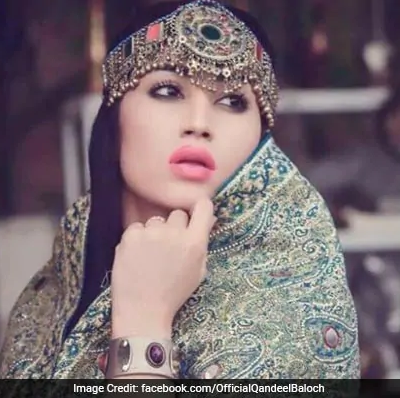
Qandeel: The Story Of A Small Town Girl With Big Dreams
Fouzia Azeem, more popularly known as Qandeel Baloch,was called Pakistan’s Kim Kardashian. Madiha Tahir, a journalist and filmmaker who is interviewed in the documentary,questions this comparison. To quote her: “She (Qandeel) is not Kim Kardashian at all. She is not famous for being rich. An upper-class woman would have her class protection and it’s unlikely that an upper-class woman would be supporting her family from these social media videos.”
By Zulfiya Hamzaki

On TikTok, the Party Don’t Start Till These Women Walk In
But TikTok is giving young people – particularly women – in South Asia a new avenue to showcase their talents. While for the majority of women using the app their fame is exclusive to TikTok, an increasing number are able to use it to get paid work. And for many, the platform represents a scarce opportunity for bodily autonomy, and a chance to carve out space as a performer in the face of film and fashion industries that shut them out.
By Curated Content

Of Identity and Belongings: The Gatekeeping within Queer Spaces
I went to a girls’ high school and for somebody who had spent the last ten years in a co-ed…
By Shubhangi
September 1, 2022

Navigating love, loneliness and singlehood
The desire for intimacy might rob one of the intimacy that one shares with oneself and thus, being with the beloved can leave one feeling even lonelier because of the continuing struggle for validation and comfort.
By Anonymous
January 3, 2022
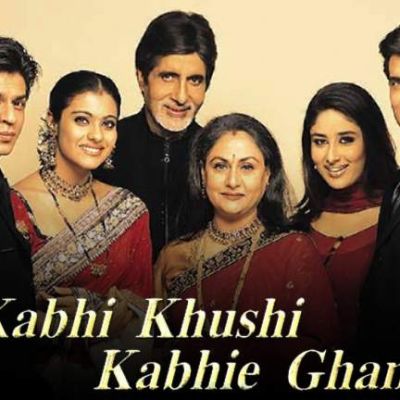
Kabhi Class Kabhie Gender: Watching K3G in a North American Anthropology Classroom
Watching K3G with my students brings forward new ways of understanding how concepts like socioeconomic class, gender, sexuality, and diasporic imaginaries are embedded with subtle messages of morality and longing and how these messages are ingrained in our Bollywood viewing experiences.
By Jessica Chandras

Journey with a transman: A self-reflective note
At present Neel[1] and I live-together, part-time. I write part-time because I stay alternately with him and with my sister…
By Sutanuka Bhattacharya
May 1, 2020
Issue in Focus: Memory and Sexuality – A Methodological Approach
A methodological approach to the study of memory and sexuality helps delineate interesting connections between the two: memory as a methodological tool for the study of sexualities, memory as an object of study, and the role of personal memory in the formation of individual sexualities.
By Varsha Chitnis

Issue in Focus: Beyond Ramps and Restrictions
Accessibility begins with access, enabled or denied, to concepts and ideas. At the core, beyond the architecture of the real and virtual worlds, it is about the architecture of the ways in which this access is broadened, to not only accommodate, but to nurture, the myriad expressions of human minds and bodies.
By Shikha Aleya
August 3, 2017

Issue in focus
Companions take many forms. Using the word very loosely here, a companion is anyone the self is connected to, anywhere, at any point in time, from a family member, to a stranger on a train.
By Shikha Aleya
November 15, 2022
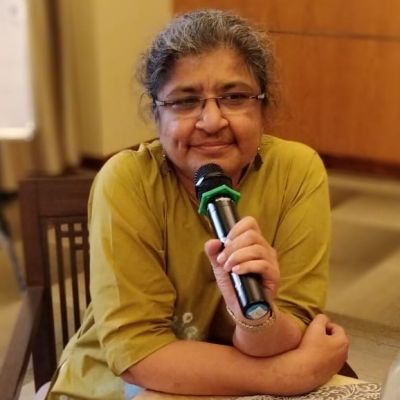
Interview: Chayanika Shah
In the course of this interview with Shikha Aleya, Chayanika Shah points out, “While decisions around gender and sexuality are very private and apparently made by each person for themselves, the material connections of community and family make this choice very contextual, and contingent on the whole social structure.”
By Shikha Aleya
June 1, 2019
Interview – Deepa Pawar
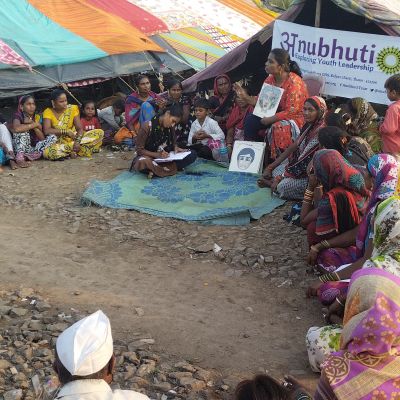
Deepa Pawar is the Managing Trustee & Founder Director of Anubhuti Trust, and is well-known for her work with NT-DNT…
By Shikha Aleya
September 1, 2022

Interview – This is what you bring to the table!
In this write up, we’d like to share a sense of what emerges from a compilation of these responses. This is based on the thoughts and feelings that come through for those of us here at In Plainspeak who have had the joy of reading the original responses as they came in to us. (Some of the quotations that follow have been slightly edited for flow and to help connect themes.) We know that most things in the realm of art, information and ideas lend themselves to a wide range of inferences and insights depending on the individuals making the inferences.
By Shikha Aleya
March 1, 2022
In Search of Ochin Pakhi
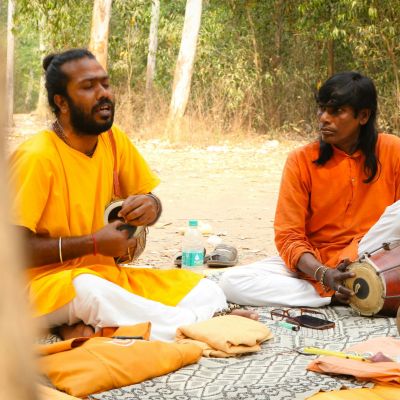
The aim of this piece is to bring to light the inherent queerness marking Baul folk music in Bengali, an oral undocumented spiritual expression that transcends heterosexual impositions and classism.
By Taniya Basu
June 17, 2025

Editorial: Class and Sexuality
In our mid-month issue, Amit Timilsina writes about the role class plays in the decisions that young people make, and what he himself, as a young person and a youth leader, had to do to gain access to resources and to professional acceptance.
By TARSHI
June 15, 2019

Editorial – Celebrating Sexuality
100 issues, 8 years! Thank you, dear readers and contributors! As we planned for this issue to put on our…
By TARSHI
March 15, 2022