SISA spaces


Brushstrokes – Scribbles
Scribbles: an Escape From the Mundane is a product of my thoughts and emotions when I was struggling to understand my sexuality and grappling with the idea of identifying with the spectrum of gender and sexuality outside the binary, but not being able to put a label on it.
By Nishita Kamdar
March 1, 2022

Video: “Un Sacré Mariage!”
What can celebrating sexuality look like? Un Sacré Mariage!, an animated short by Francis Papillon and Gregory Verreault shows us with aplomb, jest and buoyancy that one of the ways to do it could be by moving away from conventions and rituals.
By Curated Content
March 1, 2022

Editorial – Sexuality and Coupledom
If we are to reimagine coupledom and sexuality, we need to expand and challenge our ideas about togetherness, romance, love, intimacy, desire, sex, attachment, and so on.
By TARSHI
February 15, 2022

Interview – Coupledom is a mix of meanings
Coupledom may or may not be for everyone, and does not mean the same thing to everyone. Importantly, coupledom does not hold the same value or position in our lives, even in the lives of the individuals perceived to be parts of a couple structure.
By Shikha Aleya
February 15, 2022

What Polyamory is and what it could be
Practicing polyamory comes with the struggle of breaking down value systems and non-acceptance that may lead to ostracism not only from the heterosexual world but also from the queer and trans community. Claiming oneself as queer depends not only on how one identifies, but also, in society’s eyes, on who one’s partner is; being single does not qualify and neither does being polyamorous as the latter is considered ‘non-serious’.
By Abhiti Gupta
February 15, 2022

On the Sustainability of (Non) Romance
Contemporary and predominant imaginations of intimacy focus primarily on a sex-centric (romance-centric?) model which assumes that sexual desire exists and holds the same value for every person and every relationship regardless of their subjective positions. Sexual intent and desire are often the cruces of how relational aspects such as intimacy are socially constructed.
By Fariha Sameen
February 15, 2022
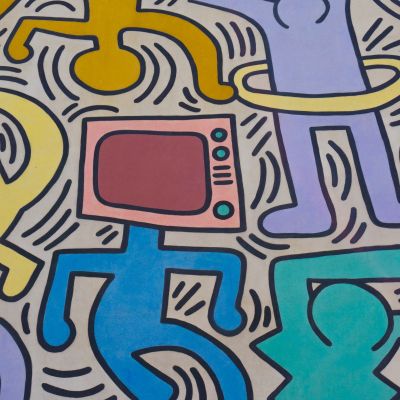
Friendships, or, That in which we decouple coupledom from the economies of marriage
I was not simply stuck within the binaries of “same-sex” or “opposite sex,” assuming that any reference to “same-sex” is in itself already revolutionary. But the call to recognise friendship, is a call to recognise so many forms of community that are made invisible by the emphasis within a liberal or conservative framework on “marriage” as the only path to family making.
By Shweta Krishnan
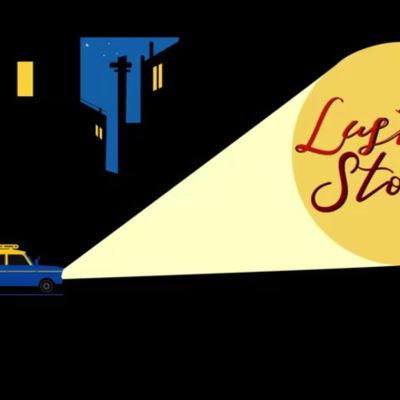
The Falsity of ‘Happily-Ever-Afters’: Examining Coupledom in ‘Lust Stories’
The anthology’s pull rests in its sincere and frank portrayal of male and female desires cutting across the divides of age, sexuality, and socioeconomic position. In terms of romance, the idealistic, till-death-do-us-part fantasy peddled by our movies and mainstream literature has been replaced by a realistic portrayal of modern relationships.
By Srishti Gupta

On Looking for Love
I wanted to be one of those people who decide to never date again and actually follow through. Indeed, I decided that a lot. A resolution that was broken so many times that it became a running joke in my head.
By Wesley D'Souza
February 1, 2022

Three Poems: ‘Untitled’, ‘Alchemy’ & ‘Third date’
He said ‘tender’ today/in such a way/I thought/I’d definitely like him saying/dirty things to me
By Carol D'Souza
February 1, 2022
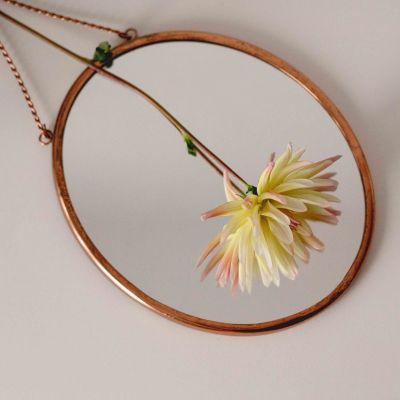
Conceptualising Love on the Aromantic Spectrum
I now feel comfortable entertaining the thought that my ease with my selfhood does not necessarily have to be threatened by the possibility of love in coupledom. Indeed, comfort with one’s self can actually evolve into healthier forms of love towards the other(s).
By Shivani Rajan
February 1, 2022

Video: Alternatives to a Standard Relationship
Is a monogamous long-term romantic relationship the only kind of relationship available to us? This School of Life video explores alternative modes of relationships through “The Menu of Love” and prods us to rethink the notion of monogamous romantic love and coupledom.
By Curated Content
February 1, 2022
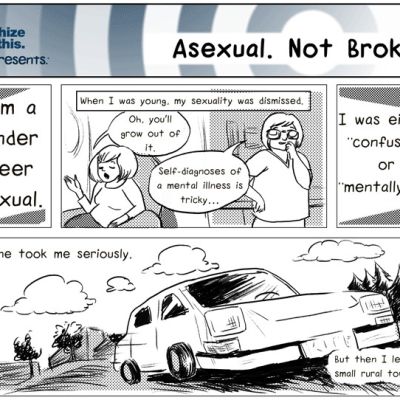
Brushstrokes: Why Being Asexual Doesn’t Mean I’m ‘Broken’
There are a lot of prejudices and misconceptions about asexual people. This comic on Everyday Feminism sensitises us to asexuality through a deeply felt real-life story of finding love as an asexual person.
By Curated Content
February 1, 2022

Editorial – Sexuality and SISA Spaces
We envision SISA spaces as non-judgmental, inclusive, rights-based and affirming spaces wherein people’s sexuality, their identities, wellbeing, choices, desires and pleasure are respected.
By TARSHI
January 3, 2022
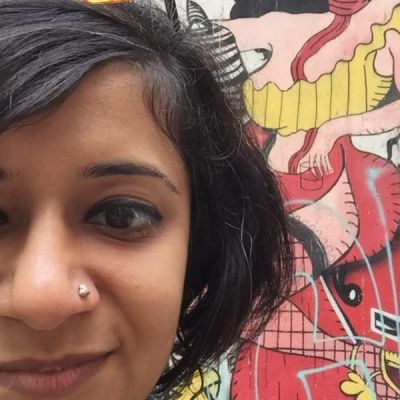
Interview: Shruti Arora
There may already be another organisation in the community to share resources with but for community-led initiatives, a shared perspective on Safe, Inclusive, Sexuality-Affirming (SISA) spaces is also important. Sometimes when the shared perspective is not there, that becomes a challenge.
By Shikha Aleya
January 3, 2022