Sexuality

March 17, 2023
What we don’t talk about when we don’t talk about kink
I realise that a lot of men want (and need) to dominate women not because it is mutually pleasurable but because it reinforces patriarchal hierarchies. The taboo around kink, as a larger space of exploration, and BDSM, as a part of it, only furthers the violence, intensifying the apparent mystery of these subjects.
By Trijita
March 17, 2023
The Motherhood Dilemma
The idealisation of motherhood is crucial to our culture; it is important that the mother is self-sacrificing. This sacrificial instinct isn’t limited to women’s behaviour. It goes on to encompass the entirety of her corporeality and the way she performs it.
By Vinky Mittal
March 17, 2023

Issue in Focus
There are different narratives where lie hidden worlds of codified feelings, justifications, a reason to buy or not buy into injustice, or othering.
By Shikha Aleya
March 1, 2023
Drag As Mapping Culture, Fun, And Resistance Onto Our Bodies
Drag is more than a form of entertainment or art form or a form of comedic release, it’s the realization of the fun of being queer or having a queer perspective.
By Rajeev Anand Kushwah

What is your verb
Khusro to Bullah. Ada to Parveen
यह, वह, वो
He, she, they
Lover or Beloved? Woman or Man?
By Carol D'Souza
March 1, 2023

Love belongs to me too
I see people and places,
Couples and crushes
I hear giggles and whispers.
These are the secrets untold to me.
By Gayathri
March 1, 2023
Did you see?
They’ punch him
with the pejorative
‘sissy’
and blame him for his smooth skin
and pink lips
for all ‘their’
disoriented gazes.
March 1, 2023
Sex Question Mark
Looking back, it seems strange, almost sad that he couldn’t contain his anxiety, couldn’t bear the shame of what he did wrong. He must have skimmed over so much turmoil, that he couldn’t accept the reality of harming someone.
By Megha
March 1, 2023
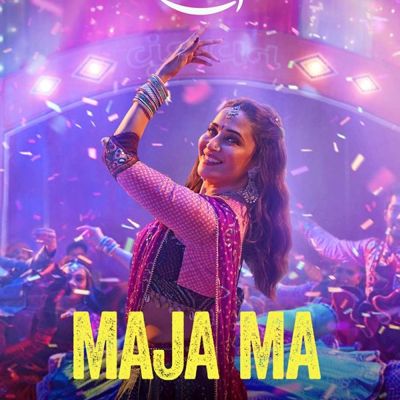
Breaking new ground: Maja Ma’s portrayal of queerness in a traditional Indian family
This reconciliation between Pallavi’s public (seemingly) heterosexual and closeted lesbian identities points to a distinctly Indian way of avoiding polarities through a new social arrangement where both identities are allowed the space to flourish.
By Juhi Sidharth and Chaitanya Ravi
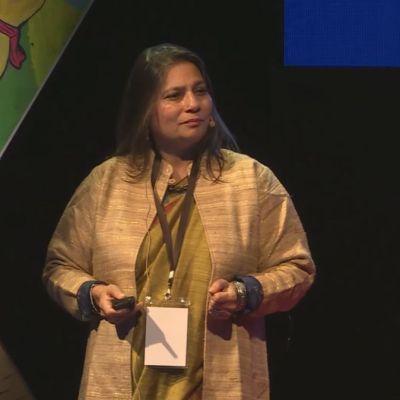
Video: Diversity and its Impact on the Workplace | ARTI CHAUDHRY | TEDxGIBS
If the workplace looked anything like our world, it would have 50% men and 50% women, 7% would have a college degree, 55% would have access to the internet, and only 70% would have access to a smartphone.
By Curated Content
Loitering towards desire
We had gathered to [discuss] digital self-determination for people with disabilities… focusing on its core component: the self. How can I be myself in digital spaces? What gives me more of a sense of self in these spaces? How can design, technology and policy contribute to helping me determine myself in digital spaces?
By Bishakha Datta
February 16, 2023
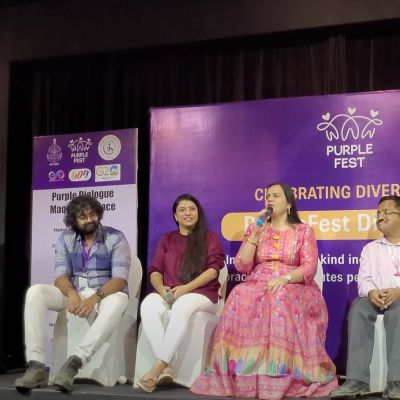
Autonomy, agency, choice: Yes these are for us
The linkages between access, health, violence, the law, workplaces, gender and sexuality are really high and that’s why we all today—whether we are working on street accessibility, education, disability and employment—need to bring and build our collective understanding around gender and sexuality, keeping it at the core of our work with people, youth, and women with disabilities.
By Nidhi Goyal and Srinidhi Raghavan
February 16, 2023
At Chattar Manzil
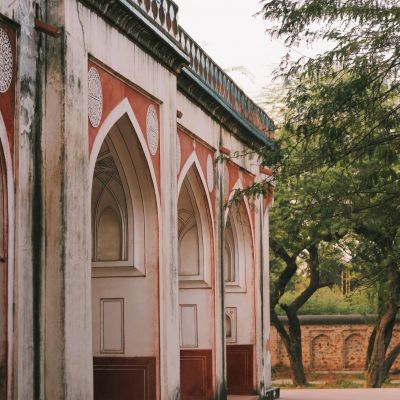
We are two boys in our early twenties
who can read touch like that, who have broken into
a 200-year-old mansion, without permission,
to see from above where people like them go
after 377 has been read down only for those
who can stay behind closed doors — in the custody
of cheap hotels, or houses that welcome nights
with the sound of latches closing.
By Aditya Vikram
February 16, 2023
Sexy Crip Desires
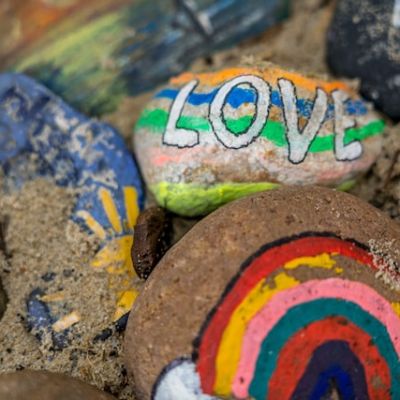
Many disabled people in India live with their parents and any expression of sexuality is suppressed as a rule within the confines of their homes. Sexual desires of persons with disabilities are seldom a priority issue for families or civil society. More is said through silence than words. Be grateful that you are alive. Isn’t that enough?
By Abhishek Anicca
February 4, 2023