Power


Too Beautiful to be Faithful
“It’s fascinating Yasmina, but also scary how sex or sexualising something can be ignited from our need for beauty that probably stirs positive emotions that we consider beautiful, such as feeling pleasure. But you know as well, desiring what we think is beautiful can generate fluidity: I can never know what I am exactly. All I know is that I was with men, and I was with women, and all of them tickled something within me. “
By Abdullah Erikat
October 15, 2018

Beauty Dictated; Beauty Discovered
Should we train it to think well, all these minds would see reason in similar things and they would come up with the same absolute reality – a universal Truth. That Truth would be a reflection of the Natural order for all humankind. That Truth alone would be beautiful.
By Shweta Krishnan
October 1, 2018
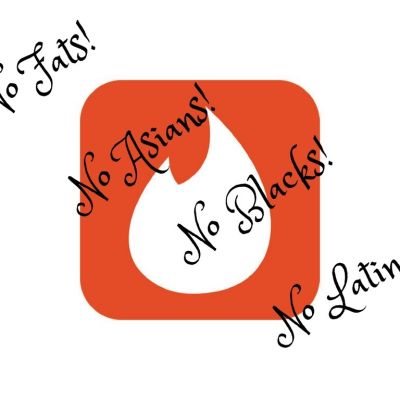
Of Tinder, Sex And Colonial Hangovers – Is Desire Political?
The point is not to lay the blame on women or assign them responsibility for patriarchy. It is to encourage a deeper introspection of our desires. My first boyfriend, whom I got to know in 2010, was in the habit of asking me (and other women he had previously dated) whether he could kiss me, before doing so. Every time any sexual activity was involved he would always ask beforehand and continuously check in if I was comfortable throughout.
By Feminism in India
August 14, 2018

Editorial: Power and Sexuality
In the mid-month issue we carry the second part of Madhu Mehra’s interview with Shikha Aleya about the law, power, inequalities, sexuality, consent and building a sex-positive culture. As Madhu says, for navigating negotiations and consent within sexual relationships more work is needed than merely lessons in legal literacy.
By TARSHI
July 16, 2018

Review: Offers You Can’t Refuse
It was a million dollar question. Literally. The Hollywood film Indecent Proposal (1993) had actors Demi Moore and Woody Harrelson…
By Manjima Bhattacharjya
July 16, 2018
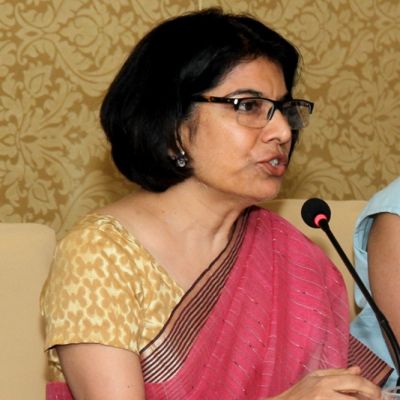
Interview – Madhu Mehra – Part 2
I think that the level of power that law makers, opinion builders and stakeholders wield over the more vulnerable and younger people in society is enormous. Yet, these actors have chosen to focus only on building a policy regime of sexual violence, even to the extent of allowing juvenile offenders to be treated as adult accused – without any corresponding effort to build a sex positive culture within which they may exercise agency.
By Shikha Aleya
July 16, 2018

What History And Fiction Teach Us About Women And Power
This article was originally published in the NPR. January 8, 2018; TANIA LOMBROZO Two recent books, one a manifesto by British…
By Curated Content
July 16, 2018

It’s All about Empowerment at a Nude Photoshoot for a Pornographic Subreddit
This post was originally published in VICE. By: Divya Karthikeyan A Bengaluru woman poses for her lover—and the followers of /r/IndiansGoneWild. Catching…
By Curated Content

6 Reasons Telling Women Their Power Is in Their Sexuality Is Not Empowering
This article was reposted from Everyday Feminism. December 14, 2015 by Suzannah Weiss One night, my college boyfriend, two of his female…
By Curated Content

Issue in Focus: Power, Agency and Sexuality
Since all women do not share a common history, agency cannot and need not be located for all in an emancipatory discourse and in the recourse to resistance and subversion. For some, feminist agency and the realisation of one’s potential as gendered actors in the world can come from submitting to a discourse that others deem repressive.
By Shweta Krishnan
July 2, 2018
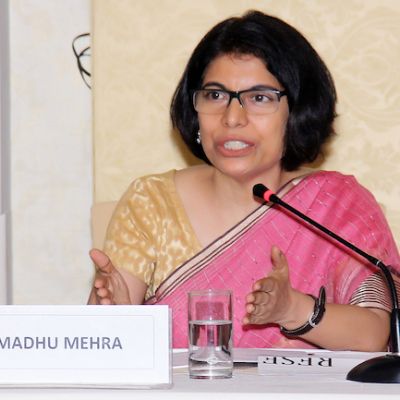
Interview: Madhu Mehra – Part 1
In this issue of In Plainspeak, we interview Madhu Mehra, lawyer and feminist activist. She is a founding member and the Executive Director of Partners for Law in Development (PLD), a legal resource group on women’s rights.
By Shikha Aleya
July 2, 2018

Media and the Power of Responsible Representation
It is the winter of 2013, and my father and I are sitting at an awkward distance from each other on the living room couch, our eyes trained on the television set as a popular prime time news debate discusses a subject we have never before talked to each other about – homosexuality. It is only a few days since Section 377 has been reinstated by the Supreme Court, and the television and print media bombards us with discussion after discussion on ‘alternate’ sexualities and LGBTQ rights.
By Rohini Banerjee
July 2, 2018

Trigger Warnings and the Subversive Potential of Uncomfortable Conversations
Giving a trigger warning helps to somewhat flatten that hierarchy by making sure the audience is okay with the content. It can also shift power to the audience who may now decide what they would like to do with that information – to stay put and listen, or to walk out.
By Arpita Das

The Nuances of Power Equations in BDSM
Irrespective of the gender or sexual orientation of the people involved, the only way the scales of power can be balanced in favour of everyone involved, is through explicit, well-informed consent.
By Asmi
July 2, 2018
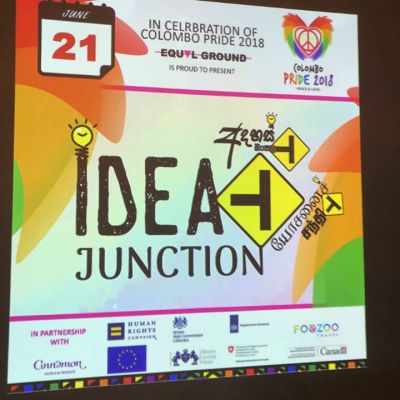
The Ocean in My Veins
The circulation of our bodily energies potentially ushers queer futurities. A future that is yet to come, a future in which our bodies will not be imprinted with fear. A future in which newer creative economies of desire, love, and pleasure surround us like the blue waters of the Indian Ocean. I write this brief reflection in hopes of such futures.
By Debanuj DasGupta
July 2, 2018