Desire

Interview – This is what you bring to the table!
In this write up, we’d like to share a sense of what emerges from a compilation of these responses. This is based on the thoughts and feelings that come through for those of us here at In Plainspeak who have had the joy of reading the original responses as they came in to us. (Some of the quotations that follow have been slightly edited for flow and to help connect themes.) We know that most things in the realm of art, information and ideas lend themselves to a wide range of inferences and insights depending on the individuals making the inferences.
By Shikha Aleya
March 1, 2022

Interview – Prakash
“I feel that connection is the survival language of the LGBTQIA+ community. The sense of a common struggle makes way for developing quick yet lasting connections among the community…”
By Shikha Aleya
November 15, 2022
In Search of Ochin Pakhi
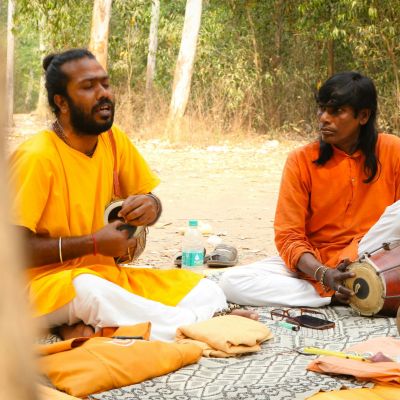
The aim of this piece is to bring to light the inherent queerness marking Baul folk music in Bengali, an oral undocumented spiritual expression that transcends heterosexual impositions and classism.
By Taniya Basu
June 17, 2025

In Appreciation of Singlehood
Growing up, for me, has been about accepting that the loneliness and sadness woven into the fabric of my being do not go away with entering conventional arrangements like monogamous relationships or marriage.
By Siddhi Pandey
February 1, 2021

If Mountains Can Move …
Language itself is being plugged as a resource, to be shared with those who share similar politics, or if not, at least to move them along in that direction. And people who speak, think, love and live differently are targeted as “the other”.
By Nandini Rao
June 17, 2025

I never liked your beanie
I only ever read your letters
to learn what patterns to avoid
in future relationships.
By Hritvika Lakhera
May 4, 2023

March 17, 2026

How would it be if we grew up embracing sexuality?
Growing up is a tedious task in our society because of the institutionalised practices, societal constructs and boxed identities and expressions that we are expected to adhere to. Anything beyond these implies harm, danger, and deviance.
By Sreejani
January 16, 2026
How Popular Culture is Changing to Bring Women’s Desires to the Forefront
Female sexuality isn’t in the closet any more. If you look at the spate of films that have been released in the past couple of years, they seem to tell us that women mouth expletives, watch porn and don’t mind talking about orgasms—things taken for granted when it comes to men.
By Curated Content
How Masculine Am I?
I have dealt with having a non-masculine body since the time I was a teenager. I have questioned my sexuality and how it interacted with my non-masculine body.
By Asim Mudgal
May 19, 2025
HOW I LEARNED THAT I DESERVE TO LOVE MYSELF
“I feel comfortable with who I am,” he responded. “I’m at ease with myself. I don’t wake up and hate myself. I can’t tell you how amazing that feels.”
“I know how that feels,” I told him.
By Guest Writer
January 4, 2021
Home-coming
The morning was heavy, laden with the weight of expectation, with the unsettling realisation that something was about to shift.
By Niv, Vanshika Gupta, Anjani Chadha
November 19, 2024

From Judy Blume To The Sexy Internet: What Counts As Erotica?
This question of appropriateness is, for me, at the heart of all questions around sexuality. Each of us carries within us our own private benchmarks for which expressions of sexuality we find appropriate, and which ones, in turn, have crossed an invisible line. The ones we believe belong across the border, in the land of the inappropriate, of the too much.
By Richa Kaul Padte
From Compliance to Critique: Localising Masculinity Work Through Feminist Praxis
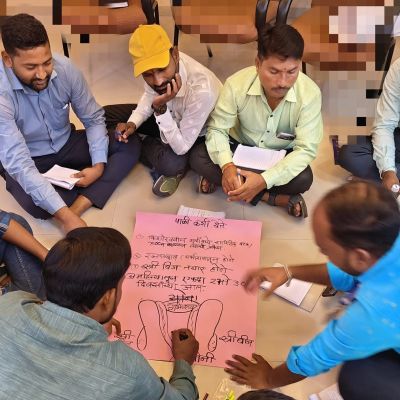
…we must also address men’s relationships with their spouses, other men, women and children in the community, and importantly, their own emotional selves to transform fatherhood. Therefore, engaging with men as fathers must involve a holistic understanding of their socialisation, emotional world, and position within patriarchal structures.
By Anand Pawar
Friendships, or, That in which we decouple coupledom from the economies of marriage
I was not simply stuck within the binaries of “same-sex” or “opposite sex,” assuming that any reference to “same-sex” is in itself already revolutionary. But the call to recognise friendship, is a call to recognise so many forms of community that are made invisible by the emphasis within a liberal or conservative framework on “marriage” as the only path to family making.
By Shweta Krishnan