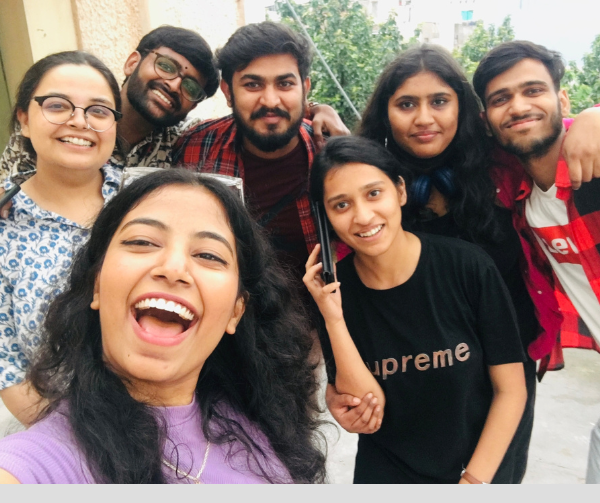
I started my journey in the social sector with an organisation that works with and for young people. I would like to believe that I was a diligent employee. I would clock in at 9:30, tick off all my tasks, clock out exactly at 6:30, and repeat the same pattern every day. I was cordial with my supervisor and peers, but not exactly “friendly”. I had grown up believing that professional and personal boundaries should never blur, much like the way we often internalise a dichotomy between the personal and the political. Besides, I already had friends from school, college, and my community. Why would I need to make friends at work?
I still remember my mid-probation conversation. I was nervous, wondering what kind of feedback I would receive. This was my first job. I sat in the meeting room reflecting on all the mistakes I had made in the past three months, the skills I lacked, and how I could contribute meaningfully to the amazing work this organisation was doing. When my supervisor walked in, the only feedback I distinctly remember was: “Nandhini, you need to make friends at the office.”
I was puzzled. What kind of feedback was this? Why would someone encourage making friends at work? At the time, I did not fully understand the value of workplace friendships, but I did sense that there was something different about working in the social sector.
If we go back in time, feminist organisations and collectives grew out of acts of friendship as much as acts of activism. Friendships bloomed with those who sat beside you in protests, shared similar struggles and values, challenged you in debates about politics and feminism, and supported you in raising your voice against all forms of inequality. These were friendships that saw the real “you” beyond societal labels. It was this foundation of trust, care, and solidarity that turned many friendships into systems capable of challenging patriarchal and heteronormative structures.
So, how can we not nurture friendships in social sector workplaces?
After nearly five years in the sector, I have realised that workplace friendships are as important as your childhood friends. Childhood friends carry you back to nostalgia, to who you were, but workplace friends anchor you in the present, reminding you of your principles, your purpose, and the person you can aspire to become. This feels especially true in the social sector where work is often deeply personal, driven by stories and struggles that do not end when you log off.
While many of us “work” in the social sector for reasons similar to those for working in any other sector (money, recognition, career growth), we are also deeply connected to what we do and why we do it. Each of us carries a personal story that drives our work in a sector that can often be challenging: a space where the work is endless, and the change we hope for may never fully materialise. Even as we strive to “empower” the communities we work with, we may still struggle to challenge these systems in our own homes or communities. In those moments of doubt, when we wonder whether we can really make a difference in the world, it is often our work friends who remind us why we began. We have a comrade who reminds us that we are not alone on this journey, and we build strategies together to keep our passions alive.
My friends at my previous and current workplace have been central to how I have come to truly experience the idea of the personal is political. With one such friend, I co-led a curriculum and campaign on gender, decision-making, and Sexual and Reproductive Health and Rights (SRHR) for young people. We often disagreed on many things, yet together we built something meaningful. Through countless conversations about gender and justice, this friendship also turned the mirror inward. I still remember him pointing out how I taught young people about autonomy and negotiation while struggling to assert the same at home. That pushed me to question and unlearn the gendered norms I carried within me. My work friends reminded me that practising what we preach is ongoing, messy, but important.
In many ways, workplace friendships have become a safe space for me to discuss and make sense of sexuality. These friendships often are the first places where we speak honestly about the greys – the many ways we think about pleasure, identities, and navigate relationships without the awkwardness or judgment that might often come with other friendships. Conversations with work friends made me realise how little I knew about myself, and the fact that having information about sexuality is my right. Working in the social sector, especially, has opened me up to friendships with people from diverse backgrounds, caste, class and gender and sexual identity, whose lives and perspectives has expanded my understanding of sexuality. Listening to colleagues share their journeys of navigating queerness, choice, and desire within families and workplaces has offered new ways of seeing how we all, in our own ways, try to bring the personal and political together and the everyday choices we make to show up for ourselves and own our sexuality.

Workplace friendships like these create a kind of Safe, Inclusive, and Self-Affirming (SISA) space that few other friendships do, where you can question, reflect, grieve, and grow, all while trying to live the very values you work for every day. At TARSHI (where I work currently), we look at SISA spaces as something bigger than our everyday work. It is about building a better future together. It is about introspecting our role in how we can shape or influence the spaces we inhabit, how we articulate and give voice to ourselves, how we listen and respond to those around us, and how we can be more open, sensitive, and inclusive of various identities and perspectives, to affect long-term change.
In many conversations with folks who have spent years in the sector, we often hear how spaces for solidarity are shrinking. The sector is modelling the corporate culture where we are forced to sit at the office, find ways to capture impact and numbers, compete for funding, and approach collaborations from a “what will we gain from this” perspective. We might be losing track of the bigger picture of building a movement together for causes we deeply care about. One way to nurture collective action and create SISA spaces within the sector is to approach partnerships and collaborations as acts of friendship, rather than purely instrumental transactions. It means building relationships beyond work, checking in on one another, celebrating each other’s wins, and offering support whenever required. Creating spaces where people can connect as individuals, not just as representatives of their organisations, allows room for vulnerability, newer ideas and connection, the very elements that strengthen solidarity.
Many feminist thinkers have reminded us time and again that friendship itself can be a political act, one rooted in love, care, and accountability. In the social sector, choosing friendship is a way of resisting. It allows us to share power, learn from each other’s lived realities and build allies to counter right-wing narratives and systems of oppression.
Friendship, in this way, becomes a feminist act: a quiet, everyday practice of care, solidarity, and collective hope.
Cover image: Puja Mahato
