SISA spaces


पुस्तक आलोचना – एरॉटिक स्टोरीज़ फ़ॉर पंजाबी विडोज़
उनकी सेक्सी कहानियों में आनंद और फैंटसी का चित्रण पूरी तरह औरतों की इच्छाओं पर केंद्रित हैं।
By Sheena D'Lima
February 15, 2024
Friendships, or, That in which we decouple coupledom from the economies of marriage
I was not simply stuck within the binaries of “same-sex” or “opposite sex,” assuming that any reference to “same-sex” is in itself already revolutionary. But the call to recognise friendship, is a call to recognise so many forms of community that are made invisible by the emphasis within a liberal or conservative framework on “marriage” as the only path to family making.
By Shweta Krishnan

For the Joy of It
Of course, I knew I wasn’t the only person in the world writing about Sherlock Holmes. I, however, thought I was the only one in the world writing about them like that. You know.
Romantically.
By Saswati
January 11, 2024
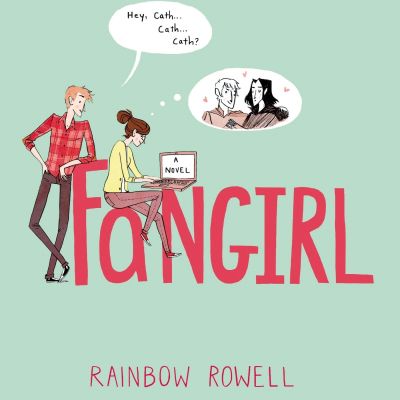
Rainbow Rowell’s ‘Fangirl’, and Everything it Gets Wrong About Fandom
With the shifting nature of perceptions around fandom, the discourse around Rainbow Rowell’s Fangirl has witnessed an interesting shift. While earlier, the book found almost unanimous acceptance, in recent times, it has completely faded into irrelevance.
By Rohini Banerjee

So what if I’m my own voyeur? — Connections and Disconnections with Desire(s)
Funnily enough, porn played a massive role in helping me articulate my queerness (I am pansexual) and my even queerer desires.
By Ankita Dhar Karmakar
The Last Local To Vashi
I gave myself the freedom to choose. And I chose to re-examine my assumptions. Maybe it was possible to ask strange men for directions without being afraid of seeming vulnerable. Maybe I could plan my outfit without bothering about the fact that I would be travelling on public transport.
By Tanvi Khemani
January 11, 2024

अपना किरदार निभाना
In this month’s issue of Play and Sexuality, Wesley D’Souza recounts the time his school put up a production of The Pied Piper of Hamelin, his preparations for its audition, and how the process was intertwined with an exploration and acceptance of his sexuality.
By Wesley D'Souza
January 11, 2024
A ‘Peoples Self-Care’ In-the-Making: Perspectives on the Multiple Possibilities of Existence and Care
But self-care is not a clean and happy procedure, it is not definitively achievable when systematically explored. To understand the scope of self-care we need to see the ‘dark side’ of the landscape, and destroy the versions of self-care that denounce our plurality. In this fight, the only outcome can be a recognition of experiences beyond the wellness narrative structured around the neoliberal agenda. This article is an attempt at foregrounding some aspects of self-care that decentralise the prevalent commodification of it.
By Rukmini Banerjee

Editorial – Humour and Sexuality
Humour makes us feel good, relaxes us, lubricates social interactions, and often allows us to see things in new ways. Who doesn’t love a good belly laugh? However, what tickles your funny bone may be very different from what tickles mine.
By TARSHI
May 17, 2023
What we don’t talk about when we don’t talk about kink
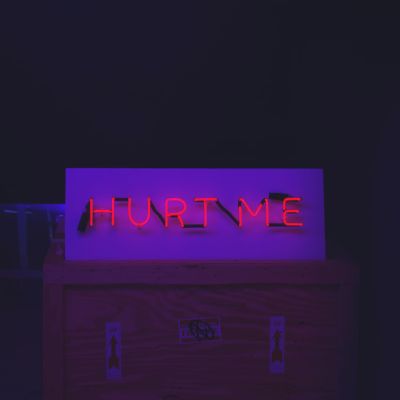
I realise that a lot of men want (and need) to dominate women not because it is mutually pleasurable but because it reinforces patriarchal hierarchies. The taboo around kink, as a larger space of exploration, and BDSM, as a part of it, only furthers the violence, intensifying the apparent mystery of these subjects.
By Trijita
March 17, 2023
Sexy Crip Desires
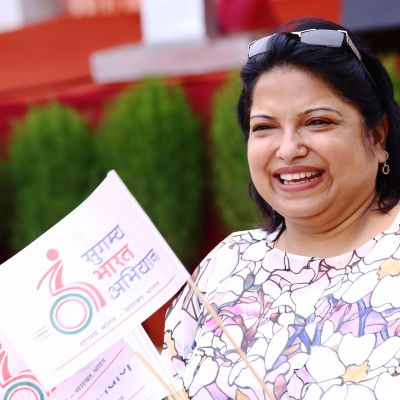
Many disabled people in India live with their parents and any expression of sexuality is suppressed as a rule within the confines of their homes. Sexual desires of persons with disabilities are seldom a priority issue for families or civil society. More is said through silence than words. Be grateful that you are alive. Isn’t that enough?
By Abhishek Anicca
February 4, 2023
Interview – Anjlee Agarwal
Self-care is influenced by the environment we inhabit, the way we relate to others, the way we negotiate with other living beings or structures. Self-care is also interlinked with other types of care – whether that is in community resources, psychosocial support, engagement with medical and health care institutions, and of course in collective agency and solidarity.
By Shikha Aleya
February 4, 2023

Editorial – Anthology Issue
Happy New Year! We have curated this anthology to remind you and ourselves of the gift and wonder of possibilities.
By TARSHI
January 3, 2023
Issue in Focus: The Heart of Being
To chase down our own vulnerabilities around sexuality is a short run around the corner, five minutes ago, last night sleeping alone, with a lover, a partner who lost interest, the Insta post that leaves you feeling you’re not good enough for the hug, the kiss, the cuddle and are you perhaps the A of LGBTQIA+?
By Shikha Aleya
January 3, 2023
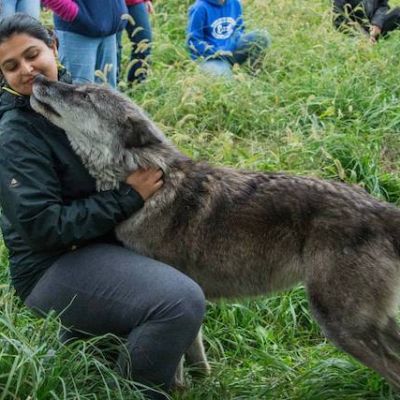
Interview – Raj Mariwala
Self-care is influenced by the environment we inhabit, the way we relate to others, the way we negotiate with other living beings or structures. Self-care is also interlinked with other types of care – whether that is in community resources, psychosocial support, engagement with medical and health care institutions, and of course in collective agency and solidarity.
By Shikha Aleya
January 3, 2023