Safety


Changing Social Norms Around Sexuality And Safety For Adolescents
To ensure that important discussions about issues of sexuality can take place at home, in schools and between generations, efforts needs to be made to change the norms – especially those related to perceptions of safety. Individuals, institutions, organisations and policies need to work together to include safe spaces for reflections and opportunities for these discussions to become common practice.
By Suniti Neogy

Camouflage
I cannot let anyone see the stretch marks, the cellulite, the saggy breasts. I cannot reveal my hideous body. I feel anxiety well up inside me even as I visualise this eventuality. I read about ten ways for a fat person to have meaningful sex. I learn that throwing a cloth over the bedside lamp will help hide my flaws.
By Sharada Vinod
August 2, 2021
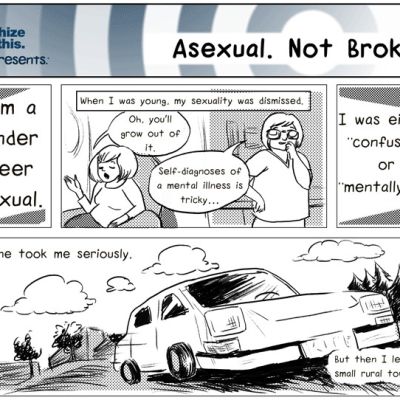
Brushstrokes: Why Being Asexual Doesn’t Mean I’m ‘Broken’
There are a lot of prejudices and misconceptions about asexual people. This comic on Everyday Feminism sensitises us to asexuality through a deeply felt real-life story of finding love as an asexual person.
By Curated Content
February 1, 2022
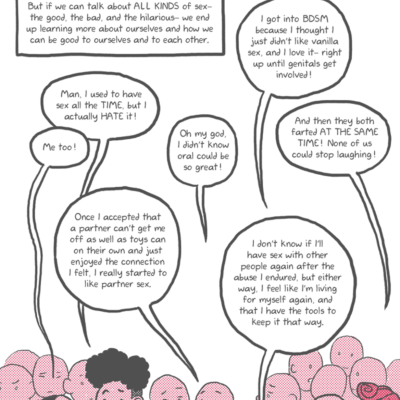
Brushstrokes: Who We’re Leaving Out of Sex Positivity – And How to Make It More Inclusive
Everyday Feminism’s comic illustrates the complexity and diversity of sexuality, revealing how sex can sometimes be pleasure-affirming and sometimes not, and asks us to talk about ALL KINDS of sex – the good, the bad, and the hilarious.
By Curated Content
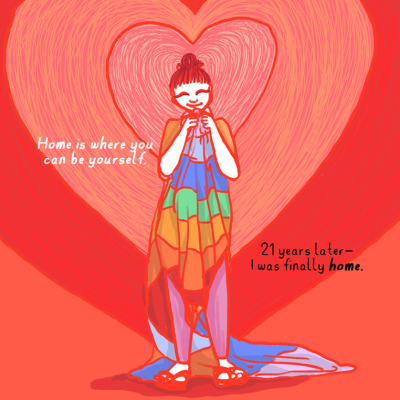
Brushstrokes: Finding Home
For a lot of queer people, ‘home’ can hold complicated meanings. The space of one’s home can be fraught with bigotry and alienation, and be far from safe or comforting. And so, there is a quest to find alternate ‘homes’, to find a space where we feel truly accepted, safe and protected.
By Curated Content
April 1, 2020
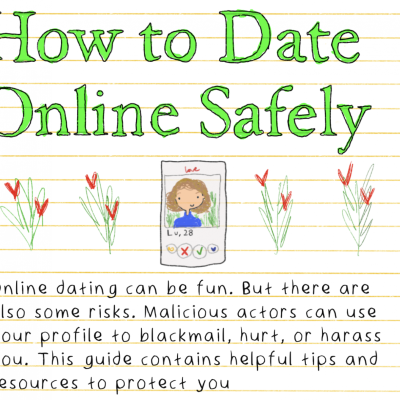
Brushstrokes: Digital security guide: How to protect yourself on dating apps
Online dating can be great fun but it comes with some risks. This quirky and in-depth Digital Security Guide by Access Now on How to Date Online Safely tells us how we can engage with fellow dating-app users while making sure we are safe from harm.
By Curated Content
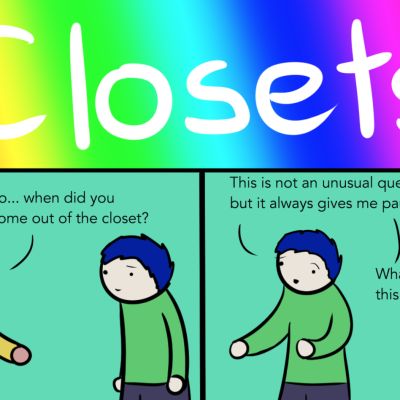
Brushstrokes: Closets
Robot Hugs, in their insightful comic, take on closets as inherently oppressive structures built to uphold what is acceptable and…
By Curated Content
July 1, 2020

Between Fear and Freedom
We are led to question what ‘safety’ really is: Will it be guaranteed by going gently, if at all, into that good night? Is it at all possible to freely and safely explore who we are and the world in which we live?
By Anjali
January 3, 2022

Being Comfortable in My Skin
I felt naked in front of everyone when I first came out, and I can’t stress enough how much my male privilege has helped me out here. I don’t even know if people found it serious enough to consider it my identity instead of ‘a mere sexual preference’ or ‘a phase’ (always a classic dismissal).
By Gokul KP
April 5, 2021

Being A Queer Woman Helped Me Accept My Body
Being a woman who loves other women, I realised that women look at me with the same tender gaze I look at them with. And that, more than anything, has made me feel at peace with my body. I hope to one day love it
By Curated Content
April 15, 2020

Accessing Safer Sex – what does it mean to have access to exploring and enjoying your sexuality safely?
The discourse on safer sex is usually couched in medical language– protection from STIs and unwanted pregnancies are what supposedly…
By Unnimaya Kurup
A ‘Room’ of One’s Own – Sexuality, Self-expression, and Safe Spaces on Clubhouse
In theory, the concept of the app is a great one – it provides women, queer people, and people belonging to oppressed castes the tea-stall, cigarette-shop type of public spaces for conversation that are available to upper-caste cis het men. The relative anonymity acts like a safe cover, and the app affords a certain autonomy and agency to marginalised people to regulate the kind of conversation that goes on in rooms moderated by them.
By Srishti Gupta