Safety


Nightmares of Being Chased by an Angry Mob
My foray of offering support in both the fields of sexual wellness and mental health was unplanned to say the…
By Pooja Priyamvada
September 1, 2022
Media and the Power of Responsible Representation
It is the winter of 2013, and my father and I are sitting at an awkward distance from each other…
By Rohini Banerjee
June 15, 2021
Loitering Online: Conditions of Possibility
To claim the public then in arbitrary, messy and oppositional ways, whether on the streets or online is to challenge the neoliberal impulse which is located in the creation of order. To create place, to stake claim, thwarts the desires for the sanitised neoliberal city and is a politics.
By Shilpa Phadke
April 15, 2019
Loitering Online: Conditions of Possibility
To claim the public then in arbitrary, messy and oppositional ways, whether on the streets or online is to challenge the neoliberal impulse which is located in the creation of order. To create place, to stake claim, thwarts the desires for the sanitised neoliberal city and is a politics.
By Shilpa Phadke
January 11, 2024
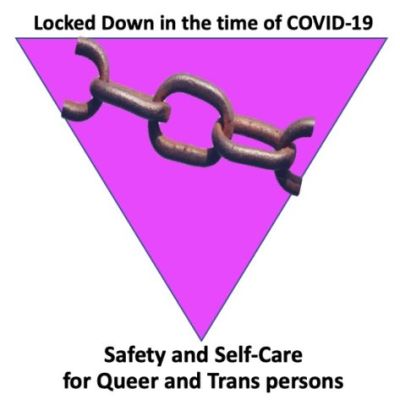
Locked Down in the Time of COVID-19: Safety and Self-Care for Queer and Trans Persons
By Orinam Apr 13 2020 Post comment To the reader: we recognize that the English-language content below may not be…
By Curated Content
Let’s Talk About Alternate Safe Spaces For Queer Women In India
Therefore, the question of safe spaces and alternative families is pertinent to queer identities, that are so much more than imagined by a single dominant narrative.
By Feminism in India
Issue in Focus: The Heart of Being
To chase down our own vulnerabilities around sexuality is a short run around the corner, five minutes ago, last night sleeping alone, with a lover, a partner who lost interest, the Insta post that leaves you feeling you’re not good enough for the hug, the kiss, the cuddle and are you perhaps the A of LGBTQIA+?
By Shikha Aleya
April 19, 2021
Issue in Focus: The Heart of Being
To chase down our own vulnerabilities around sexuality is a short run around the corner, five minutes ago, last night sleeping alone, with a lover, a partner who lost interest, the Insta post that leaves you feeling you’re not good enough for the hug, the kiss, the cuddle and are you perhaps the A of LGBTQIA+?
By Shikha Aleya
January 3, 2023
Interview: Shruti Arora
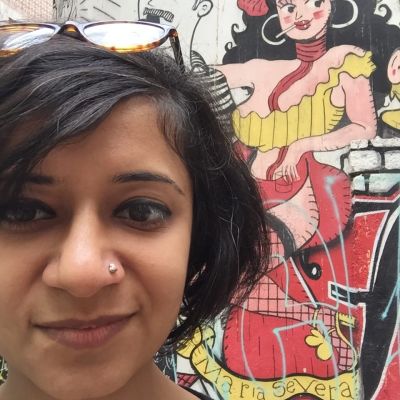
Shruti Arora is a feminist trainer and researcher in the field of Gender and Sexuality. In this interview, she shares her insights on collective practices of building safe and sexuality-affirming spaces for young people, in friendships and community, digital and healthcare settings.
By Shikha Aleya
April 1, 2020
Interview: Shruti Arora
There may already be another organisation in the community to share resources with but for community-led initiatives, a shared perspective on Safe, Inclusive, Sexuality-Affirming (SISA) spaces is also important. Sometimes when the shared perspective is not there, that becomes a challenge.
By Shikha Aleya
January 3, 2022
Interview: Shilpa Phadke
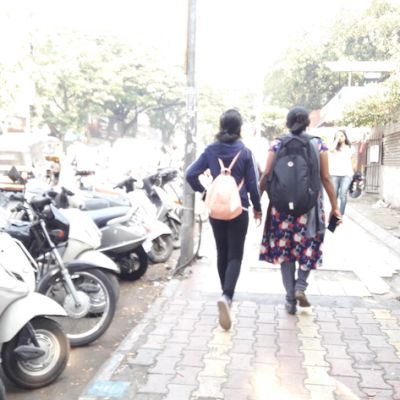
‘Why would you want to loiter?’ is an excellent question to ask feminist researcher, parent, educator and activist Dr. Shilpa…
By Shikha Aleya
December 18, 2017
Interview: Shilpa Phadke
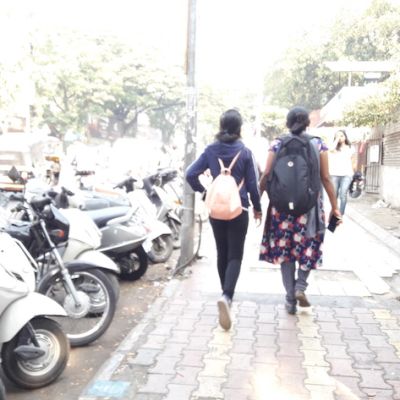
Shilpa believes loitering, just being, just hanging out in public places, is about ‘claiming the city with your body’. One of the co-authors of the book, ‘Why Loiter: Women and Risk on Mumbai’s Streets’ published in 2011, Shilpa has authored several essays and journals on issues of feminist parenting, gender and the politics of space, the right to take risks and related thoughts and concepts.
By Shikha Aleya
January 2, 2020
Interview: Adsa Fatima
Adsa Fatima is a feminist, trainer and resource person working with Sama Resource Group for Women and Health. In this interview, she shares her insights on issues of privacy, safety and inclusion in the context of reproductive health, sexuality and rights, and the family and social environment that influence individual choices and decisions
By Shikha Aleya
September 2, 2019
Interview – Srinidhi Raghavan
Disabled people might not have many spaces where they can speak openly about their sexual experiences or even sexual curiosity. There is a heavy monitoring of disabled young people especially, and this can mean that exploration, which is often how many of us discover sexuality, can be limited. Moreover, since the experiences of disabled people are not seen in popular media such as films, we can (and probably do) imagine we will have the same or similar experiences as non-disabled people – which is often not possible.
By Shikha Aleya
August 2, 2021
Interview – Padmini Ray Murray
What we lack are digital spaces and infrastructures that are informed by the needs of their end users, that prioritise safety, comfort, joy and care.
By Shikha Aleya
November 20, 2023