resistance


Interview – Tishani Doshi
I’ve essentially thought of movement as a kind of freedom, but one that has the capacity to destabilise you in some way. My most creative moments are when I’m not moving, when I am in fact rooted and still.
By Shikha Aleya
January 16, 2026
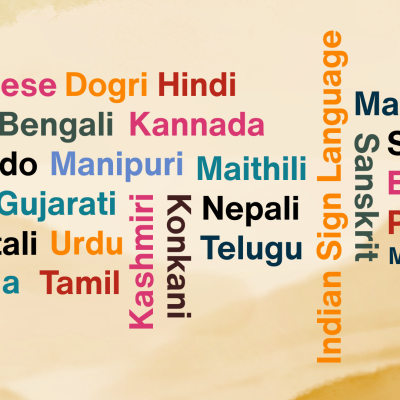
Editorial – Language and Sexuality
The glorious heights of self-actualisation to which some words beckon us, the promises lying within others, it’s all language.
By TARSHI
July 16, 2025
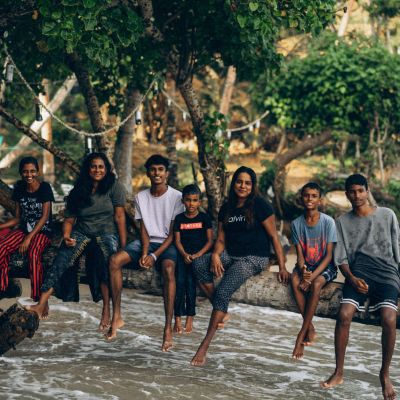
Revealing the Code
What is the language, across languages, that we associate with sexuality? Is it healing? Empowering? Does this language comfort and console? Does it lift you up and make you feel good about who you are?
By Shikha Aleya
June 17, 2025

If Mountains Can Move …
Language itself is being plugged as a resource, to be shared with those who share similar politics, or if not, at least to move them along in that direction. And people who speak, think, love and live differently are targeted as “the other”.
By Nandini Rao
June 17, 2025

Editorial – Mental Health and Sexuality
Mental health, much like physical health, is a state of wellbeing and not just the absence of disease or infirmity….
By TARSHI
September 19, 2022

This is how we do it
We need to recognise that mental health stressors that queer people face are not because something is inherently wrong with them.
By Shruti Chakravarty
September 1, 2022

Editorial – Movement and Sexuality
This issue of In Plainspeak while inviting us to embrace the joys and pleasure in movement, also questions the ways in which movements are facilitated or obstructed, visibilised or invisibilised, and the spaces that we must envision to find freedom in/to movement.
By TARSHI
May 19, 2022
Interview – Tishani Doshi
I’ve essentially thought of movement as a kind of freedom, but one that has the capacity to destabilise you in some way. My most creative moments are when I’m not moving, when I am in fact rooted and still.
By Shikha Aleya
May 3, 2022

Video – Tishani Doshi: Girls Are Coming Out of the Woods (poetry/dance)
In the video section, watch Tishani Doshi perform one of her most haunting and popular poems ‘Girls Are Coming Out of the Woods’. Using the movements of/in body, music and language, it is a powerful expression of Tishani’s expansive vision of resistance, freedom and solidarity in the face of violence.
By Curated Content

Interview – Sameera Khan
But what has been amazing to witness is how quickly young women in particular, took to the ideas of Why Loiter? and pushed them even further, creating new movements to expand women’s rights to the public, including the right to be out late at night, to stretch the curfew at women’s hostels, to demand extended access to women’s toilets, to public transport etc.
By Shikha Aleya
April 1, 2022

Negotiating Expression
I am still coming to terms with my own femininity, as with new learnings I find myself regaining many facets of my personality which were lost while trying to ‘act like a man’ and ‘act tough’.
By Ambica Naithani
March 1, 2022
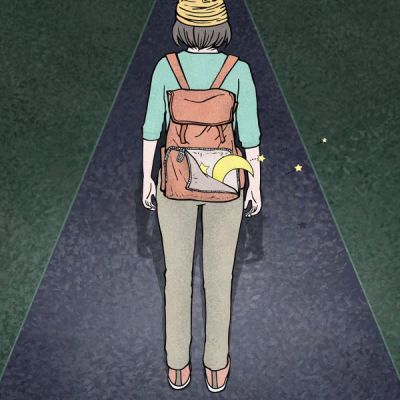
Between Fear and Freedom
We are led to question what ‘safety’ really is: Will it be guaranteed by going gently, if at all, into that good night? Is it at all possible to freely and safely explore who we are and the world in which we live?
By Anjali
January 3, 2022

Navigating love, loneliness and singlehood
The desire for intimacy might rob one of the intimacy that one shares with oneself and thus, being with the beloved can leave one feeling even lonelier because of the continuing struggle for validation and comfort.
By Anonymous
January 3, 2022

Who would we be if we weren’t trying to survive? A Conversation on the Survival Myth
What does it mean to hold space and extend compassion to ourselves and our communities? Rachel Cargle reminds us to ask ourselves: who would we be if we weren’t trying to survive? Similarly, what would care and vulnerability look like if we weren’t trying to survive? The anarchy of queerness constantly and necessarily resists the capitalist engineering of the Survival Myth: one that wants us to endure an isolated life instead of embracing it with the radically transformative joy of togetherness. Caring for yourself precedes, succeeds, and exists alongside caring for the collective.
By Rukmini and Soumya

Rights, Rescues and Resistance In The Global Movement For Sex Workers’ Rights – Introducing The Series
Further, the crucial role of sex worker organisations in promoting the rights, safety, and security of sex workers and addressing working conditions in the industry has largely gone unrecognised by national and international policymakers, donors, and some non-governmental organisations
By Curated Content