relationships

Video Page: The Importance of Vulnerability
Though most of us shy away from opening ourselves to be vulnerable, there is great power in expressing our vulnerabilities to the people closest to us, whether a friend or an intimate partner.
By Curated Content
April 1, 2020
Editorial: Sexuality and Pleasure
Fragile and fleeting like soap bubbles, pleasure shines with many colours. But its iridescence is frightening for many. Perhaps because its colours change in unpredictable and uncontrollable ways, and though fragile and fleeting, it is a world in itself
By TARSHI
February 17, 2020
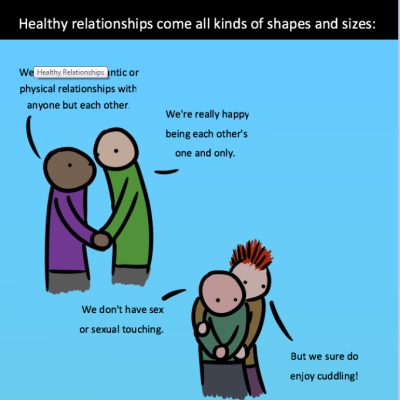
Brushstrokes: Healthy Relationships
Just as there are diverse ways of expressing and experiencing one’s sexuality, pleasure, too, is experienced in multiple forms and through multiple practices in each relationship.
By Curated Content
February 3, 2020

Pleasure and Sexuality – What Is Beyond?
Over the years, my understanding of pleasure has changed. However, much of it is thanks to external inputs. It is thanks to people of all gender identities sharing how they feel pleasure in different ways.
By Asmi
February 3, 2020

3 Ways to Rethink Masculinity as a Newly Masculine-Presenting Person
Being a man isn’t about domination, and it definitely isn’t about subjugation of feminine people. We need to find a way to re-frame masculinity so that it isn’t diametrically opposed to respectful and equal gender relations.
By Curated Content
October 15, 2019

Interview: Adsa Fatima
Adsa Fatima is a feminist, trainer and resource person working with Sama Resource Group for Women and Health. In this interview, she shares her insights on issues of privacy, safety and inclusion in the context of reproductive health, sexuality and rights, and the family and social environment that influence individual choices and decisions
By Shikha Aleya
September 2, 2019
Interview: Jeeja Ghosh
Jeeja Ghosh is a disability rights researcher and activist, feminist, parent, writer, scholar and trainer. Her lived experience of disability, and of standing up against discrimination and injustice, is at the core of her work and insights. Shikha Aleya interviews Jeeja about mobility across divides other than the physical.
By Shikha Aleya
August 1, 2019

Some Part of them Stays with You
For them there is always a smile, and for them time has stood through. Memories are edged in the season of those years in which I met them.
By Pavel Sagolsem
February 15, 2019

Review: It’s the Little Things that Make All the Difference
But whether you root for this couple or not, Little Things makes you think about the small things – like reading out a line from a book of poetry, sharing a friend’s WhatsApp message with your partner, forgetting to wash your dirty socks before they make the room stink – that make or break a relationship.
By Shweta Krishnan
February 1, 2019
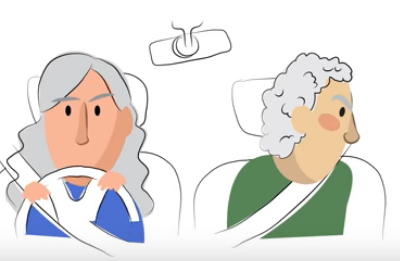
Video Page: The Challenge of Being Close
The process of connecting with another person, opening up to them, and getting close enough to build an intimate relationship is fraught with complexities and grey-areas, which often has a marked impact on how we interact with that person and how we choose to conduct ourselves around them.
By Curated Content
February 1, 2019

Reclaiming Intimacy: Sex Positivity and A Cultural Grammar That Values ‘Personhood’
As we move toward destigmatising the topic of sex for all genders, we should include the language of intimacy as we collectively create a new cultural grammar around sex.
By Anonymous
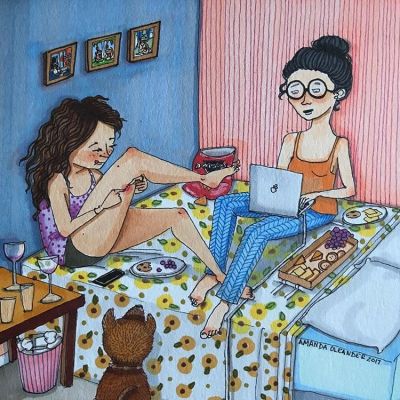
Brushtrokes: Amanda Oleander’s Art
Artist Amanda Oleander’s paintings chronicles the everyday lives of couples and the various mundane things they do together that are simultaneously deeply intimate and poignant.
By Curated Content
February 1, 2019

Jasmine Stains
Desire is a man’s turf, right up there with moustaches and Adam’s apples / I’m the apple, I am the snake, I am Eve / I am the vibrator nestled between flimsy, cheap lace underwear / I am the shame, of saying I came
By Malini Gopalakrishnan
January 2, 2019
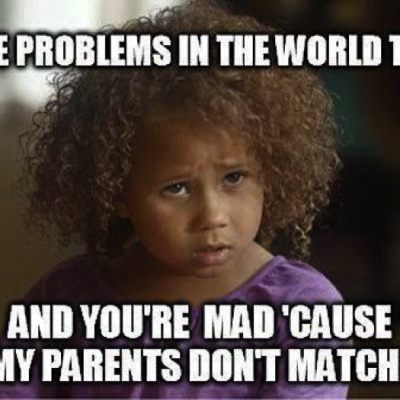
एक बेमेल जोड़े की कहानी
Both of us, have recently, decided to get married and will be in a marriage that I like to call a subversive marriage. Subversive marriages are based on an uncompromising equality and negotiations that serve for the betterment of both the partners.
By Shivani Gupta
January 2, 2019
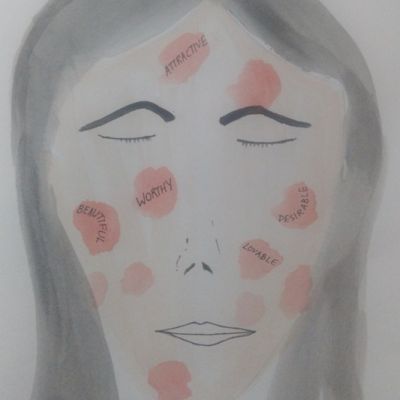
Acne and Attraction: An Unspoken Affair
The last few years have been a struggle in accepting myself with the possibility of always having acne and believing that I am still beautiful, even on the “outside”. This journey of believing that I can be worthy of love, attraction, expression and desire regardless of my looks continues to be liberating and empowering.
By Lamia Bagasrawala
October 1, 2018