relationships

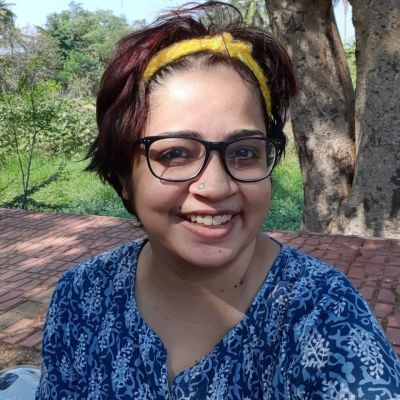
Interview – Srinidhi Raghavan
Disabled people might not have many spaces where they can speak openly about their sexual experiences or even sexual curiosity. There is a heavy monitoring of disabled young people especially, and this can mean that exploration, which is often how many of us discover sexuality, can be limited. Moreover, since the experiences of disabled people are not seen in popular media such as films, we can (and probably do) imagine we will have the same or similar experiences as non-disabled people – which is often not possible.
By Shikha Aleya
August 2, 2021
Camouflage
I cannot let anyone see the stretch marks, the cellulite, the saggy breasts. I cannot reveal my hideous body. I feel anxiety well up inside me even as I visualise this eventuality. I read about ten ways for a fat person to have meaningful sex. I learn that throwing a cloth over the bedside lamp will help hide my flaws.
By Sharada Vinod
August 2, 2021

Violation of Sexual and Reproductive Health Rights (SRHR): Where are the Women With Disabilities?
What vindicates the argument that women with disabilities (WWDs) should be deprived of sexual and reproductive healthcare and rights is scary. Harmful stereotypes of WWDs include the belief that they are hypersexual, incapable, irrational and lacking control. These narratives are then often used to build other perceptions such as that WWDs are inherently vulnerable and should be ‘protected from sexual attack’.
By Smruti
Despite all odds
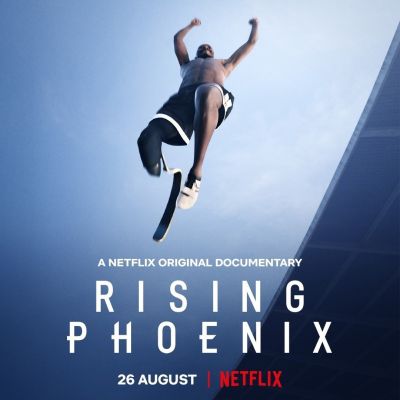
In the spirit of the Games, I watched the Netflix film Rising Phoenix which documents the history of the Paralympics and its impact on the world in making visible the topic of disability. It also tracks the personal and professional journey of some of the top Paralympic athletes who share their challenges, frustrations and motivations.
By ElsaMarie D'Silva
August 2, 2021
Brushstrokes: Who We’re Leaving Out of Sex Positivity – And How to Make It More Inclusive
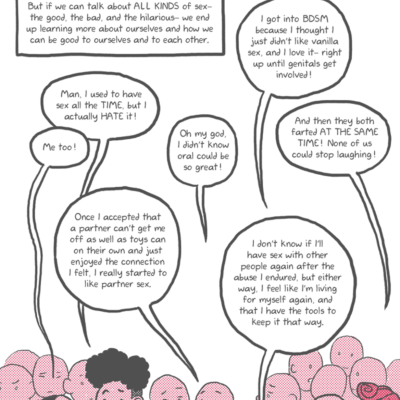
Everyday Feminism’s comic illustrates the complexity and diversity of sexuality, revealing how sex can sometimes be pleasure-affirming and sometimes not, and asks us to talk about ALL KINDS of sex – the good, the bad, and the hilarious.
By Curated Content
Video: Disability and Sex
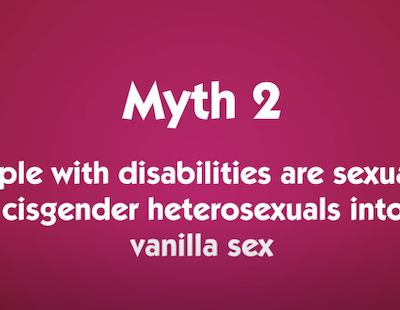
Dr. Lindsey Doe debunks myths around disability and sexuality, at once carving out space for affirming and inclusive discussions and challenging negative and harmful stereotypes. Emphasising the sexuality of people with disabilities as rich and diverse, Lindsey wonders what inclusive sexual and reproductive health and rights really mean.
By Curated Content
August 2, 2021
Editorial: Sexuality and Self-care
Continuing with our theme of self-care being about sustaining ourselves, our work, our movements, keeping the fires lit, and relating with love to ourselves, in our mid-month issue we bring you more articles looking at self-care from different perspectives – individual, queer, activist, collective, organisational, not necessarily separated, or in this order, of course.
By TARSHI
July 19, 2021

Burnout, Boundaries, and Better Self-Care
My self-care journey has only just begun and I have a long way to go. I do have bouts of self-doubt, anxiety, and panic, and I still go through periods of feeling overwhelmed. However, more than anything, I have learnt that self-care, for me, is a subversive act, and caring for myself gives me the strength to challenge the status quo and play my part in social justice movements.
By Devika
July 19, 2021
Who would we be if we weren’t trying to survive? A Conversation on the Survival Myth
What does it mean to hold space and extend compassion to ourselves and our communities? Rachel Cargle reminds us to ask ourselves: who would we be if we weren’t trying to survive? Similarly, what would care and vulnerability look like if we weren’t trying to survive? The anarchy of queerness constantly and necessarily resists the capitalist engineering of the Survival Myth: one that wants us to endure an isolated life instead of embracing it with the radically transformative joy of togetherness. Caring for yourself precedes, succeeds, and exists alongside caring for the collective.
By Rukmini and Soumya
The Politics of Self Care and Feminism
In a time when reason is more valued than emotion, unravelling and understanding the politics of self-care becomes all the more fundamental for us, and the movements we seek to develop and build. When our bodies, our emotions and our needs become weapons to be used against us, acts of defiance become rooted in thinking about your self and how we practice it. I find I am faced with more questions than answers, but I also know that asking the questions is the first step to finding the answers
By Curated Content
July 19, 2021

Interview – Raj Mariwala
Self-care is influenced by the environment we inhabit, the way we relate to others, the way we negotiate with other living beings or structures. Self-care is also interlinked with other types of care – whether that is in community resources, psychosocial support, engagement with medical and health care institutions, and of course in collective agency and solidarity.
By Shikha Aleya
July 5, 2021

Caring and care-giving
Just as capitalism has learned how to co-opt feminism into its model, it has done the same to ‘wellness’, so much so it has become an industry of its own. Mental wellbeing, no matter how necessary and important it is, remains a luxury with more than half of our country either unaware of available mental health resources or not in a position to even afford therapy.
By Deepa Ranganathan
July 5, 2021
A ‘Peoples Self-Care’ In-the-Making: Perspectives on the Multiple Possibilities of Existence and Care
But self-care is not a clean and happy procedure, it is not definitively achievable when systematically explored. To understand the scope of self-care we need to see the ‘dark side’ of the landscape, and destroy the versions of self-care that denounce our plurality. In this fight, the only outcome can be a recognition of experiences beyond the wellness narrative structured around the neoliberal agenda. This article is an attempt at foregrounding some aspects of self-care that decentralise the prevalent commodification of it.
By Rukmini Banerjee
MY VAGINA IS DUKHA?
Ageing vaginas in ageing female bodies are joked about. But a vagina shouldn’t have the task of pleasing anybody but itself first. To begin with, we’ll have to love and respect our vaginas in order to pleasure them. Love them just as they are. If they feel a little dry, don’t despair. Use a lubricant or a little coconut oil. If my labia are unshapely, they’re still my labia and respond very nicely to gentleness and tenderness. If I don’t love and respect my ageing body, in need of gentle, loving, patient care, then who will, for God’s sake?
By Nighat Gandhi
July 5, 2021

Dear Diary: The radically feminist creative journalling practice that nobody talks about
My journal has many entries that are speculative and fantastic. Writing about the mundane leads me to question the way the world operates and from there I frog-leap into a world of ideas where I imagine a radically different way of being. In my journal, I imagine a politics of care, community, and compassion. I become grand, valuable, and unstoppable, even in a world where I am sometimes made to feel small.
By Sheena D'Lima