love


Love belongs to me too
I see people and places,
Couples and crushes
I hear giggles and whispers.
These are the secrets untold to me.
By Gayathri
March 1, 2023

Lootera: The Thief Who Stole My Heart
It is rare to show with such simplicity and depth, the undoing of a robber as he falls in love with the subject of his robbery. Lootera reinforces the belief in love’s gentleness which can disarm all the trappings of normative masculinity that society commands.
By Pronita Tripathi
April 17, 2025

Looking For Someone To Talk To
I would say that growing up in a small village would make it difficult to find love or companionship, but I have since moved to a city and found that it was difficult to find love there, too. It did not stop me from trying, though.
By Wesley D'Souza
April 1, 2022

Locating the ‘Nagar’ in ‘Nagarkirtan’: Identifying the feeling of socio-sexual rootlessness in the Transgender community
The plot of the movie narrates the tale of the love that grows between two people who are struggling to survive in a world of rootlessness and are continuing to make a cosy home for themselves. The love between Madhu, who works as a food delivery boy, and Puti, who survives by singing at traffic signals, blossoms while they cross paths everyday at the traffic signal and the look that they exchange appears to us as if each of them is trying to find a home in the other.
By Ria Basu

Like Telling a Caged Bird to Soar Higher
Change those worlds, and sexuality stops echoing limits.
By Ratnaboli Ray
April 15, 2026

Languages of Love (and Sex)
I soon realised how central language is to our understanding of the world, and how language constitutes the limits and possibilities of our experiences and identities.
By Siddharth Narrain
July 16, 2025
March 17, 2023

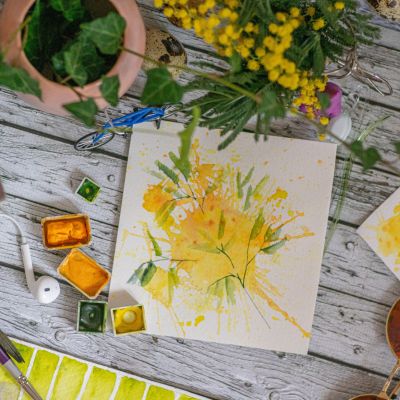
La esquina de mi corazón
To be politically queer in a new language is an intoxication of all senses, revelation, outrageous freedom.
By Cat D
July 16, 2025

Kun Faya Kun: Embodying Non-Conformity
For a queer person, or for someone who remains single by choice, everyday existence requires strength and will. That is the embodiment of kun faya kun as a personal philosophy: to manifest the person you want to be through sheer will.
By Ghausia Rashid Salam
February 1, 2021

May 18, 2026

Issue in Focus: The Heart of Being
To chase down our own vulnerabilities around sexuality is a short run around the corner, five minutes ago, last night sleeping alone, with a lover, a partner who lost interest, the Insta post that leaves you feeling you’re not good enough for the hug, the kiss, the cuddle and are you perhaps the A of LGBTQIA+?
By Shikha Aleya
April 19, 2021
Issue in Focus: The Heart of Being
To chase down our own vulnerabilities around sexuality is a short run around the corner, five minutes ago, last night sleeping alone, with a lover, a partner who lost interest, the Insta post that leaves you feeling you’re not good enough for the hug, the kiss, the cuddle and are you perhaps the A of LGBTQIA+?
By Shikha Aleya
January 3, 2023

Issue In Focus: The Conversations We Don’t Have
A long, long time ago, in a room far, far away, I remember playing at being a mythological hero I…
By Shikha Aleya
February 1, 2016

Issue In Focus: Is ‘Dhanda’ (Sex Business) Work? – II
Is business work? Can business that involves providing sexual services be understood as work? If work is any mental or physical activity performed for a result, then for the individual performing the activity sex work is work. If work is any activity performed as a means of survival, then sex work is work.
By Meena Saraswathi Seshu and Aarthi Pai
April 18, 2016
Issue In Focus: Baboochamuffins and Other Musings
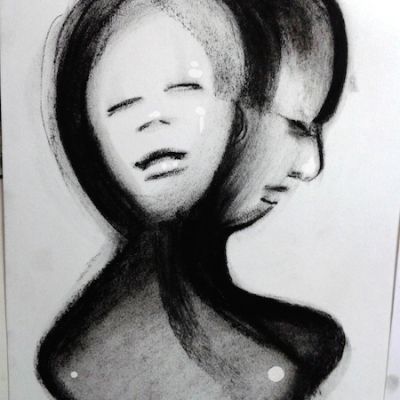
Why are certain privileges only afforded to couples? Why can we not share them with others outside of a romantic or sexual paradigm? Why is intimacy seen as being the purview of lovers? In actual fact, we may often share a greater intimacy with our friends than we do with our lovers.
By Radhika Chandiramani