intimacy


How We Reimagine and Redefine Freedoms
Every part of life, the world too, is storied. Stories are the thread that hold histories and truths together. Stories are at the core of myth-making. Everything that we know is part of multiple crisscrossing relational storylines that we raise and those that we have no power in raising.
By Curated Content
March 15, 2022

Home-coming
The morning was heavy, laden with the weight of expectation, with the unsettling realisation that something was about to shift.
By Niv, Vanshika Gupta, Anjani Chadha
November 19, 2024
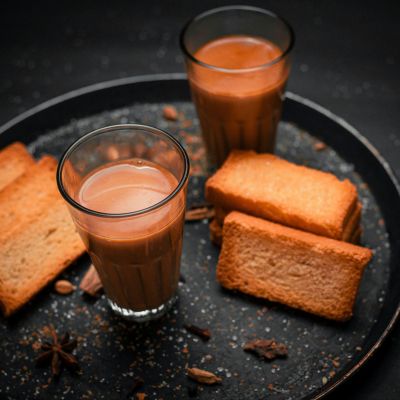
Having a Tea with You
On calls your voice greets me, balm to the parched everything.
By Carol D'Souza
October 15, 2025

From Judy Blume To The Sexy Internet: What Counts As Erotica?
This question of appropriateness is, for me, at the heart of all questions around sexuality. Each of us carries within us our own private benchmarks for which expressions of sexuality we find appropriate, and which ones, in turn, have crossed an invisible line. The ones we believe belong across the border, in the land of the inappropriate, of the too much.
By Richa Kaul Padte
Friendships, or, That in which we decouple coupledom from the economies of marriage
I was not simply stuck within the binaries of “same-sex” or “opposite sex,” assuming that any reference to “same-sex” is in itself already revolutionary. But the call to recognise friendship, is a call to recognise so many forms of community that are made invisible by the emphasis within a liberal or conservative framework on “marriage” as the only path to family making.
By Shweta Krishnan
Friendships, or, That in which we decouple coupledom from the economies of marriage
I was not simply stuck within the binaries of “same-sex” or “opposite sex,” assuming that any reference to “same-sex” is in itself already revolutionary. But the call to recognise friendship, is a call to recognise so many forms of community that are made invisible by the emphasis within a liberal or conservative framework on “marriage” as the only path to family making.
By Shweta Krishnan

Following Aladdin’s Genie
The lip colour then enters into a rather queer state of existence as it refuses to stand by the label it is expected to conform to. It moves and escapes categorisation. In its queerness, it renders itself as a paradox. At the heart of paradoxes is the understanding that something is what it is also not. Similarly, the colour of this lipstick is nude, but it is also not. It is possible that it is because of this slippery nature of the paradox that my sexuality as my identity too remains slippery, in motion and fluid.
By Muskan Nagpal
June 15, 2021

Find Yourself – A Triptych
As we grow and experience intimate relationships, pleasure becomes taboo or is only okay as a performance for another person, rather than our right as human beings.
By Suryaa Rajan
November 19, 2024
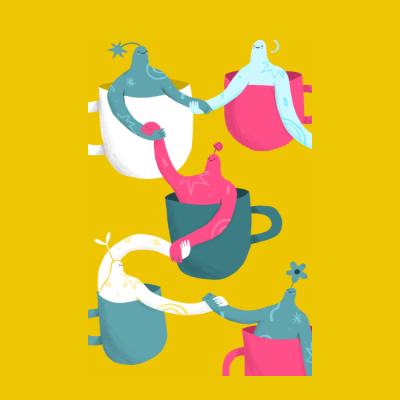
Editorial– Friendship and Sexuality
Friendship – a place where we can be ourselves as we truly are, with no artifice. A place of peace,…
By TARSHI
November 17, 2025
Editorial: Support Systems and Sexuality
Connection is essential for our survival – physical, mental, emotional and spiritual. We connect with people, form networks of care and support, and in a sense weave webs of safety and comfort that we can turn to when stressed or simply want to infuse a dose of joy into our day.
By TARSHI
November 16, 2020
Editorial: Sexuality and Self-care
Continuing with our theme of self-care being about sustaining ourselves, our work, our movements, keeping the fires lit, and relating with love to ourselves, in our mid-month issue we bring you more articles looking at self-care from different perspectives – individual, queer, activist, collective, organisational, not necessarily separated, or in this order, of course.
By TARSHI
July 19, 2021
Editorial: Sexuality and Pleasure
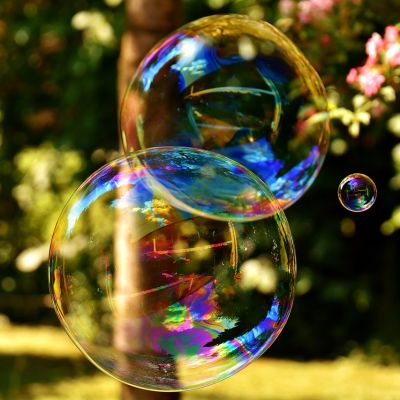
Fragile and fleeting like soap bubbles, pleasure shines with many colours. But its iridescence is frightening for many. Perhaps because its colours change in unpredictable and uncontrollable ways, and though fragile and fleeting, it is a world in itself
By TARSHI
February 17, 2020
Editorial: Representation and Sexuality
We are, all of us, trying to hold steady, and to hold space for each other and for ourselves. And so, instead of trying to put together a collection of ‘all new’ articles, this time we are republishing some ‘ever fresh’ ones on the theme of Sexuality and Representation.
By TARSHI
June 15, 2021
Editorial: Intimacy and Sexuality
In our mid-month issue, Rahul Sen writes of the impossibility of intimacy, of the gnawing pain and underlying cruelties it may unsheathe and how it is at best an illusion while Pavel reminds us of how, in our search for intimacy, we keep bits and parts of our lost loves and they keep parts of us, and how through being loved by them we learn also to love ourselves.
By TARSHI
February 15, 2019