friendship

Two Poems: ‘Only sometimes’ & ‘No filter’
Only sometimes Sometimes my love is as expansive as the earth itself Patient None of the restlessness of a…
By Carol D'Souza
May 3, 2022
Dancing around each other: Conversations with a Tween
As a generation X-er I grew up in a world that was challenging sexuality but only encountered the instability of gender as an adult in radical new academic texts which were not then yet part of our everyday narratives. My daughter born between Gen Z and Gen Alpha is growing up in a world of gender fluidity and multiple pronouns.
By Shilpa Phadke
March 15, 2022
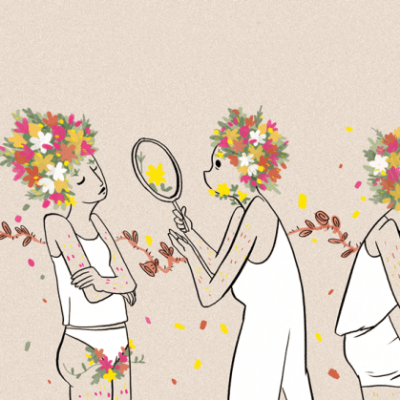
Loving My Dysfunctional Body: Lessons In Self Love After A Decade Of Self-Loathing
My body presented to me the first paradox in my feminism that I would encounter. How could I claim to be a feminist if I was not proud of the body I was born in? My advocacy as a sixth grader seemed to fail when it came to my own self.
By Feminism in India

‘A Promise to Stand By’: The quiet feminism of Nathicharami
Nathicharami takes sexuality and sexual desire away from upper-class, Gucci-clad women and makes its viewers acknowledge its existence in the lives of women (middle-class wives and widows, in the case of this film) who are invisibilised, both in the society they live in and as subjects of popular content.
By Srishti Gupta
What Polyamory is and what it could be
Practicing polyamory comes with the struggle of breaking down value systems and non-acceptance that may lead to ostracism not only from the heterosexual world but also from the queer and trans community. Claiming oneself as queer depends not only on how one identifies, but also, in society’s eyes, on who one’s partner is; being single does not qualify and neither does being polyamorous as the latter is considered ‘non-serious’.
By Abhiti Gupta
February 15, 2022
On the Sustainability of (Non) Romance
Contemporary and predominant imaginations of intimacy focus primarily on a sex-centric (romance-centric?) model which assumes that sexual desire exists and holds the same value for every person and every relationship regardless of their subjective positions. Sexual intent and desire are often the cruces of how relational aspects such as intimacy are socially constructed.
By Fariha Sameen
February 15, 2022
Friendships, or, That in which we decouple coupledom from the economies of marriage
I was not simply stuck within the binaries of “same-sex” or “opposite sex,” assuming that any reference to “same-sex” is in itself already revolutionary. But the call to recognise friendship, is a call to recognise so many forms of community that are made invisible by the emphasis within a liberal or conservative framework on “marriage” as the only path to family making.
By Shweta Krishnan

On Looking for Love
I wanted to be one of those people who decide to never date again and actually follow through. Indeed, I decided that a lot. A resolution that was broken so many times that it became a running joke in my head.
By Wesley D'Souza
February 1, 2022
Editorial – Sexuality and SISA Spaces
We envision SISA spaces as non-judgmental, inclusive, rights-based and affirming spaces wherein people’s sexuality, their identities, wellbeing, choices, desires and pleasure are respected.
By TARSHI
January 3, 2022
Interview: Shruti Arora
There may already be another organisation in the community to share resources with but for community-led initiatives, a shared perspective on Safe, Inclusive, Sexuality-Affirming (SISA) spaces is also important. Sometimes when the shared perspective is not there, that becomes a challenge.
By Shikha Aleya
January 3, 2022

Navigating love, loneliness and singlehood
The desire for intimacy might rob one of the intimacy that one shares with oneself and thus, being with the beloved can leave one feeling even lonelier because of the continuing struggle for validation and comfort.
By Anonymous
January 3, 2022

The Birds and the Bees: On Play and Sexuality
How would we see the world really, if we were open to the idea that it is not purpose but play that drives us to seek companionship, be it an orchid seeking a pollinator or a human seeking another?
By Shweta Krishnan
December 1, 2021

Interview – Manak Matiyani
As we grow older, moral codes, conventions of appropriateness and shame, and the utilitarian and income-focused education we get make us lose that stability. The idea of play to me is about bringing back that ability and comfort into the lives of people so that they can actually play.
By Shikha Aleya
December 1, 2021

Burnout, Boundaries, and Better Self-Care
My self-care journey has only just begun and I have a long way to go. I do have bouts of self-doubt, anxiety, and panic, and I still go through periods of feeling overwhelmed. However, more than anything, I have learnt that self-care, for me, is a subversive act, and caring for myself gives me the strength to challenge the status quo and play my part in social justice movements.
By Devika
July 19, 2021
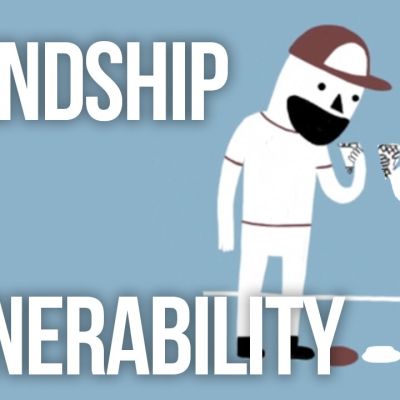
Video: Friendship & Vulnerability
We are often told to speak to ourselves as we would to a friend, gently and lovingly. At the heart of friendship is vulnerability – a radical acceptance of oneself and another for who we truly are, the glowing and beautiful, as well as the dark and crooked.
By Curated Content
April 5, 2021