Feminism

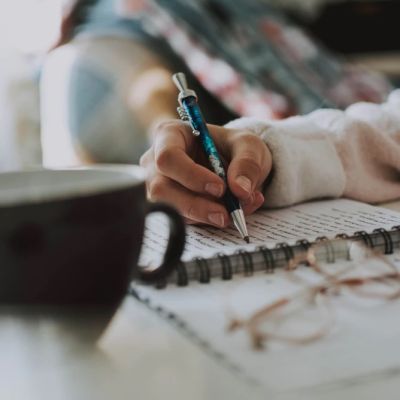
Dear Diary: The radically feminist creative journalling practice that nobody talks about
My journal has many entries that are speculative and fantastic. Writing about the mundane leads me to question the way the world operates and from there I frog-leap into a world of ideas where I imagine a radically different way of being. In my journal, I imagine a politics of care, community, and compassion. I become grand, valuable, and unstoppable, even in a world where I am sometimes made to feel small.
By Sheena D'Lima
On Confinements & Coexistence: Perspectives on the Impact of Covid-19 on the Mental Health of Women
Pandemics have a profound psychological impact. They are known to disrupt one’s sense of safety, security, certainty, control, concordance, and…
By Ansha Patel
From Judy Blume To The Sexy Internet: What Counts As Erotica?
This question of appropriateness is, for me, at the heart of all questions around sexuality. Each of us carries within us our own private benchmarks for which expressions of sexuality we find appropriate, and which ones, in turn, have crossed an invisible line. The ones we believe belong across the border, in the land of the inappropriate, of the too much.
By Richa Kaul Padte
Probing the Screen: Pleasure in the Virtual World
The virtual world allows me to challenge the hold of patriarchy on my ‘effeminate’ body; in a sense, it allows me to evade the policing of desire that my body shares with another, its flows and slippages, the messy and the unkempt. While virtual sex offers a window to revisit the sensual, it is also not immune to limitations and insecurities.
By Neel
June 15, 2021
Issue in Focus: The Heart of Being
To chase down our own vulnerabilities around sexuality is a short run around the corner, five minutes ago, last night sleeping alone, with a lover, a partner who lost interest, the Insta post that leaves you feeling you’re not good enough for the hug, the kiss, the cuddle and are you perhaps the A of LGBTQIA+?
By Shikha Aleya
April 19, 2021
Should I Say I Love You?
Being vulnerable helps boost our self-esteem and self-worth by pushing us out of our comfort-zone. It provides us with an opportunity to overcome obstacles and reach deep down within ourselves to find strength and confidence to keep going even when the odds are against us.
By Shubham Ranjan
April 19, 2021
Vulnerability and Romantic Relationships: My Struggles Navigating These Spaces
It took me some time to realise how important being vulnerable or, for that matter, being vulnerable during sexual engagement was for me to have great sex and how empowering it is for my sexuality. After much thought, I decided to open up to my partner about my past experiences and other things I never used to openly talk about.
By Grishma Trivedi
There I sat down and wept
“Be yourself, Sarah. Awkward smiles, empty silences, weird laughter, and all. It’s just a part of being human. Loving someone physically is never not awkward. Even if it’s a monogamous relationship. It’s only the comfort of familiarity that makes you think otherwise.”
By Anna Lynn
April 19, 2021
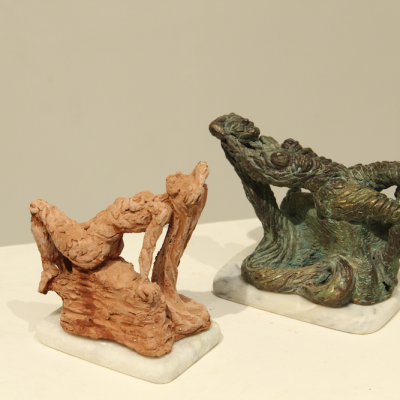
Reclining Vulnerability
Through multiple maquettes, I finally came across (since I myself did not know what the result of the form or figure would be) the Reclining Lady. She represents confident femininity and vulnerability. The feeling one has after taking a bath and sitting in the nude, drying oneself in unabashed nakedness.
By Noella Fernandes
April 19, 2021

Interview – Indu Harikumar
I was watching something recently that said it was a bad thing to be vulnerable, but I don’t think it is a bad thing. I do see that there is a certain amount of power in vulnerability, it also needs courage, in my experience.
By Shikha Aleya
April 5, 2021
Spinning Straw into Gold: Older Womxn Celebrate Sexuality and Spirituality
The most satisfying spiritual and sexual experiences I’ve had were not in my twenties, thirties or even forties. They have been in my 50’s. The most insightful spiritual insights, and the most orgasmic orgasms have both arrived in middle age.
By Nighat Gandhi
Editorial: Femininities and Sexuality
Are certain forms of femininities denigrated more than others? Not just by misogynists but also by feminists? Is there a particular way of manifesting an ‘appropriate’ femininity, one that is just right, and is not ‘too girly’ or ‘too tomboyish’?
By TARSHI
December 15, 2020

Tomboy Femininity
When I finally came out to myself at age 16 and made it to a free queer youth space, I couldn’t wait to be accepted among folks who didn’t play by society’s heterosexist rules of masculine and feminine as polar opposites.
By Di Sands
December 1, 2020
A ‘girly’ feminist
Desiring motherhood meant veering into a more ‘girly’ territory, a notion that I had simultaneously been fighting and trying to embrace since childhood. I had understood that to be a feminist I had to be independent, be wary of men, dislike families and relationships.
By Anubha Sarkar
December 1, 2020
Biscuit tin
I keep on hold the colours and prints to wrap you in gentle delicate flowers or little cartoon lions and boys with fists that say Bam and Super / until I know what lies between your legs the cigar or the smile of consolation if you’re the first
By Shikha Aleya
December 1, 2020