consent


Kun Faya Kun: Embodying Non-Conformity
For a queer person, or for someone who remains single by choice, everyday existence requires strength and will. That is the embodiment of kun faya kun as a personal philosophy: to manifest the person you want to be through sheer will.
By Ghausia Rashid Salam
February 1, 2021

John Norman’s series of Gorean fiction and his representation of sexual slavery
My formative years in BDSM[1]were heavily influenced by a series of books called Chronicles of Gor written by an author…
By Asmi

It’s not ‘just’ play!
Play is not only about cocks, balls, vaginas, paddles, or anything that happens between two consenting adults in the bedroom. It’s also about what goes on in a masochist’s mind before they submit to a cane, or a whip, and before they orgasm from the pain.
By Asmi
December 1, 2021

Issue In Focus: Sexual Rights
It may be useful to visualize sexual rights as a large tree with deep roots and a vast canopy of…
By Radhika Chandiramani
December 1, 2013

Issue in Focus: My right to say ‘yes’ and my right to say ‘no’
Women in our societies largely do not have any acquaintance with the word ‘consent’, but they are very familiar with…
By Sumati Panikkar
February 1, 2014

Issue In Focus: Challenging Neo-liberal ‘Equality’ in Consent
In an ideal world, this article would read at Tweet-length: “Enthusiastic sexual consent is sexy, and necessary for negotiating unequal…
By Kristin Francoeur
November 1, 2015

Interview: Vidya Reddy
On Jan 1, 2014 when I met Vidya Reddy, one of TULIR’s co-founders, for an interview on consent among teenagers…
By Shweta Krishnan
February 1, 2014

Interview: Sharanya Manivannan
If you are true to yourself, and attuned to your emotions and needs, you’ll invariably find that even a core belief (such as: not believing in the institution of marriage) is complicated by what the lived experience of that means (not only discriminatory experiences, but also intimate ones).
By Shikha Aleya
February 1, 2021
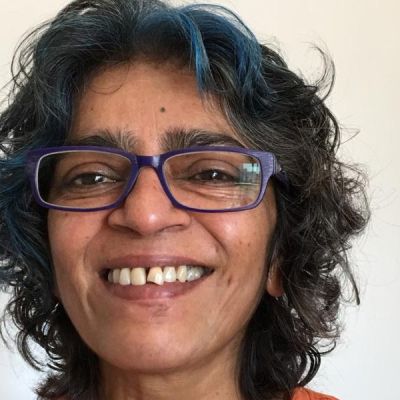
Interview: Radhika Chandiramani on What Self-Care and Sexuality Have to Do With Each Other
Sexuality and self-care are related at many levels, right from the level of knowing what you want and what you don’t, how you feel about yourself, how you are able to communicate your desires and how you are able to enjoy your experiences.
By Anjora Sarangi
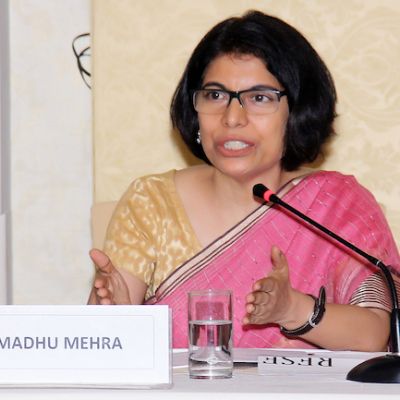
Interview: Madhu Mehra – Part 1
In this issue of In Plainspeak, we interview Madhu Mehra, lawyer and feminist activist. She is a founding member and the Executive Director of Partners for Law in Development (PLD), a legal resource group on women’s rights.
By Shikha Aleya
July 2, 2018

Interview: Food and Sexuality Via Email with Radhika Chandiramani
Radhika Chandiramani founded TARSHI in 1996. She is a recipient of the MacArthur Fellowship for Leadership Development and the Soros…
By TARSHI Team
October 15, 2015

Interview – A reflective self-questioning
It is true though that ageing has brought home realities about my body that I ignored when I was younger. It has made me mindful of what I value, and what I choose to let go of, without too much of thought or unnecessary angst.
By Shikha Aleya
March 1, 2021

Interview – Srinidhi Raghavan
Disabled people might not have many spaces where they can speak openly about their sexual experiences or even sexual curiosity. There is a heavy monitoring of disabled young people especially, and this can mean that exploration, which is often how many of us discover sexuality, can be limited. Moreover, since the experiences of disabled people are not seen in popular media such as films, we can (and probably do) imagine we will have the same or similar experiences as non-disabled people – which is often not possible.
By Shikha Aleya
August 2, 2021

Interview – Raj Mariwala
Self-care is influenced by the environment we inhabit, the way we relate to others, the way we negotiate with other living beings or structures. Self-care is also interlinked with other types of care – whether that is in community resources, psychosocial support, engagement with medical and health care institutions, and of course in collective agency and solidarity.
By Shikha Aleya
July 5, 2021
Interview – Raj Mariwala
Self-care is influenced by the environment we inhabit, the way we relate to others, the way we negotiate with other living beings or structures. Self-care is also interlinked with other types of care – whether that is in community resources, psychosocial support, engagement with medical and health care institutions, and of course in collective agency and solidarity.
By Shikha Aleya
January 3, 2023