Comprehensive Sexuality Education

Of Giggles, Whispers and Embarrassed Teachers : The ‘Sex-Ed’ Classes That Taught Us Nothing
By Nishtha Relan This post is part of TARSHI’s #TalkSexuality campaign on Comprehensive Sexuality Education in collaboration with Youth Ki Awaaz. I remember an…
By Curated Content

Of Curvy Women And Rugged Men: The Endless Search For ‘Ideal’ And ‘Desirable’ Bodies
By Shambhavi Saxena This post is part of TARSHI’s #TalkSexuality campaign on Comprehensive Sexuality Education in collaboration with Youth Ki Awaaz. Various forms of media have…
By Curated Content

Not Delulu but Doable: The Ecosystem Giving us Hope for CSE in India
There are individuals, collectives and organisations that are doing their best to create an ecosystem that supports the education of children on gender, sexuality, health, consent, safety, relationships, self-esteem and confidence in themselves.
By Vani Viswanathan
December 16, 2025
No Birds No Bees
Aria walked into her school’s auditorium, giggling with the rest of the girls, because they were about to have their very first Sex Ed workshop.
By Aradhana Phadke Sardesai
December 18, 2024
My Sexuality is My DIY Project
I often imagine if I had been able to access friendly and empowering comprehensive sexuality education from my childhood, how different my life would have turned out to be.
By Surbhi Bhalla
August 25, 2023

My CSE Sundays
CSE survives in information as well as in the values that carry it forward.
By Khushi Kaushal
December 16, 2025
Musings of a Sexuality Educator
To be a support system is to be a safe space for them where they can reflect upon, experiment with and understand themselves. A space where people not only come to terms with their individual selves, sexual or otherwise, but also where they become increasingly aware of their own rights.
By Anannya Chatterjee
November 2, 2020

Ms. Pleasant Gets Stubborn
… spaces led by the desire to not just protect but also educate all who connect with children…
By Reema Ahmad
December 16, 2025
Learning To Pause and Reflect At CREA’s Sexuality, Gender and Rights Institute
I recently had the wonderful opportunity of attending the seven-day Sexuality, Gender and Rights Institute (SGRI)* organised by Delhi-based organisation…
By Deepa Ranganathan
Journey from Stigma to Pleasure
For a long time, female bodies were considered similar to male bodies, just shorter, and most research and medical trials focused primarily on the male body with the assumption that the same would work on the female body.
By Pooja Singh and Ramneek Banga
August 14, 2020
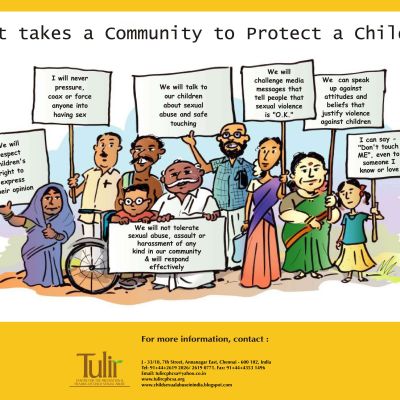
It Takes A Community To Protect A Child
[slideshow_deploy id=’5400′] TULIR uses these posters in their advocacy work to prevent sexual violence against children. These posters address children…
By TULIR CPHCSA
February 15, 2015

February 1, 2015
Interview – Comprehensive Sexuality Education
We requested some sexuality educators to speak on some of the priorities they identify, and also to share directions towards possible ways that could move us forward together in the Comprehensive Sexuality Education landscape, keeping in mind that there are many different constituencies and interest groups involved.
By Shikha Aleya
August 25, 2023

Interview – Anindita Kargupta
Young people make better choices when they understand consequences, boundaries and respect – not when they are kept in the dark.
By Shikha Aleya
December 16, 2025

Interview – Dr. Sangeeta Saksena
Lived experience cannot be overlooked. It is the ultimate teacher.
By Shikha Aleya
December 16, 2025