bodily autonomy

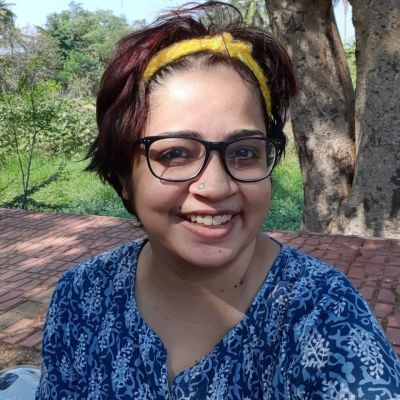
Interview – Srinidhi Raghavan
Disabled people might not have many spaces where they can speak openly about their sexual experiences or even sexual curiosity. There is a heavy monitoring of disabled young people especially, and this can mean that exploration, which is often how many of us discover sexuality, can be limited. Moreover, since the experiences of disabled people are not seen in popular media such as films, we can (and probably do) imagine we will have the same or similar experiences as non-disabled people – which is often not possible.
By Shikha Aleya
August 2, 2021
Camouflage
I cannot let anyone see the stretch marks, the cellulite, the saggy breasts. I cannot reveal my hideous body. I feel anxiety well up inside me even as I visualise this eventuality. I read about ten ways for a fat person to have meaningful sex. I learn that throwing a cloth over the bedside lamp will help hide my flaws.
By Sharada Vinod
August 2, 2021
Violation of Sexual and Reproductive Health Rights (SRHR): Where are the Women With Disabilities?
What vindicates the argument that women with disabilities (WWDs) should be deprived of sexual and reproductive healthcare and rights is scary. Harmful stereotypes of WWDs include the belief that they are hypersexual, incapable, irrational and lacking control. These narratives are then often used to build other perceptions such as that WWDs are inherently vulnerable and should be ‘protected from sexual attack’.
By Smruti
Despite all odds
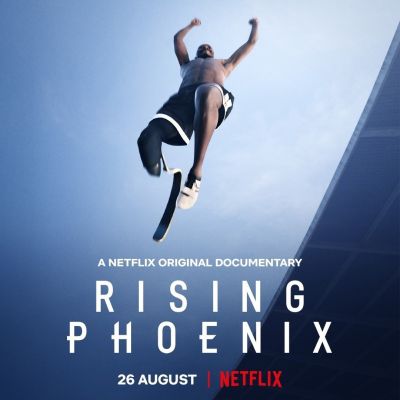
In the spirit of the Games, I watched the Netflix film Rising Phoenix which documents the history of the Paralympics and its impact on the world in making visible the topic of disability. It also tracks the personal and professional journey of some of the top Paralympic athletes who share their challenges, frustrations and motivations.
By ElsaMarie D'Silva
August 2, 2021
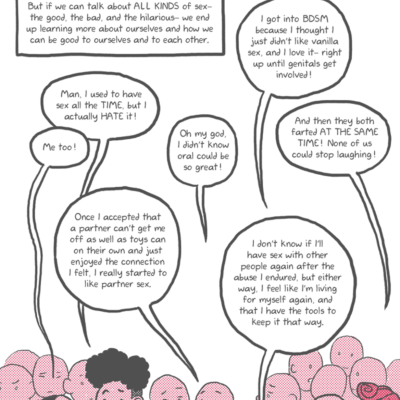
Brushstrokes: Who We’re Leaving Out of Sex Positivity – And How to Make It More Inclusive
Everyday Feminism’s comic illustrates the complexity and diversity of sexuality, revealing how sex can sometimes be pleasure-affirming and sometimes not, and asks us to talk about ALL KINDS of sex – the good, the bad, and the hilarious.
By Curated Content
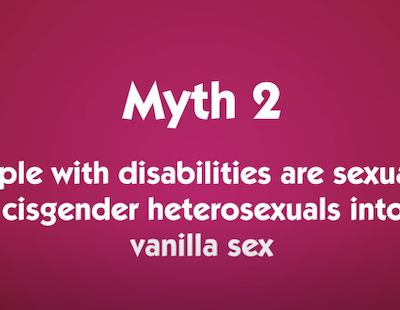
Video: Disability and Sex
Dr. Lindsey Doe debunks myths around disability and sexuality, at once carving out space for affirming and inclusive discussions and challenging negative and harmful stereotypes. Emphasising the sexuality of people with disabilities as rich and diverse, Lindsey wonders what inclusive sexual and reproductive health and rights really mean.
By Curated Content
August 2, 2021
Swipe me left, I’m Dalit
Dalit women are primarily viewed as victims and survivors of various kinds of violence. Reification of the Dalit identity has led to the boxing of our existence whose dimensions are solely defined by the savarna (dominant caste) gaze. Our self-assertions of identity are commodified to create a warped limiting of our lives, creating an image that is voiceless in the minds of our potential suitors. We are not seen as being capable of desire, love or happiness; we don’t exist as individuals outside of violence.
By Curated Content
June 15, 2021
Is Digital Colonisation Redefining the Understanding of Agency, Bodily Autonomy, and Being Human?
Apart from systematic exclusions faced by individuals, evidently the mandatory use of a biometric-based digital ID has also reshaped the understanding of an individual’s agency and right to bodily autonomy. Gender and sexuality seem to no longer be matters of an individual’s right to privacy. With digitisation, disclosure of one’s gender and sexuality has become a hindrance to accessing one’s rights.
By Brindaalakshmi K
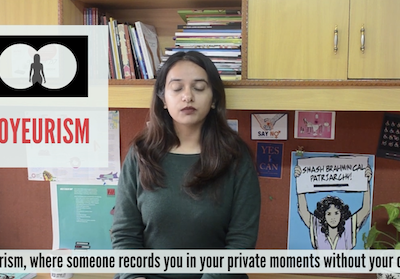
Video: How Can Women & Non-Binary People Combat Online Violence?
Japleen Pasricha, founder of Feminism in India, lays bare the violence women, LGBTQIA+ folks, and historically marginalised communities face in online spaces, ranging from identity theft, bullying, trolling, to having our private photographs and details disseminated without our consent and being blackmailed.
By Feminism in India
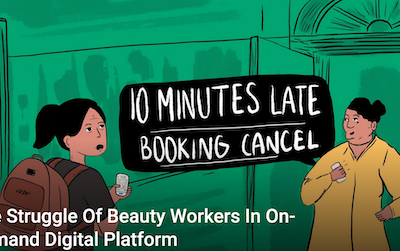
The Struggle Of Beauty Workers In On-Demand Digital Platform
If you live in an urban metropolitan city, you must have seen women dressed up in company uniform, carrying a heavy bag on their shoulders, their attire shouting a brand name with logos all over her. Their bodies become an advertising ground for a company’s marketing. Sometimes, the bag is a portable salon that they carry to their client’s (home), who book the beauty service using a mobile application. These ‘workers’ enroll themselves on the platform company that operates as an intermediary, to get bookings on-demand.
By Feminism in India
On TikTok, the Party Don’t Start Till These Women Walk In
But TikTok is giving young people – particularly women – in South Asia a new avenue to showcase their talents. While for the majority of women using the app their fame is exclusive to TikTok, an increasing number are able to use it to get paid work. And for many, the platform represents a scarce opportunity for bodily autonomy, and a chance to carve out space as a performer in the face of film and fashion industries that shut them out.
By Curated Content