Activism

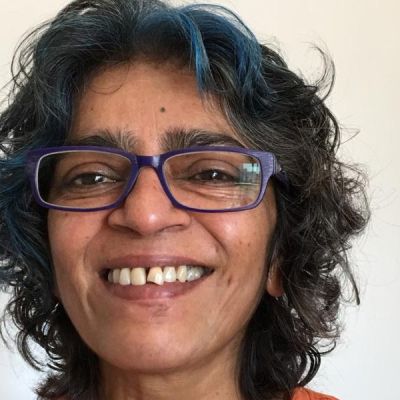
Interview: Radhika Chandiramani on What Self-Care and Sexuality Have to Do With Each Other
Sexuality and self-care are related at many levels, right from the level of knowing what you want and what you don’t, how you feel about yourself, how you are able to communicate your desires and how you are able to enjoy your experiences.
By Anjora Sarangi
Interview: Marevic ‘Bing’ Parcon on Activism and the Development Agenda
Marevic Parcon or Bing, as she is known, is the Asia Programme Officer for the Women’s Global Network for Reproductive…
By Shweta Krishnan
September 15, 2015
Interview: Diversity and Sexuality – Part 2
Here, in Part 2, each interviewee addresses aspects of sexuality and diversity from their own particular space of personal knowledge, as well as work, advocacy, art and activism across diverse fields.
By Shikha Aleya
May 15, 2019

Interview – A reflective self-questioning
It is true though that ageing has brought home realities about my body that I ignored when I was younger. It has made me mindful of what I value, and what I choose to let go of, without too much of thought or unnecessary angst.
By Shikha Aleya
March 1, 2021

Interview – Srinidhi Raghavan
Disabled people might not have many spaces where they can speak openly about their sexual experiences or even sexual curiosity. There is a heavy monitoring of disabled young people especially, and this can mean that exploration, which is often how many of us discover sexuality, can be limited. Moreover, since the experiences of disabled people are not seen in popular media such as films, we can (and probably do) imagine we will have the same or similar experiences as non-disabled people – which is often not possible.
By Shikha Aleya
August 2, 2021
Interview – Raj Mariwala
Self-care is influenced by the environment we inhabit, the way we relate to others, the way we negotiate with other living beings or structures. Self-care is also interlinked with other types of care – whether that is in community resources, psychosocial support, engagement with medical and health care institutions, and of course in collective agency and solidarity.
By Shikha Aleya
January 3, 2023
Interview – Raj Mariwala
Self-care is influenced by the environment we inhabit, the way we relate to others, the way we negotiate with other living beings or structures. Self-care is also interlinked with other types of care – whether that is in community resources, psychosocial support, engagement with medical and health care institutions, and of course in collective agency and solidarity.
By Shikha Aleya
July 5, 2021
Interview – Jyotsna Siddharth
Our bodies are the vessels through which we feel, emote, work or navigate our societies and the world at large. Our bodies are the real, live archive of everything we have experienced and they have borne the consequences of our social conditioning and decisions.
By Shikha Aleya
June 16, 2023
Interview – Amba Salelkar
But not every issue of discrimination and conflict can go to a court.Say for example, affording privacy to a young adult with disability to understand their body and sexual responses, or enabling them to access accessible sex toys or assistive devices related to sexual pleasure.
By Shikha Aleya
September 1, 2020
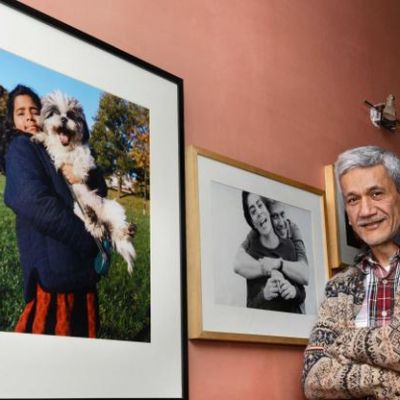
Interview – Sunil Gupta
Sunil Gupta is an artist, activist, and a curator, based in London UK. In this interview, he talks to Manak…
By Manak Matiyani
July 1, 2014
In conversation with Sheema Kermani
Sheema Kermani is a cultural activist, theatre practitioner, theatre director and a known Pakistani exponent of Indian classical dance. She had studied Bharatanatyam…
By TARSHI
July 1, 2014
In Appreciation of Singlehood
Growing up, for me, has been about accepting that the loneliness and sadness woven into the fabric of my being do not go away with entering conventional arrangements like monogamous relationships or marriage.
By Siddhi Pandey
February 1, 2021
If Mountains Can Move …
Language itself is being plugged as a resource, to be shared with those who share similar politics, or if not, at least to move them along in that direction. And people who speak, think, love and live differently are targeted as “the other”.
By Nandini Rao
June 17, 2025
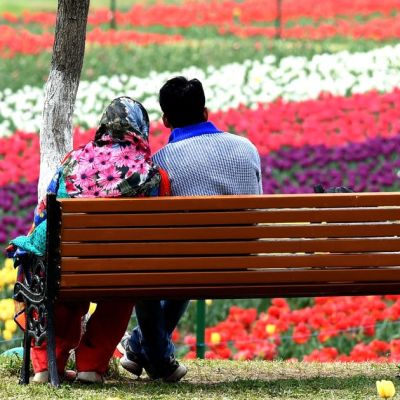
How young Kashmiris are finding love in the time of conflict and curfew
The internet is playing a major role in activism in the Valley, and love and relationships too Onaiza Drabu Since…
By Curated Content
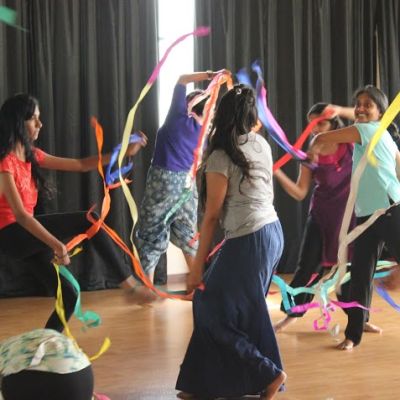
Finding Your Feet – Journeys within Dance Movement Therapy
This is a good enough place to begin. From inside your own skin. Before we could speak, we moved. We…
By Arpita Bohra