Today, with the digital boom, a huge influence on what is considered masculine is dictated by popular culture and media. For young men, navigating their experiences and emotions, popular social media creators like Andrew Tate, Elvish Yadav and Dev Tyagi who advise them on being an ‘Alpha male’, dating, self-improvement and ‘taking back control over their lives by dominating women’, are appealing. Many find role models in the ‘Angry Young Man’ in heroes from films like Animal (Ranbir Kapoor) and Kabir Singh (Shahid Kapoor). Much of the hate content being propagated in the digital world, is directed towards young men and boys, who feel outcompeted by their female counterparts. And many find resonance and comfort in the beliefs and concepts peddled by this ‘manosphere’, which validates their aggression, as a necessary tool to ‘survive’.
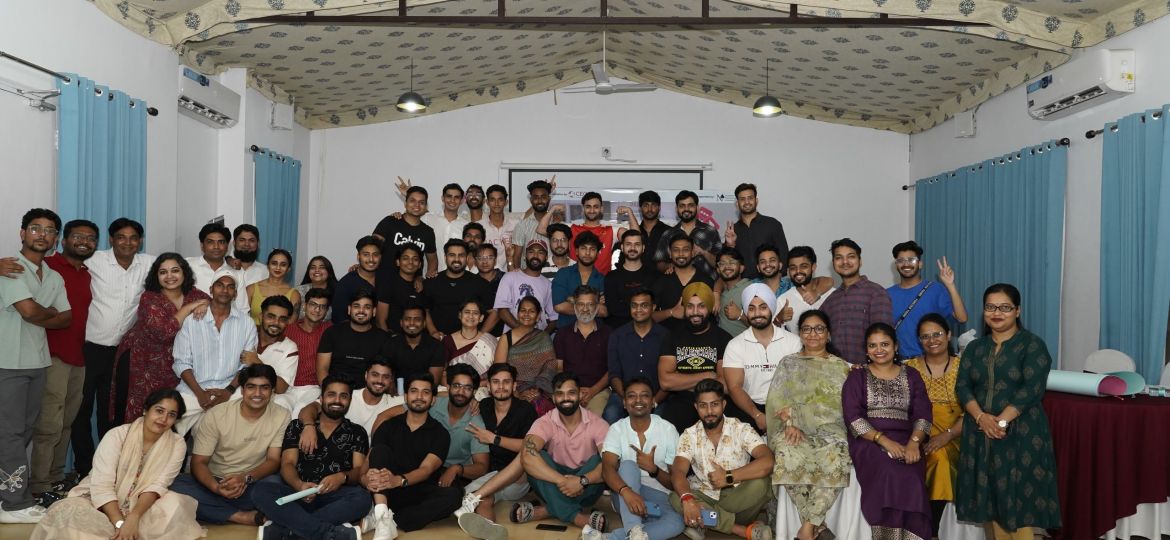
Expanding CEQUIN’s masculinities work, in August 2024, we launched ‘#MardonWaliBaat – Unlearnt & Rescripted’, a powerful digital campaign and leadership journey with 40 male, youth micro-influencers across North and Central India, to create socially responsible content and narratives on positive masculinities, highlighting the equal role of men in fighting gender based violence. Mardon wali baat literally means ‘men talking to men, and about them’. The campaign aimed to engage young men in conversations and redefine masculinities beyond aggression and violence. Starting out as a bold experiment, across 10 months, ‘first time’ influencers created deeply authentic content and led meaningful conversations on safe cities, mental health and well-being, gender-based violence and virtual violence, positive masculinities, inclusive workplaces, intergenerational masculinities, carework, consent and other topics.
This unique campaign helped me, Mariyam, understand a different point of view – masculinities ‘by and for men’.
The young male influencers in the campaign helped me unlearn many things, like being aware of our own gaze towards men, and that it’s critical to challenge our own cynicism while engaging with men and boys.
Being a “raging” feminist always came with a lot of anger towards Patriarchy, Systems and Men, because of my unpleasant and disappointing experiences with and around men. The constant annoyance of ‘adjusting oneself’, one’s behaviour – whether in public and even in private spaces – just to be safe and avoid any kind of violence, is really exhausting. I’ve always carried this anger and cynicism towards men. I felt justified in carrying this rage, because everyday I could see the violence, that we, as women and other vulnerable genders, and men themselves, would face at the hands of other men. But did I mention that carrying this rage, a hyper- awareness and constant worry for my safety brings a lot of thakawat on my shoulders – an internalised exhaustion that most women have known all their lives?! How amazing it would be to just slip into that quick nap in my auto while heading back from work, without any worry, enjoying the breeze, without needing to constantly adjust my dupatta.
In the beginning, convincing a room full of 40 young men, influencers, that gender-based violence is not just a women’s issue was challenging and intimidating. As an anchor of the campaign, slowly and unknowingly I started questioning my own cynicism. Our process entailed working on detailed monthly briefs, unpacking the themes together, brainstorming content ideas, prompts and curating resources to share with the influencers. Most of them struggled to grasp what we were trying to do. For some it was ‘business as usual’, while others took a deep dive, integrating the themes and messages into their respective niches like travel, fashion, entertainment, health, comedy. But the process wasn’t just about unpacking and redefining masculinity, it was also about unpacking and redefining the bias towards men, my bias towards men.
Through the eyes of these 40 men, I could reflect on the ‘burdens’ men carry and never share with anyone, least of all with their close ones. I could see that the same patriarchy which affords them privileges, also costs them dearly – with demands to be tough and “man up”.
Placing themselves in progressive gender politics, can be confusing and even hostile, for men. But where do we start? How do we talk to men about masculinity and gender-based violence? It was clear that some themes resonated more than others, with audiences. ‘Mard Aur Jazbaat’, men’s mental health – a reel on a man struggling to open up by Saurabh (Farq Hain), or Harshit asking people to normalise men asking for help, and Keshav talking about how being vulnerable as men doesn’t make you weak, gained huge traction, and opened doors for ‘unexpected’ digital conversations in DMs and comments. Fitness influencers like Ashish spoke of breaking gender stereotypes in the gym, others like Harjot showed men playing an equal role in care work and challenged derogatory terms like ‘simp’ by showing men who are comfortable with successful partners in a marriage. Some like Amit Gurjar questioned the space for queer masculinities in heteronormative frameworks, Katiyar Singh built awareness on bystander intervention in gender-based violence.
Some influencers kept their audiences hooked through open taglines – like Saurabh who made a part 2 reel of his video ‘Farq Hain’, only this time instead of men’s emotions, it spoke about the burden of care work on women. The theme of intergenerational masculinities, where influencers like Prateek and Shubham reflected back on their childhood, was deeply personal, and struck a chord with many audiences.
Nida’s thoughts about this:
We could see the tangible change through the content over the months, shifting from ‘grandstanding’ statements on women’s equality to deeply personal, nuanced and often conflicting narratives on many masculinities. And while they built perspectives on gender, they also honed their skills as storytellers, crafting thought-provoking short stories, mixed with humble reflections, facts, observations or humour, about everyday real examples of men navigating masculinities with themselves, with other men and in society at large. The more we saw, the more we were convinced that we must break the notion of a singular masculinity. And to really talk to men, we need to ‘call them in’, not just ‘call them out’.
Many applauded the influencers for taking the lead in holding these conversations, for this unique and ‘unheard of, novel’ digital campaign, sharing how it is the ‘need of the hour’.
“Finally, someone is talking about it! The kind of content I pay my internet bills for!”
“This really needs to continue, and it would be great if popular influencers and actors answered this call”
“Men need to become much more aware of themselves”
“Apna channel pivot kar diya bhai ne!”
“So happy to see you talk about things which men aren’t able to communicate and express. Thank you for opening your heart and sharing this beautiful message”
But many experienced a backlash with a drop in their follower count, many questioning why they’re suddenly talking about gender equality, with some even being doxxed and threatened about ‘being taught a lesson’ for speaking out.
“Gender equality is a joke in today’s world no matter what you do there won’t be any equality.”
A huge success, the campaign has gained massive traction, engaging over 14 million people, establishing these young men as role models and advocates for alternative masculinities, not just in the digital space, but also in their families, peer groups and intimate relationships. There was a buzz across major media about this novel campaign where men were talking to other men about GBV. CEQUIN’s National Conference on Masculinities and Gender Based Violence in 2025 and the campaign film Mardangi Reloaded put these influencers centre stage, with organisations, UN agencies, funders, academics and policy makers echoing the need to engage with men and boys at a national level. For the influencers, even if they were able to inspire one person in their communities to think, reflect or change, the campaign had done its job. And for us, having created a safe space where tech savvy ‘hustlers’ like influencers could recognise and harness their power as changemakers – to truly ‘influence’ people to imagine new masculinities – was a success. And the fact that these young men had become more vulnerable in their digital and personal spaces, challenging gender roles and stereotypes at home, in their personal relationships, contributing to care work, advocating being an ally to other genders was a reaffirmation that this works!
“What I didn’t anticipate was how deeply I was impacted by this campaign. As a ‘gender expert’, I believed that I know all that I need to about engaging with young men on masculinities. But this campaign helped me to pause and question my own biases and sit with the discomfort of the ‘unknown’, coming out the other side with much more empathy and curiosity.” – Mariyam
“Listening and the need to be heard must co-exist. Men need and are deserving of both. Without this, our efforts towards gender equality are all in vain.” – Nida
In the fast-paced digital world of clickbaits and instant gratification, where you can be ‘cancelled’ or ‘trending’ within the same minute, the very act of men talking to other men about alternative masculinities, has the ability to disrupt hierarchies of power, to disrupt the algorithm, to disrupt patriarchy. The question remains: between #NotAllMen and #Metoo, is there a space where we can pause and talk to men, where they reflect on the ‘oppressions’ imbued in mainstream masculinity, without denying the fact that these oppressions have already been their privileges? A world where men are a part of the solution, not just the problem.
Cover image by Aishwarya Goyal
