
Across the Global South, community-driven technologies are ensuring that floods, heatwaves, and displacement don’t erase reproductive rights.
When a cyclone rips through a coastal village in Bangladesh, the headlines focus on collapsed homes and flooded fields. But quietly, another crisis unfolds: women cannot reach clinics for contraceptives, survivors in crowded shelters face sexual violence, LGBTQ+ youth lose the privacy of safe spaces, and maternal health emergencies become life-threatening.
Climate change doesn’t only melt glaciers or scorch fields, it reshapes our intimate lives. Sexual wellbeing, reproductive rights, and safety are often the first casualties when climate chaos strikes. Across the Global South, communities already at the margins, rural women, Indigenous peoples, queer youth, feel the heaviest impact. As climate shocks intensify, their sexual and reproductive health and rights (SRHR) are threatened in ways that extend beyond the visible losses of food and shelter.
Yet from SMS midwives to floating farms, grassroots innovations are proving that survival is not just about staying alive, but also about protecting the right to love, desire, and dignity. These aren’t high-tech solutions dreamed up in Silicon Valley boardrooms, but grassroots innovations born from necessity and designed by the very people they serve.
Can a Text Message Save a Life?
Sometimes, survival comes in 160 characters. In Cameroon, the Gifted Mom program reminds pregnant women of antenatal visits. In South Africa, MomConnect reaches hundreds of thousands with pregnancy advice in multiple languages, even alerting health workers when appointments are missed. And in Nigeria, the Abiye initiative gave expectant mothers simple phones with prepaid minutes – a lifeline to call an ambulance during labour.
These interventions sound deceptively simple, but when floodwaters cut off roads or droughts isolate villages, a text message can mean the difference between a safe birth and tragedy. They show that resilience isn’t only about food or shelter, it is about ensuring that women’s bodies and choices are not abandoned in disaster.
The Doctor Will See You, On Your Screen
When roads are blocked by floods or stigma prevents women and queer youth from walking into clinics, telehealth becomes a lifeline. In Pakistan, the women-led startup Sehat Kahani runs e-clinics staffed by local nurses who connect patients to remote women doctors, many of whom had left practice after marriage or childbirth. Today, more than 7,000 doctors (90% women) provide care through this model.
This is more than healthcare delivery. It reclaims women doctors for the workforce, provides safe spaces for female patients, and chips away at cultural barriers. Technology here is not an outsider’s fix, it’s a way of repairing broken systems from within.
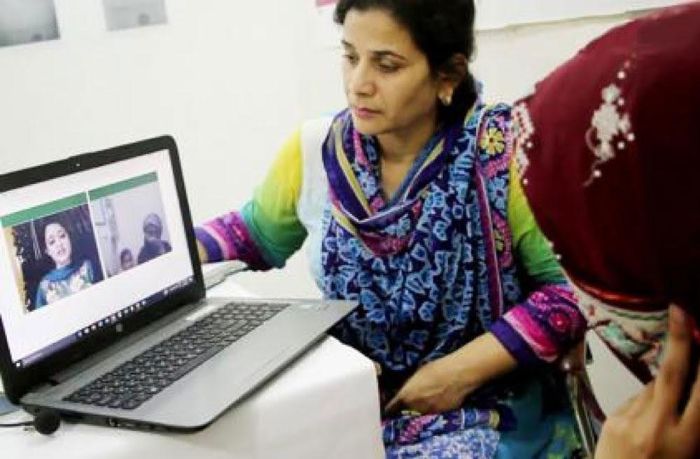
Female doctors are able to consult from their homes via web calls. Credit: Sehat Kahani
During the COVID-19 lockdowns, Bangladesh’s OB-GYN society launched hotlines and teleconsultations, connecting 2,200 doctors with 300,000 patients for family planning, antenatal care, and even safe-abortion advice. In South Africa, Marie Stopes piloted tele-abortion services, proving that even in crisis, women could manage reproductive health safely with remote support.
For LGBTQ+ community, telehealth offers privacy that brick-and-mortar clinics often cannot. Apps and chat platforms have quietly become safe spaces to seek sensitive sexual health information anonymously and without fear. Love, sex, pregnancy, and identity don’t pause when disaster strikes. Telemedicine proves that intimacy can be safeguarded through screens when the outside world becomes hostile.
“Hey Kem, Can We Talk?”. When Chatbots Become Companions
Artificial intelligence is stepping in where human systems fail. In Nigeria, the mDoc project built an SRHR chatbot named Kem, which speaks in Pidgin English and regional languages like Yoruba, Igbo, and Hausa. Youth can text Kem to ask about contraception or STIs, questions they may never ask adults.
In Pakistan, AI Sarosh analyses anonymised health hotline data to predict which callers might face contraception barriers, enabling proactive counsellor support. Argentina’s University of Buenos Aires is building the first AI model to screen for cervical cancer using thousands of local Pap smear images, potentially revolutionising early detection in under-resourced clinics.
These pilot programs point toward AI-augmented community health workers equipped with diagnostic algorithms and virtual peer support. Rooted in regional networks emphasising ethics and equity, they target real needs like teen pregnancy and maternal morbidity without widening digital divides. Yet critical questions remain: Who owns the data? Can marginalised women trust their intimate questions won’t be misused? As climate displacement rises, we must ensure AI companions remain allies, not predators.
From Whispers of Fear to Dots on a Map
Climate disasters often displace women into unsafe shelters and precarious transit routes. In those spaces, gender-based violence spikes. Here, technology has become a tool of resistance.
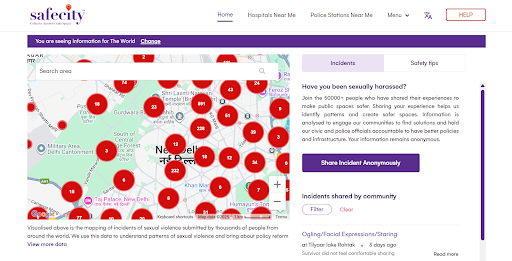
Image source: https://webapp.safecity.in/
In India, Safecity has gathered tens of thousands of harassment reports, giving cities a visual map of unsafe zones. In Kenya, the women-led Flone Initiative launched an app to log harassment on public minibuses and motorbike routes, forcing transport unions to confront abuse in their systems. In Egypt, HarassMap let women anonymously report street harassment, each report turning into a dot on a map that shamed the silence of authorities.
These platforms are owned and used by the community, reports come directly from women and bystanders, often via familiar channels like WhatsApp or Twitter, ensuring accessibility. The impact is two-fold: survivors feel a sense of solidarity and catharsis by voicing their experiences, and simultaneously, the aggregate data compels society to acknowledge and tackle the prevalence of gender-based violence.
Indonesia’s PetaBencana turns social media and chatbots into real-time flood maps, accessed over 259,000 times during the 2020 Jakarta floods. Beyond saving lives, it safeguards SRHR, guiding pregnant women to hospitals, keeping clinics within reach, and helping queer youth or survivors avoid unsafe shelters.
In a climate-stressed world where women are displaced, crowded, and made more vulnerable, such mapping isn’t just digital activism, it is survival.
Turning Floods Into Fields
In the flood-prone delta regions of Bangladesh and India, climate change was wiping out farmlands for months each year, leaving women farmers destitute. But the South Asian Forum for Environment (SAFE) worked with village women’s groups to revive and modernise traditional “floating gardens”.
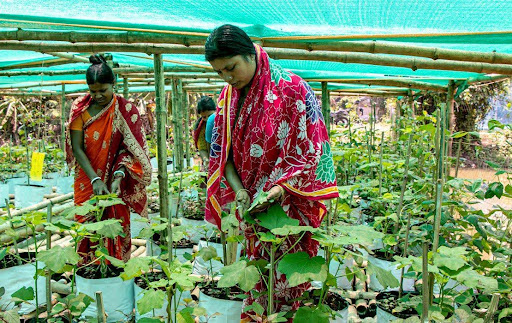
The South Asian Forum for Environment (SAFE) in India trains women farmers on float farming. Photo: SAFE-India
They developed hydroponic floating farms: bamboo rafts covered with potted plants that rise and fall with floodwaters. Women farmers are trained to grow vegetables and fish on these floating plots year-round, ensuring food production even when fields are underwater. Solar-powered cold storage on boats keeps produce fresh, improving incomes.
This innovation demonstrates how traditional knowledge, combined with simple technology and women’s leadership, can build climate resilience while supporting reproductive choices. When women have economic independence, they have greater control over family planning decisions.
Protecting Forests, Protecting Futures
In the Brazilian Amazon, Indigenous communities are blending ancestral knowledge with satellite data through the SOMAI-ACI platform. With 900 trained users safeguarding 33 million hectares, they are often the first to detect fires or illegal mining.
The ecological impact is clear, but so is the intimate one: secure land rights and climate resilience translate into stronger sexual and reproductive health outcomes. Families with stability can resist pressure for large families, plan pregnancies, and make reproductive decisions from a place of security rather than survival. Protecting forests, it turns out, also protects futures.
Healing, One Chat at a Time
Mental health is sexuality’s quiet twin, ignored until crises force it to the surface. In Zimbabwe, the Friendship Bench programme trained grandmothers to offer evidence-based talk therapy on wooden benches. Later, they took the same model online: WhatsApp chats with “Granny Counsellors” providing comfort in Shona or English. In India’s Gujarat, the Atmiyata project turned ordinary women into “psychosocial champions”, offering counselling and connecting neighbours to health or social services. Even basic Android apps helped them track cases and reduce stigma.
These grassroots approaches show that resilience is not just physical. When heatwaves and floods destabilise lives, mental health support is part of sexual wellbeing. Desire, safety, and mental peace are deeply interlinked, and community-driven care is bridging the gaps.
The Blueprint for Resilient Futures
These innovations succeed not because of technology alone, but because they centre the people they serve. Whether it’s Nigeria’s chatbot switching to Pidgin to make users feel heard, or Amazonian villagers co-designing climate apps to answer their real needs, each solution prioritises community ownership and cultural relevance.
When people cannot realise their SRHR, they cannot build resilience, and barriers to SRHR may impede climate action. At the same time, climate change impacts may negatively affect SRHR through interruptions in services caused by extreme weather events.
But the reverse is also true: when communities have access to comprehensive sexual and reproductive health services, education, and rights, they’re better equipped to adapt to climate challenges. Women with economic autonomy can make informed choices about family size and timing. Communities with strong social networks can respond more effectively to disasters.
As climate impacts intensify globally, these grassroots innovations offer blueprints for resilience that are not only effective and cost-efficient, but equitable and inclusive. They embody the principle that those closest to problems are closest to solutions – and that technology, when designed with love and local wisdom, can transform both climate adaptation and sexual health outcomes.
The next time climate disaster strikes, communities won’t just be victims waiting for help. They’ll be agents of change, armed with phones, apps, and networks that turn vulnerability into strength. In this transformation lies perhaps our greatest hope for a future where both climate resilience and sexual rights flourish together.
References
- Cultural Survival. (2024). Indigenous territorial management rewritten through technology. Cultural Survival Quarterly, 48(2). https://www.culturalsurvival.org/publications/cultural-survival-quarterly/indigenous-territorial-management-rewritten-through-0
- Friendship Bench Zimbabwe. (2024). Online talk therapy services. https://www.friendshipbenchzimbabwe.org/online
- Gavi Alliance. (2023). Sehat Kahani: Showing Pakistan digital health services can change lives both patients and doctors. VaccinesWork. https://www.gavi.org/vaccineswork/sehat-kahani-showing-pakistan-digital-health-services-can-change-lives-both
- HarassMap | Stop sexual harassment. harassmap.org. https://harassmap.org/en/
- International Development Research Centre. (2024). AI solutions improving sexual and reproductive health across global south. https://idrc-crdi.ca/en/research-in-action/ai-solutions-improving-sexual-and-reproductive-health-across-global-south
- International Development Research Centre. (2024). Addressing neglected areas of sexual and reproductive health and rights in sub-Saharan Africa. https://idrc-crdi.ca/en/initiative/addressing-neglected-areas-sexual-and-reproductive-health-and-rights-sub-saharan-africa
- International Telecommunication Union. (2022, August 15). Crowdsourcing helps mitigate disasters. ITU News. https://www.itu.int/hub/2022/08/crowdsourcing-helps-mitigating-disasters/
- SafeCity. (n.d.). SafeCity. https://webapp.safecity.in/
- Social Good Moms. (2015, July 27). 5 maternal health mobile apps that are saving African mothers’ lives. https://socialgoodmoms.com/2015/07/27/5-maternal-health-mobile-apps-that-are-saving-african-mothers-lives/
- United Nations Development Programme. (2024). Global South have mastered locally-led climate adaptation solutions – it’s time to scale them. https://www.adaptation-undp.org/global-south-have-mastered-locally-led-climate-adaptation-solutions-its-time-scale-them
- World Bank. (2023, September 11). Early warning system saves lives in Mozambique. https://www.worldbank.org/en/news/feature/2023/09/11/early-warning-system-saves-lives-in-afe-mozambique
Cover Image by No Revisions on Unsplash