SISA spaces


So what if I’m my own voyeur? — Connections and Disconnections with Desire(s)
Funnily enough, porn played a massive role in helping me articulate my queerness (I am pansexual) and my even queerer desires.
By Ankita Dhar Karmakar
Editorial – Mental Health and Sexuality
Mental health, much like physical health, is a state of wellbeing and not just the absence of disease or infirmity….
By TARSHI
September 19, 2022

Where do we begin?
The connection between mental and emotional wellbeing and stigmatised identities is perhaps most easily understood and therefore a good entry…
By Shikha Aleya
September 19, 2022
The Chronicles of the Changing Room: Reclaiming the Cubicle of Doom
I pride myself on being a fast learner. Yet it took me an embarrassingly long time to realise that shopping,…
By Sanskriti Bhardwaj
September 19, 2022

This is how we do it
We need to recognise that mental health stressors that queer people face are not because something is inherently wrong with them.
By Shruti Chakravarty
September 1, 2022
Nightmares of Being Chased by an Angry Mob
My foray of offering support in both the fields of sexual wellness and mental health was unplanned to say the…
By Pooja Priyamvada
September 1, 2022
Of Identity and Belongings: The Gatekeeping within Queer Spaces
I went to a girls’ high school and for somebody who had spent the last ten years in a co-ed…
By Shubhangi
September 1, 2022
With Love: A Special Issue on Sexuality, Mental Health, Wellbeing, and Self-care
The intricate connections between sexuality, mental health, wellbeing, and self-care have been some of the core themes that In Plainspeak…
By TARSHI

Editorial – Movement and Sexuality
This issue of In Plainspeak while inviting us to embrace the joys and pleasure in movement, also questions the ways in which movements are facilitated or obstructed, visibilised or invisibilised, and the spaces that we must envision to find freedom in/to movement.
By TARSHI
May 19, 2022

Issue in Focus
Expanding contexts give the word ‘movement’ different meanings and value. Physical, conceptual, technological, relationship, emotional, mental, power, knowledge, ability, access, may be amongst the contexts immediately identified.
By Shikha Aleya
May 3, 2022
Interview – Tishani Doshi
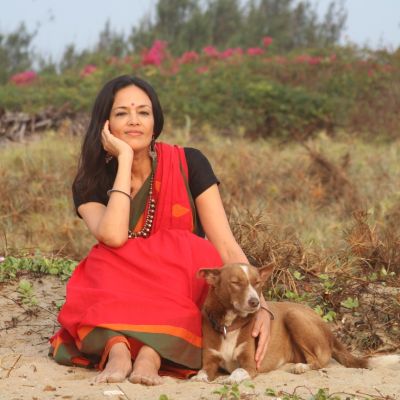
I’ve essentially thought of movement as a kind of freedom, but one that has the capacity to destabilise you in some way. My most creative moments are when I’m not moving, when I am in fact rooted and still.
By Shikha Aleya
May 3, 2022

Shouldn’t The World Be Big Enough?
We live in a world where resilience is celebrated and given priority over attempting to resolve factors that force one to be resilient. Campuses shouldn’t aim to merely be inclusive of diverse individuals – they must strive to not only affirm them but also celebrate them.
By Mythili Menon
April 18, 2022
Interview – Sameera Khan
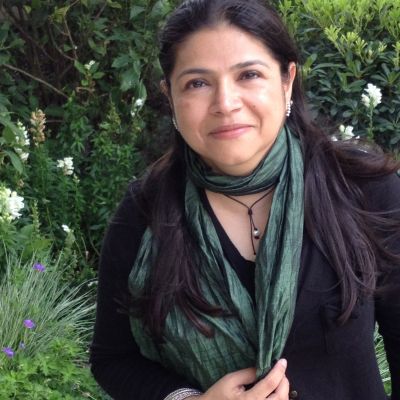
But what has been amazing to witness is how quickly young women in particular, took to the ideas of Why Loiter? and pushed them even further, creating new movements to expand women’s rights to the public, including the right to be out late at night, to stretch the curfew at women’s hostels, to demand extended access to women’s toilets, to public transport etc.
By Shikha Aleya
April 1, 2022
A ‘Room’ of One’s Own – Sexuality, Self-expression, and Safe Spaces on Clubhouse
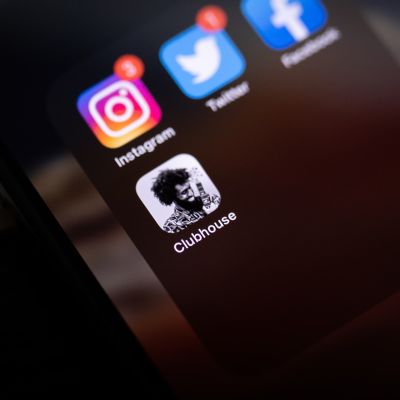
In theory, the concept of the app is a great one – it provides women, queer people, and people belonging to oppressed castes the tea-stall, cigarette-shop type of public spaces for conversation that are available to upper-caste cis het men. The relative anonymity acts like a safe cover, and the app affords a certain autonomy and agency to marginalised people to regulate the kind of conversation that goes on in rooms moderated by them.
By Srishti Gupta
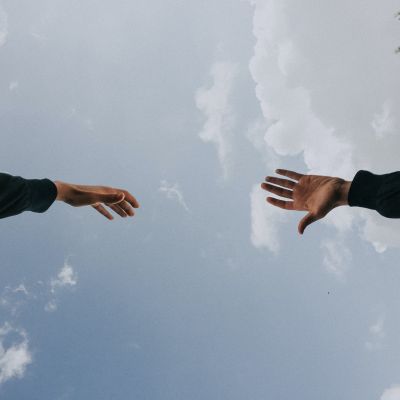
Looking For Someone To Talk To
I would say that growing up in a small village would make it difficult to find love or companionship, but I have since moved to a city and found that it was difficult to find love there, too. It did not stop me from trying, though.
By Wesley D'Souza
April 1, 2022