safe spaces

Loitering towards desire
We had gathered to [discuss] digital self-determination for people with disabilities… focusing on its core component: the self. How can I be myself in digital spaces? What gives me more of a sense of self in these spaces? How can design, technology and policy contribute to helping me determine myself in digital spaces?
By Bishakha Datta
February 16, 2023
Let’s Talk About Alternate Safe Spaces For Queer Women In India
Therefore, the question of safe spaces and alternative families is pertinent to queer identities, that are so much more than imagined by a single dominant narrative.
By Feminism in India
Keep it Light
I tell them to laugh freely but question as much too. This gives them a sense of sheer relief to be able to ask, talk, question, because, even if it is ‘really bad’, after all, it’s being said in ‘lightness, is it not?
By Gunjan Sharma
May 17, 2023
Invisible Women
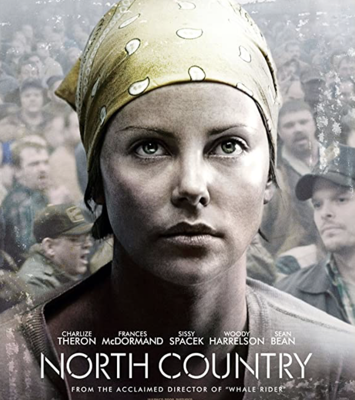
I recently watched North Country on Netflix, a movie based on a true story of a woman’s fight for equality at the workplace. It is based on the case, Jenson vs Eveleth Mines, in the United States in which Lois Jenson, fought for the right to work as a miner, and the right to work free of sexual harassment. She won the landmark 1984 lawsuit, which was the first class-action lawsuit on sexual harassment at the workplace in the United States and resulted in companies/organisations having to introduce sexual harassment policies at the workplace.
By ElsaMarie D'Silva
May 15, 2021
Interview – Chand
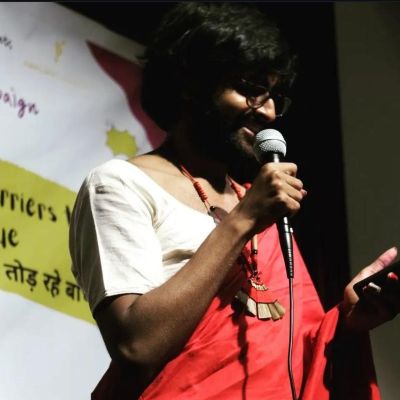
Safe spaces in the way that they often circulate are depoliticised and the assumption is that there won’t be any conflicts, but there can be no safe space without an exchange of ideas, which will create some bad feelings leading to conflict.
By Akshita Singh and Pragya Solanki
November 19, 2024

From Judy Blume To The Sexy Internet: What Counts As Erotica?
This question of appropriateness is, for me, at the heart of all questions around sexuality. Each of us carries within us our own private benchmarks for which expressions of sexuality we find appropriate, and which ones, in turn, have crossed an invisible line. The ones we believe belong across the border, in the land of the inappropriate, of the too much.
By Richa Kaul Padte
Editorial: Anthology Issue
As we move into a new year and a new decade we hope to be moving towards a more just and peaceful world, especially given the troubled times that people all over the world have been and are currently experiencing. And so, in this new year, we wish you lots of SISA spaces through 2020 and beyond!
By TARSHI
January 1, 2020
Circle of Trust
None of these characters is perfect but in their imperfections we can learn more about body positivity, gender sensitivity, privilege, consent, unconscious and implicit bias, sexuality, masculinity, their intersections with class, religion, race, age, and more.
By ElsaMarie D'Silva
April 5, 2021
Challenging Gender Norms, Strengthening Resilience in Crisis
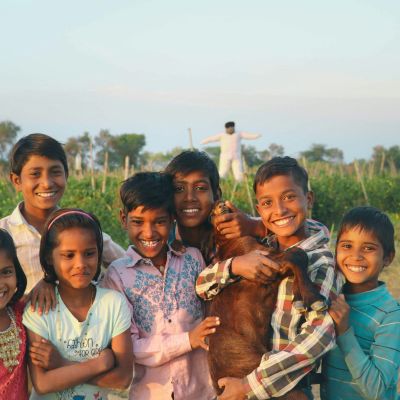
What other stories are waiting to be told? How can we encourage more families to stand together, share chores, and make safe spaces where everyone feels respected and valued?
By Urasmita Ghosh
September 18, 2025

Burnout, Boundaries, and Better Self-Care
My self-care journey has only just begun and I have a long way to go. I do have bouts of self-doubt, anxiety, and panic, and I still go through periods of feeling overwhelmed. However, more than anything, I have learnt that self-care, for me, is a subversive act, and caring for myself gives me the strength to challenge the status quo and play my part in social justice movements.
By Devika
July 19, 2021
Building Safe Spaces In Threatening Places
If sharing was a proverbial coin at the rehabilitation facility, connections were one side of it, and sexuality was the other. Men and women were not allowed to touch one another – no handshakes or hugs or an eager slap on the back.
By Trijita
November 15, 2022
Brushstrokes: Finding Home
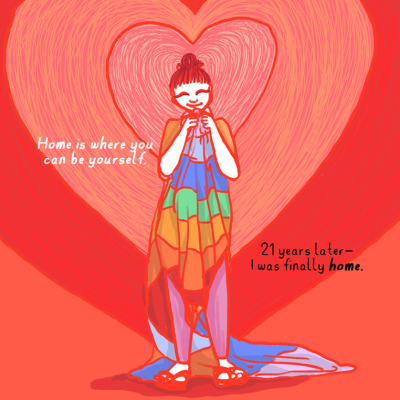
For a lot of queer people, ‘home’ can hold complicated meanings. The space of one’s home can be fraught with bigotry and alienation, and be far from safe or comforting. And so, there is a quest to find alternate ‘homes’, to find a space where we feel truly accepted, safe and protected.
By Curated Content
April 1, 2020
Bodies Seen Through a Kinky Lens
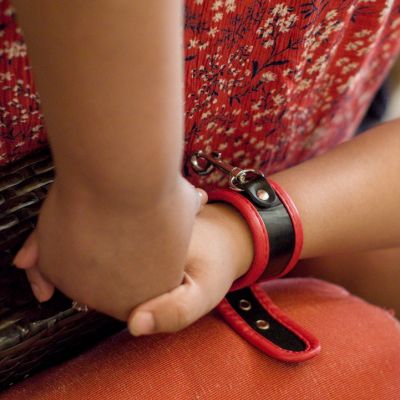
Our bodies become the form and medium through which we present ourselves to the outside world, engage with it, interact with it, perceive it and are perceived by it.
By iwonderwhy
June 1, 2023
Bodies Seen Through a Kinky Lens
Our bodies become the form and medium through which we present ourselves to the outside world, engage with it, interact with it, perceive it and are perceived by it.
By iwonderwhy
January 13, 2025
Autonomy, agency, choice: Yes these are for us
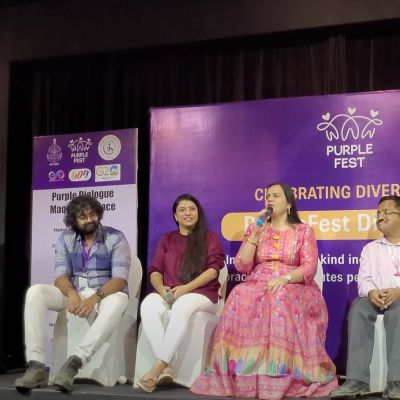
The linkages between access, health, violence, the law, workplaces, gender and sexuality are really high and that’s why we all today—whether we are working on street accessibility, education, disability and employment—need to bring and build our collective understanding around gender and sexuality, keeping it at the core of our work with people, youth, and women with disabilities.
By Nidhi Goyal and Srinidhi Raghavan
February 16, 2023