LGBTQIA


Issue in Focus
Expanding contexts give the word ‘movement’ different meanings and value. Physical, conceptual, technological, relationship, emotional, mental, power, knowledge, ability, access, may be amongst the contexts immediately identified.
By Shikha Aleya
May 3, 2022

Masculinity, queer representation, and the motifs of movement in ‘Dedh Ishqiya’
The film has all the makings and trimmings of a commercial thriller – a dynamic story, song and dance, an action-packed climax – and at the same time, it is a cinephile’s film.
By Srishti Gupta

Locating the ‘Nagar’ in ‘Nagarkirtan’: Identifying the feeling of socio-sexual rootlessness in the Transgender community
The plot of the movie narrates the tale of the love that grows between two people who are struggling to survive in a world of rootlessness and are continuing to make a cosy home for themselves. The love between Madhu, who works as a food delivery boy, and Puti, who survives by singing at traffic signals, blossoms while they cross paths everyday at the traffic signal and the look that they exchange appears to us as if each of them is trying to find a home in the other.
By Ria Basu

Interview – Sameera Khan
But what has been amazing to witness is how quickly young women in particular, took to the ideas of Why Loiter? and pushed them even further, creating new movements to expand women’s rights to the public, including the right to be out late at night, to stretch the curfew at women’s hostels, to demand extended access to women’s toilets, to public transport etc.
By Shikha Aleya
April 1, 2022
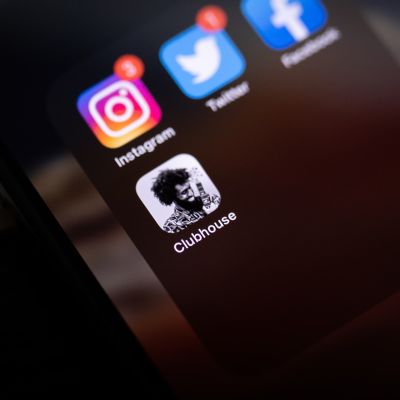
A ‘Room’ of One’s Own – Sexuality, Self-expression, and Safe Spaces on Clubhouse
In theory, the concept of the app is a great one – it provides women, queer people, and people belonging to oppressed castes the tea-stall, cigarette-shop type of public spaces for conversation that are available to upper-caste cis het men. The relative anonymity acts like a safe cover, and the app affords a certain autonomy and agency to marginalised people to regulate the kind of conversation that goes on in rooms moderated by them.
By Srishti Gupta
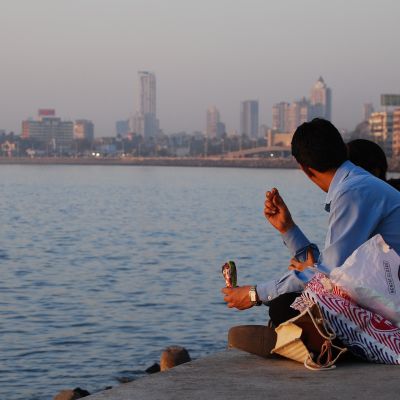
Public Sex and the Police in Urban Spaces
While sex workers face repeated harassment by the police, many young couples face threats in a one-off incident if the police finds them with their partner/lover. They may face police surveillance of expressions of intimacy and affection in public.
By Shruti Arora
April 1, 2022

Editorial – Celebrating Sexuality
100 issues, 8 years! Thank you, dear readers and contributors! As we planned for this issue to put on our…
By TARSHI
March 15, 2022

Interview – This is what you bring to the table!
In this write up, we’d like to share a sense of what emerges from a compilation of these responses. This is based on the thoughts and feelings that come through for those of us here at In Plainspeak who have had the joy of reading the original responses as they came in to us. (Some of the quotations that follow have been slightly edited for flow and to help connect themes.) We know that most things in the realm of art, information and ideas lend themselves to a wide range of inferences and insights depending on the individuals making the inferences.
By Shikha Aleya
March 1, 2022

Interview – Coupledom is a mix of meanings
Coupledom may or may not be for everyone, and does not mean the same thing to everyone. Importantly, coupledom does not hold the same value or position in our lives, even in the lives of the individuals perceived to be parts of a couple structure.
By Shikha Aleya
February 15, 2022

What Polyamory is and what it could be
Practicing polyamory comes with the struggle of breaking down value systems and non-acceptance that may lead to ostracism not only from the heterosexual world but also from the queer and trans community. Claiming oneself as queer depends not only on how one identifies, but also, in society’s eyes, on who one’s partner is; being single does not qualify and neither does being polyamorous as the latter is considered ‘non-serious’.
By Abhiti Gupta
February 15, 2022
Friendships, or, That in which we decouple coupledom from the economies of marriage
I was not simply stuck within the binaries of “same-sex” or “opposite sex,” assuming that any reference to “same-sex” is in itself already revolutionary. But the call to recognise friendship, is a call to recognise so many forms of community that are made invisible by the emphasis within a liberal or conservative framework on “marriage” as the only path to family making.
By Shweta Krishnan

Conceptualising Love on the Aromantic Spectrum
I now feel comfortable entertaining the thought that my ease with my selfhood does not necessarily have to be threatened by the possibility of love in coupledom. Indeed, comfort with one’s self can actually evolve into healthier forms of love towards the other(s).
By Shivani Rajan
February 1, 2022
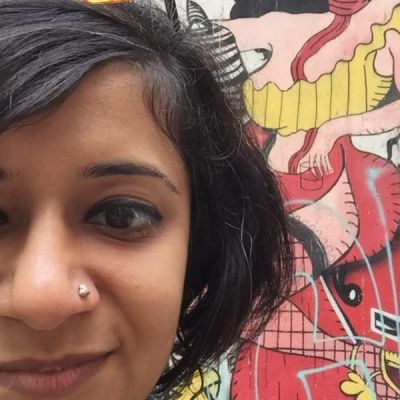
Interview: Shruti Arora
There may already be another organisation in the community to share resources with but for community-led initiatives, a shared perspective on Safe, Inclusive, Sexuality-Affirming (SISA) spaces is also important. Sometimes when the shared perspective is not there, that becomes a challenge.
By Shikha Aleya
January 3, 2022

Book Review: Erotic Stories for Punjabi Widows
The story is so well told and is written with such a light, deft hand that it is almost easy to miss what makes it so quietly radical. To review it within the scope of exploring the coming together of literature and sexuality we must begin with its central cast of characters – the widows.
By Sheena D'Lima
January 3, 2022

Navigating love, loneliness and singlehood
The desire for intimacy might rob one of the intimacy that one shares with oneself and thus, being with the beloved can leave one feeling even lonelier because of the continuing struggle for validation and comfort.
By Anonymous
January 3, 2022