Gender

A ‘Room’ of One’s Own – Sexuality, Self-expression, and Safe Spaces on Clubhouse
In theory, the concept of the app is a great one – it provides women, queer people, and people belonging to oppressed castes the tea-stall, cigarette-shop type of public spaces for conversation that are available to upper-caste cis het men. The relative anonymity acts like a safe cover, and the app affords a certain autonomy and agency to marginalised people to regulate the kind of conversation that goes on in rooms moderated by them.
By Srishti Gupta
The Gendered Muscle in Gym Spaces
I can recall my experiences in the washrooms of different gyms that I have been a member of. A men’s washroom is an interesting place in terms of how sexuality manifests itself in its various aspects. It was not unusual to see men of various kinds with strange energies in these washrooms.
By Shiva Chauhan
April 1, 2022
Editorial – Celebrating Sexuality
100 issues, 8 years! Thank you, dear readers and contributors! As we planned for this issue to put on our…
By TARSHI
March 15, 2022

Refusing the weight in waiting
As a girl, I was made to believe that pleasure was something that existed outside my body, something that I had to seek out, something that was necessarily a product of a partnered experience. I don’t think I was even allowed to want pleasure, especially in its sexual forms.
By Aathira Gopi
March 15, 2022
Interview – This is what you bring to the table!
In this write up, we’d like to share a sense of what emerges from a compilation of these responses. This is based on the thoughts and feelings that come through for those of us here at In Plainspeak who have had the joy of reading the original responses as they came in to us. (Some of the quotations that follow have been slightly edited for flow and to help connect themes.) We know that most things in the realm of art, information and ideas lend themselves to a wide range of inferences and insights depending on the individuals making the inferences.
By Shikha Aleya
March 1, 2022

‘A Promise to Stand By’: The quiet feminism of Nathicharami
Nathicharami takes sexuality and sexual desire away from upper-class, Gucci-clad women and makes its viewers acknowledge its existence in the lives of women (middle-class wives and widows, in the case of this film) who are invisibilised, both in the society they live in and as subjects of popular content.
By Srishti Gupta
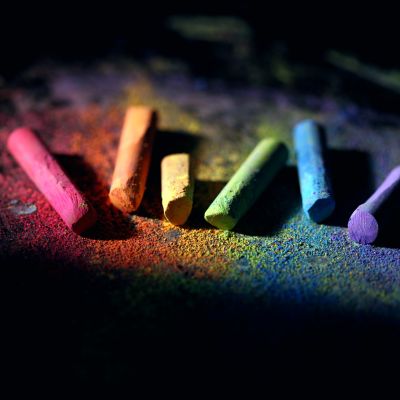
Brushstrokes – Scribbles
Scribbles: an Escape From the Mundane is a product of my thoughts and emotions when I was struggling to understand my sexuality and grappling with the idea of identifying with the spectrum of gender and sexuality outside the binary, but not being able to put a label on it.
By Nishita Kamdar
March 1, 2022

What Polyamory is and what it could be
Practicing polyamory comes with the struggle of breaking down value systems and non-acceptance that may lead to ostracism not only from the heterosexual world but also from the queer and trans community. Claiming oneself as queer depends not only on how one identifies, but also, in society’s eyes, on who one’s partner is; being single does not qualify and neither does being polyamorous as the latter is considered ‘non-serious’.
By Abhiti Gupta
February 15, 2022
एक ‘स्त्रीत्व’ गुणों वाली नारीवादी
एक समय ऐसा था जब मैं भी लड़कियों के लिए बनाई जाने वाली हर चीज़ से सिर्फ इसलिए दूर भागती थी क्योंकि मुझे लगता था कि नारीवादी दिखने के लिए एक खास तरीके से दिखना और व्यवहार करना आवश्यक है।
By Anubha Sarkar
February 1, 2022
Interview: Shruti Arora
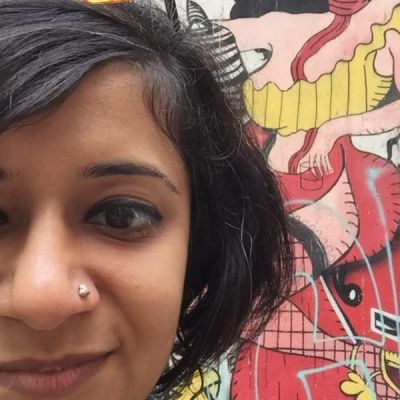
There may already be another organisation in the community to share resources with but for community-led initiatives, a shared perspective on Safe, Inclusive, Sexuality-Affirming (SISA) spaces is also important. Sometimes when the shared perspective is not there, that becomes a challenge.
By Shikha Aleya
January 3, 2022
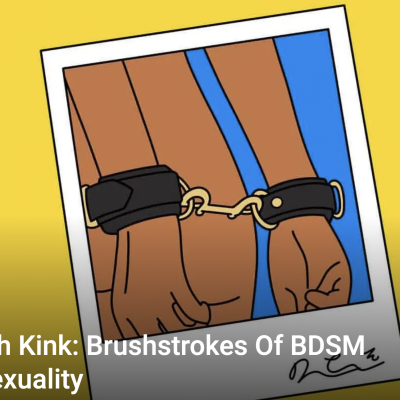
Tryst With Kink: Brushstrokes Of BDSM On My Sexuality
The responsibilities attached to BDSM are frankly the same as that for any other sex act. But since the submissive partner(s) are placing themselves at a position of vulnerability, these responsibilities mark the difference between sex and abuse. Have fun, but responsibly.
By Feminism in India
December 15, 2021
Interview – Manak Matiyani
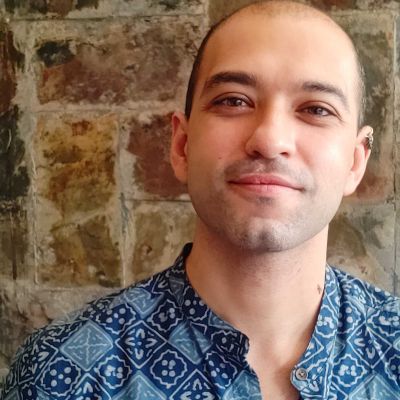
As we grow older, moral codes, conventions of appropriateness and shame, and the utilitarian and income-focused education we get make us lose that stability. The idea of play to me is about bringing back that ability and comfort into the lives of people so that they can actually play.
By Shikha Aleya
December 1, 2021
Haunted by Shame: The Struggle of Being Rendered Invisible
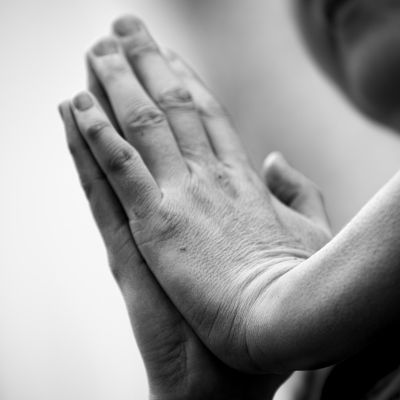
Where did my body go? This is a question I have asked myself repeatedly over the last two years. My…
By Reva Puri
September 1, 2021

Is Digital Colonisation Redefining the Understanding of Agency, Bodily Autonomy, and Being Human?
Apart from systematic exclusions faced by individuals, evidently the mandatory use of a biometric-based digital ID has also reshaped the understanding of an individual’s agency and right to bodily autonomy. Gender and sexuality seem to no longer be matters of an individual’s right to privacy. With digitisation, disclosure of one’s gender and sexuality has become a hindrance to accessing one’s rights.
By Brindaalakshmi K

Interview – #covid19 and conversations online: Listening in
We are plugged in to all kinds of data from a variety of sources, through technology, and even a window view of this space is like stepping into a global COVID control data centre. We are standing up to be counted, to be seen, to do, to contribute, to advocate, to remind, to rectify and restore, to strengthen a growing network of support and response to crisis on a scale we have neither been able to process or measure.
By Shikha Aleya