Feminism


Why Sexuality & Sexual Freedom Need To Be Discussed Beyond Violence Against Women
This post is a part of TARSHI‘s #TalkSexuality Campaign. By Shruti Arora “I’ve never told this to anyone before, but…
By Curated Content

When the Waters Rise, We Stay Rooted
The skills, networks, and resilience we’ve built over years aren’t just stories from the margins; they’re tools the whole system can learn from.
By Satbhan Singh
August 19, 2025

April 15, 2026

When Rights Aren’t Enough: Exploring Sexuality Education in India’s National Law Universities
Without explicit attention to desire, intimacy, and emotional negotiation, legal concepts remain abstract rather than practicable.
By Prerna

When Communities Fight Back – Climate Tech for Sexual Rights
… technology, when designed with love and local wisdom, can transform both climate adaptation and sexual health outcomes.
By Lakshmi Pillai Gupta
September 18, 2025

What History And Fiction Teach Us About Women And Power
This article was originally published in the NPR. January 8, 2018; TANIA LOMBROZO Two recent books, one a manifesto by British…
By Curated Content
July 16, 2018

What Does a Feminist Relationship Look Like?
Feminist critiques are often critiques of relationship structures: marriage, the joint and nuclear family, monogamy, and heteronormativity. Patriarchy, fundamentally a system of inheritance, finds a natural home in these structures.
This is why I’ve often wondered: how do feminists imagine and navigate romantic relationships? Do they have to constantly be thinking about and watching out for the many ways in which power, privilege, autonomy and entitlement manifest in their relationships and dating culture? It seems rather unromantic to do so.
By Moulshri Mohan
May 16, 2016

what cannot be said (will be wept)
It is not a word you expected in this poem,
Or in any poem at all.
By Malavika Krishna Kumar
July 16, 2025

Vulnerability and Romantic Relationships: My Struggles Navigating These Spaces
It took me some time to realise how important being vulnerable or, for that matter, being vulnerable during sexual engagement was for me to have great sex and how empowering it is for my sexuality. After much thought, I decided to open up to my partner about my past experiences and other things I never used to openly talk about.
By Grishma Trivedi
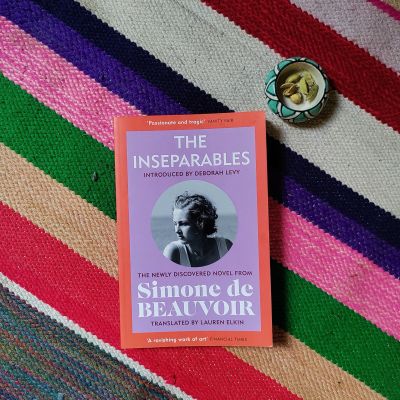
Vignettes of an Intimate Friendship in Simone de Beauvoir’s “The Inseparables”
Must intimacy be tied to the sexual or is it allowed a course of its own?
By Pronita Tripathi
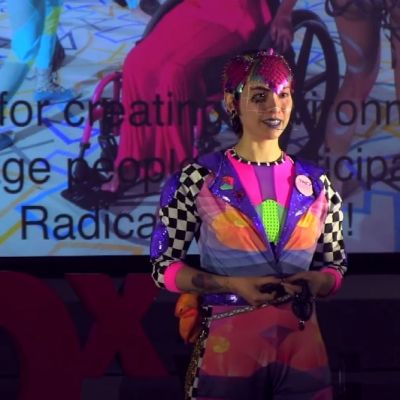
Video: Dress Reform Movement | Sky Cubacub
What if we refused to assimilate? What if we collectively decided to dress in a way that made it so society could not render us invisible?
By Curated Content
October 19, 2023
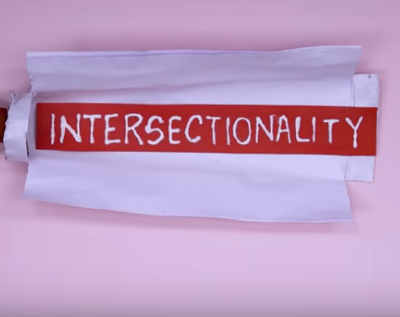
Video Page: What is Intersectionality?
If feminism is about fighting for equality, then how can we ensure that our feminism is truly inclusive and equal? Does it feature only a certain kind of voice or experience, and not take into account the multiple axes of oppression that another group of people may face?
By Curated Content
December 2, 2019
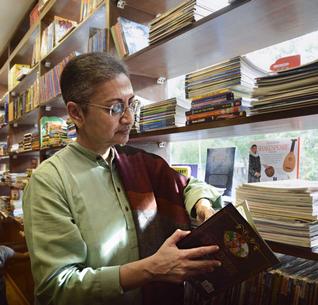
Video Page: Lata Mani on Neoliberalisation and Gender
Watch media theorist, linguist and philosopher, Wolfgang Sutzl interview feminist historian and cultural critic Lata Mani about the impact of neoliberalism…
By Curated Content
November 15, 2015


Toxic Soup
Even her talking to other men elicits a growl from these men, and it’s all supposed to be okay because they’re billionaires and 6’5 feet tall or something, oh and did I mention the abs?
By Aradhana Phadke Sardesai
April 17, 2025