bodily autonomy


Not Delulu but Doable: The Ecosystem Giving us Hope for CSE in India
There are individuals, collectives and organisations that are doing their best to create an ecosystem that supports the education of children on gender, sexuality, health, consent, safety, relationships, self-esteem and confidence in themselves.
By Vani Viswanathan
December 16, 2025

Ms. Pleasant Gets Stubborn
… spaces led by the desire to not just protect but also educate all who connect with children…
By Reema Ahmad
December 16, 2025
Is Digital Colonisation Redefining the Understanding of Agency, Bodily Autonomy, and Being Human?
Apart from systematic exclusions faced by individuals, evidently the mandatory use of a biometric-based digital ID has also reshaped the understanding of an individual’s agency and right to bodily autonomy. Gender and sexuality seem to no longer be matters of an individual’s right to privacy. With digitisation, disclosure of one’s gender and sexuality has become a hindrance to accessing one’s rights.
By Brindaalakshmi K

Interview – Srinidhi Raghavan
Disabled people might not have many spaces where they can speak openly about their sexual experiences or even sexual curiosity. There is a heavy monitoring of disabled young people especially, and this can mean that exploration, which is often how many of us discover sexuality, can be limited. Moreover, since the experiences of disabled people are not seen in popular media such as films, we can (and probably do) imagine we will have the same or similar experiences as non-disabled people – which is often not possible.
By Shikha Aleya
August 2, 2021
How would it be if we grew up embracing sexuality?
Growing up is a tedious task in our society because of the institutionalised practices, societal constructs and boxed identities and expressions that we are expected to adhere to. Anything beyond these implies harm, danger, and deviance.
By Sreejani
January 16, 2026
Guilty Learnings: Breaking the Cycle with Comprehensive Sexuality Education
It is unfortunate that one of the most fundamental processes of human life is shunned to the extent that we’ve been taught, and so we learn to dismiss the natural feelings our bodies produce.
By Sanchia Alleen Aranha

Editorial– CSE and Affirming Ecosystems
CSE’s ‘natural habitat’ is often considered to be the classroom, but as our contributors show us, CSE also lives, breathes and thrives in habitats as disparate as neighbourhood parks, jobs-training centres, playgrounds and sports fields, law schools, family discussions, and digital spaces.
By TARSHI
December 16, 2025
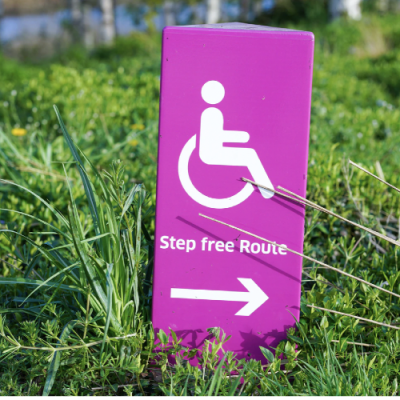
Editorial: Disability and Sexuality
Both sexuality and disability are complex terrains, offering a realm of possibilities that are often made unnecessarily complicated and unattainable by the mental maps we draw of them and the artificial barriers we erect.
By TARSHI
August 16, 2021
Editorial – Celebrating Sexuality
100 issues, 8 years! Thank you, dear readers and contributors! As we planned for this issue to put on our…
By TARSHI
March 15, 2022
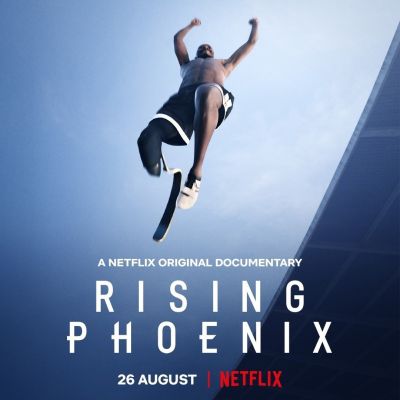
Despite all odds
In the spirit of the Games, I watched the Netflix film Rising Phoenix which documents the history of the Paralympics and its impact on the world in making visible the topic of disability. It also tracks the personal and professional journey of some of the top Paralympic athletes who share their challenges, frustrations and motivations.
By ElsaMarie D'Silva
August 2, 2021
Camouflage
I cannot let anyone see the stretch marks, the cellulite, the saggy breasts. I cannot reveal my hideous body. I feel anxiety well up inside me even as I visualise this eventuality. I read about ten ways for a fat person to have meaningful sex. I learn that throwing a cloth over the bedside lamp will help hide my flaws.
By Sharada Vinod
August 2, 2021
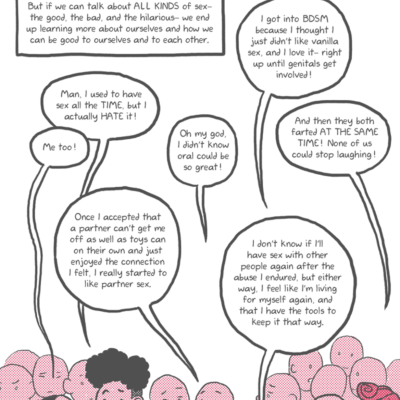
Brushstrokes: Who We’re Leaving Out of Sex Positivity – And How to Make It More Inclusive
Everyday Feminism’s comic illustrates the complexity and diversity of sexuality, revealing how sex can sometimes be pleasure-affirming and sometimes not, and asks us to talk about ALL KINDS of sex – the good, the bad, and the hilarious.
By Curated Content