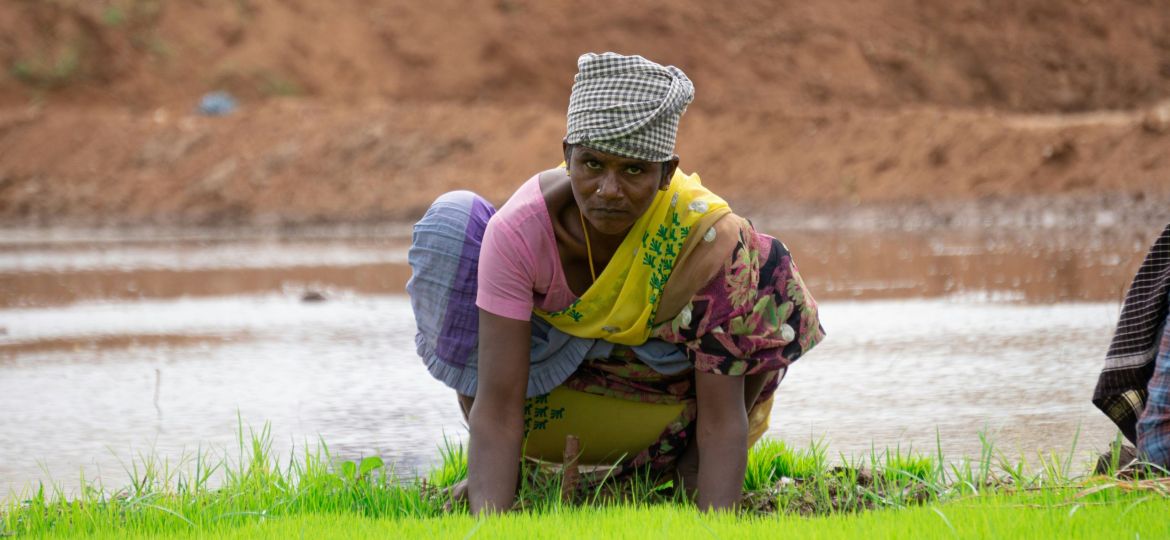
The world as we know it is changing. Rapidly growing population, urbanisation, land use change and erosion – climate change in India is causing serious natural resource depletion and crises. Unpredictable and extreme weather events like increased heat, rainfall, floods, cloudbursts, droughts, cyclones and natural disasters are becoming regular occurrences. Climate change is affecting the lives of all, especially women, girls and marginalised populations. Pre-existing inequalities heighten women’s and marginalised populations’ vulnerability to the consequences of climate change. In many regions, women bear a disproportionate responsibility for securing food, water and fuel for their families. When these resources become scarce due to the changing climate, women must work harder and travel farther. This also puts pressure on girls, who often have to leave school to help their mothers manage the increased burden. At times, it also puts their safety at risk. During crises like floods and droughts, while trying to ensure food security, women often become vulnerable to violence and human trafficking. It is also becoming increasingly difficult to work in extreme weather conditions. Outdoor workers, particularly agricultural workers, construction labourers and street vendors including women, are complaining of increasing symptoms of heat rashes, heat cramps, dehydration, weakness, reduced cognitive functions, and dizziness.1 The Intergovernmental Panel on Climate Change (IPCC) 2023 report highlights the increased vulnerability of already marginalised groups, including those whose marginalisation is based on factors like gender, ethnicity, low income and informal settlements to the impacts of climate change. As extreme weather events, including heat waves and flash floods become more frequent and intense, the burden falls disproportionately on those already struggling to make ends meet. Two such vulnerable social groups are the transgender community and women in sex work.2
Sexual and reproductive health
Climate change is having effects on health and more specifically sexual and reproductive health needs and services for women and marginalised populations. The examples given below highlight how climate change is affecting these communities in different contexts.
Little Rann of Kutch (LRK) is a marshy wetland in Gujarat, India with arid climate and very high temperatures. These extreme climatic conditions make this region ideal for salt farming. Salt pan workers/families including women of the Agariya community have been migrating to the salt fields for 8-9 months every year. That is their traditional skill and livelihood. However, despite sharing an equal burden of labour, women are considered secondary in salt production. With rising temperatures and extreme heat conditions, it is becoming very difficult to work in the salt pans. Due to inadequate water and lack of sanitation facilities, urinary tract infections (UTIs) are a common problem. Medical facilities remain scarce with infrequent visits by mobile medical vans which do not have female health staff, making healthcare inaccessible for women. The extreme heat effects are being seen in pregnant women with increased incidences of miscarriages. According to anecdotal information, the community response is to send women to their villages during pregnancies. In the context of menstruation – in the past women used cloth/long skirts to absorb the blood. There is now an increased use of sanitary napkins, but safe disposal remains an issue. Even during their periods, women and girls have to work in the scorching sun, amidst dust storms and difficult weather conditions.3
The organisation Terre De Hommes works in the world’s largest delta, the Sundarbans areas4 of West Bengal. In a recent webinar, they highlighted the multifaceted impacts of climate change in the region. Climate change was leading to rising sea levels, increased cyclonic storms, and freshwater salinity, which were exacerbating existing socioeconomic vulnerabilities faced by the community. Climate disasters disrupted healthcare facilities and infrastructure, continuity of services, with increased disease burdens. The lack of capacity of facilities to cater to increased patient loads was also leading to system collapse. Looking more specifically at maternal and child health, TDH shared that sudden onset disasters disrupted emergency health services, especially perinatal care, leading to complications like stillbirths, infections, and low birth weight due to overwhelmed temporary facilities. According to them, prolonged climate stressors like rising salinity, heatwaves, and sea levels, contributed to chronic issues like pre-eclampsia, gestational diabetes, maternal anaemia, intrauterine growth retardation and low birth weight among neonates.5
Climate change worsens air pollution, which is particularly dangerous for pregnant women and their babies, potentially leading to low birth weight and other adverse outcomes. Climate change impacts maternal and neonatal health services, especially when disasters and conflicts limit access to services and health care. Research indicates that extreme heat increases incidence of stillbirth, and warming global temperatures are helping to spread vector-borne illnesses such as malaria, and dengue fever. Climate-related stress and trauma, including from extreme weather events, is also seen to significantly impact mental health, potentially leading to Post Traumatic Stress Disorder (PTSD), depression, and other disorders. Droughts, floods, and other disasters disrupt food production and distribution, leading to increased food insecurity and malnutrition, especially among women who fend for their families.
In the last decade, media reports have put the spotlight on increasing sugarcane cutter workers (women) in drought-prone areas of Maharashtra undergoing hysterectomies. This is driven by factors such as personal need to avoid pregnancy and painful periods in order to continue working to earn money; unscrupulous labour contractors; and unscrupulous medical professionals advising hysterectomies to boost their incomes. Harvesting sugarcane has also become demanding and precarious as temperatures rise and livelihoods become unpredictable making women vulnerable. Campaigners are also blaming child marriage, early sexual activity, pregnancy and heavy workload done by girls on sugarcane farms in their early teens leading to reproductive stress.6
Climate-related disasters exacerbate existing gender inequalities and increase the risk of gender-based violence (GBV), sex trafficking and forced marriages. A 2025 UN Spotlight brief finds that climate change is intensifying the social and economic stresses that are fuelling increased levels of violence against women and girls.
Marginalised populations
Climate change disproportionately affects the sexual and reproductive health (SRH) of LGBTQ+ individuals and female sex workers, increasing existing vulnerabilities and creating new challenges. In normal circumstances, access to healthcare for marginalised populations like sex workers and LGBTQ+ people is challenging due to lack of awareness amongst them and among health care providers on the specific issues and challenges they face. Ignorance, judgmental attitudes, stigma, discrimination, and insensitivity about their life situations by health care providers often drive them away from health services. They also face pre-existing disparities in healthcare access, social support, and economic stability, making them more vulnerable to the negative impacts of climate change. Climate-related disasters like floods, droughts, and heatwaves can disrupt access to essential SRH services, including contraception, prenatal care and safe abortion. Extreme weather events strain healthcare systems and hinder the availability of essential medications, impacting access to HIV and STI prevention and treatment, including antiretroviral therapy. Climate crises can exacerbate existing gender inequalities, stigma and discrimination, increasing the risk of sexual violence, intimate partner violence, and other forms of GBV. The unique stressors in the context of climate change, including social isolation, discrimination, and fear of displacement, can increase mental health issues including anxiety, depression, and PTSD, and impact their SRH behaviours and access to care.
Disruptions to healthcare, increased risk of GBV, and potential changes in sexual behaviour due to displacement or stress can all contribute to higher STI/HIV rates. Members of the trans community share that when extreme weather events hit, their homes and shops are often washed away. With their livelihoods impacted, many resort to begging and sex work to make ends meet. Their marginalisation also reflects in the challenges they face in recovery, post an extreme weather event. Shelters often turn them away or they are denied access to food and resources that others can access.7
What can be done
Strengthening healthcare systems and investing in resilient healthcare systems that can withstand climate-related shocks and provide comprehensive SRH services, including those tailored to vulnerable populations like LGBTQ+ people and sex workers is crucial. It is also crucial to ensure that climate policies and adaptation strategies address the specific vulnerabilities of varied populations and promote their access to resources and support. Implementing comprehensive GBV prevention and response programs, including those that address the specific needs of sex workers and LGBTQ+ individuals, is essential. Incorporating SRHR into climate change adaptation and mitigation strategies is critical for ensuring that everyone can access the sexual and reproductive health services they need, regardless of their gender identity or sexual orientation. It is also important to build community awareness and resilience in the face of climate change.
- https://www.business-humanrights.org/en/latest-news/india-women-sugarcane-workers-coerced-into-undertaking-hysterectomies-face-higher-risk-of-exploitation-as-temperatures-rise/ ↩
- https://www.orfonline.org/english/expert-speak/addressing-climate-change-challenges-for-transgender-individuals-and-sex-workers ↩
- Sudeshna Chowdhury, Photo essay: Illness and isolation in Kachchh’s salt pans. IDR. August 2025 ↩
- The world’s largest delta, which is shared by India and Bangladesh. Indian Sundarbans consists of 102 islands, 48 forested, 58 inhabited by 4.5 million people (TDH webinar, June 2025) ↩
- From Sundarbans to the World: Evaluating Climate Change on the Ground. Webinar Recap, Terre Des Hommes (TDH), Glocal Evaluation Week, June 2025 ↩
- https://www.theguardian.com/global-development/2025/jun/12/outrage-as-sugar-cane-workers-in-india-still-being-pushed-into-having-hysterectomies https://www.britsafe.in/safety-management-news/2025/a-bitter-harvest-female-sugarcane-workers-pushed-into-having-hysterectomies ↩
- https://india.mongabay.com/2023/03/transgender-activists-highlight-the-impacts-of-climate-change-and-environmental-issues-on-the-community/ ↩
Cover image by Deepak Kumar on Unsplash