feminist politics


Editorial – Anthology Jan 2026
To remind us of what spaces that are safe, inclusive and self-affirming for each person could look like, we have curated a selection of articles from the last five years of In Plainspeak for this anthology – our gift to wish you a wonderful 2026.
By TARSHI
January 16, 2026

On Learning and Becoming: “To Whom Do I Owe the Woman I Have Become?”
We become women before we become a woman. Of course, we don’t need to try hard to do so…We learn the sides and folds of the gendered box we are in before we gain the perspective to decide we don’t fit in and build a customised box or choose to have no box at all.
By Anjali
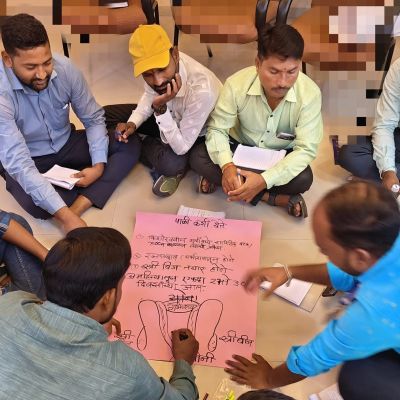
From Compliance to Critique: Localising Masculinity Work Through Feminist Praxis
…we must also address men’s relationships with their spouses, other men, women and children in the community, and importantly, their own emotional selves to transform fatherhood. Therefore, engaging with men as fathers must involve a holistic understanding of their socialisation, emotional world, and position within patriarchal structures.
By Anand Pawar

दो कविताएँ
दो कविताएं – हवेली आधुनिकता के आवरण में क्षयग्रस्त पारंपरिक पुरुषत्व को दर्शाती है, जबकि चारपाई कठोर और लचीली अभिव्यक्तियों के बीच विरोधाभास प्रस्तुत करती है, जहां जो जिस चारपाई पर बैठते हैं, उसके गुणों को अपनाते हैं, जो भिन्न-भिन्न पुरुषवादी पहचानों का प्रतीक है।
By Sakshi Nain Bishnoi
May 19, 2025

The Time Machine – 5 In Plainspeak Articles that Celebrate Sexuality in its Diverse Forms!
The In Plainspeak team decided to time travel and re-discover previously published articles that explore the multiple ways in which people find joy and pleasure in their sexualities.
By TARSHI

Radicalise The Banal
How we treat each other in our daily lives informs our feminist praxis. How we fail each other in our daily lives through the use of unkind language, dismissal of mental illnesses, making fun of one’s own choices, disrespecting personal boundaries (and so on), also counter our feminist praxis.
By Debarati Sarkar
December 16, 2019
How Being A Queer Feminist Shaped My Approach To Mental Health
As a queer-feminist mental health practitioner, my way to understand realities is to examine the power relations that exist in our social locations, identities and structures.
By Curated Content