consent


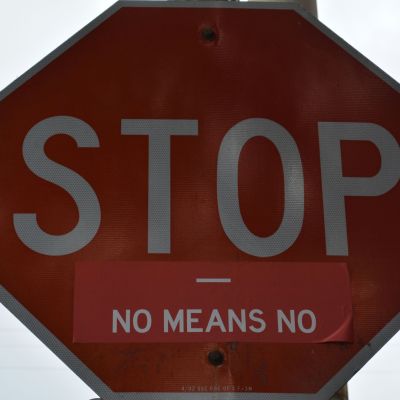
Consent, reaction, response, or – you lead, I follow.
Look sharp. Consent is tricky, hiding secrets behind the empowerment toolkit and all our good intentions. Why? Because we activate this value-loaded word in a world where many, or most things, are still about the first-mover advantage. A world that holds typically narrow views of capacity, ability and success.
By Shikha Aleya
February 18, 2025

Theatrics of Consent
The sheer ignorance of the intricacies of consent, or its performance, serves only to strengthen the enduring patriarchal framework that holds sway in a society where the bodies, desires, and even voices of women have been, and, tragically, continue to be, defined and controlled by men.
Consequently, a “yes” – whether verbal or gestural – cannot be shallowly inferred as an authentic, unambiguous, and static agreement to a “contract” proposed by men.
By Saurabh Suman
February 18, 2025

The Silent Theft of Consent: How Patriarchy Undermines Women at Every Step
When a woman, in her own house, is told by her family members, to always seek their consent before doing anything, and to always keep them informed of every activity she engages in, or even to seek a job in her chosen field, her freedom is taken away from her. She is expected to take their consent for anything and everything, but her own consent is taken away from her.
By Aanya Narula
Behind the Curtains
… when they believed we were of the right age to marry, they urged us to “leave everything behind and get settled”. When marriage is considered such an important institution in our society, why not teach us about consent as well?
By Bhargavi Vyas
February 18, 2025

Closeted in the Workplace: Identity, Be(long)ing, Consent, and Inclusion
…when both of us speak about the way we engage in our workspaces, we find common contradictions and barriers. How does a queer person navigate these barriers, constantly negotiating when, where and on what terms to engage? To be seen or to remain unseen?
By Vanshika Gupta and Niv
February 18, 2025

What we are owed
…what is there to misunderstand
about hands that take without asking,
about silence twisted into consent
by those who have never had to be afraid?
By Shruti Sharma
February 18, 2025

Bodies Seen Through a Kinky Lens
Our bodies become the form and medium through which we present ourselves to the outside world, engage with it, interact with it, perceive it and are perceived by it.
By iwonderwhy
January 13, 2025

MeToo, Masculinity and Amrita Pritam
Dilli ki Galiyaan therefore offers us a broader canvas for our desires, than the one afforded by the clear cut binaries of our current debates. The text shows that there will be masculinities that we urgently need to discourage; while men who do not encourage us will continue to exist.
By Ishan
January 13, 2025

The Banyan Tree
It’s clear Ms. Nisha is not here to shame them or lecture them. She’s here to give them words when they have none.
By Taarina Therese Chandiramani
December 18, 2024

एकल जीवन की सराहना
Growing up, for me, has been about accepting that the loneliness and sadness woven into the fabric of my being do not go away with entering conventional arrangements like monogamous relationships or marriage.
By Siddhi Pandey
August 20, 2024
राख से सोना बनाना – कैसे मध्यम आयु वर्ग की महिलाएं यौनिकता और आध्यात्मिकता का जश्न मनाती हैं
The most satisfying spiritual and sexual experiences I’ve had were not in my twenties, thirties or even forties. They have been in my 50’s. The most insightful spiritual insights, and the most orgasmic orgasms have both arrived in middle age.
By Nighat Gandhi

Questions I want to ask!
If you’ve got a body, in which you’re going to negotiate this life, you have to know how it works.
By Suchitra Dalvie
June 18, 2024

अपना और दूसरो का ख़्याल रखना
मां बनने के बाद से आत्म-देखभाल पर मेरे नज़रिये में बहुत बदलाव आया है। एक अभिभावक की भूमिका निभाते हुए और उसकी चुनौतियों का सामना करते हुए अपना ख़्याल कैसे रखा जा सकता है?
By Deepa Ranganathan
May 16, 2024

A ‘Peoples Self-Care’ In-the-Making: Perspectives on the Multiple Possibilities of Existence and Care
But self-care is not a clean and happy procedure, it is not definitively achievable when systematically explored. To understand the scope of self-care we need to see the ‘dark side’ of the landscape, and destroy the versions of self-care that denounce our plurality. In this fight, the only outcome can be a recognition of experiences beyond the wellness narrative structured around the neoliberal agenda. This article is an attempt at foregrounding some aspects of self-care that decentralise the prevalent commodification of it.
By Rukmini Banerjee
Bodies Seen Through a Kinky Lens
Our bodies become the form and medium through which we present ourselves to the outside world, engage with it, interact with it, perceive it and are perceived by it.
By iwonderwhy
June 1, 2023