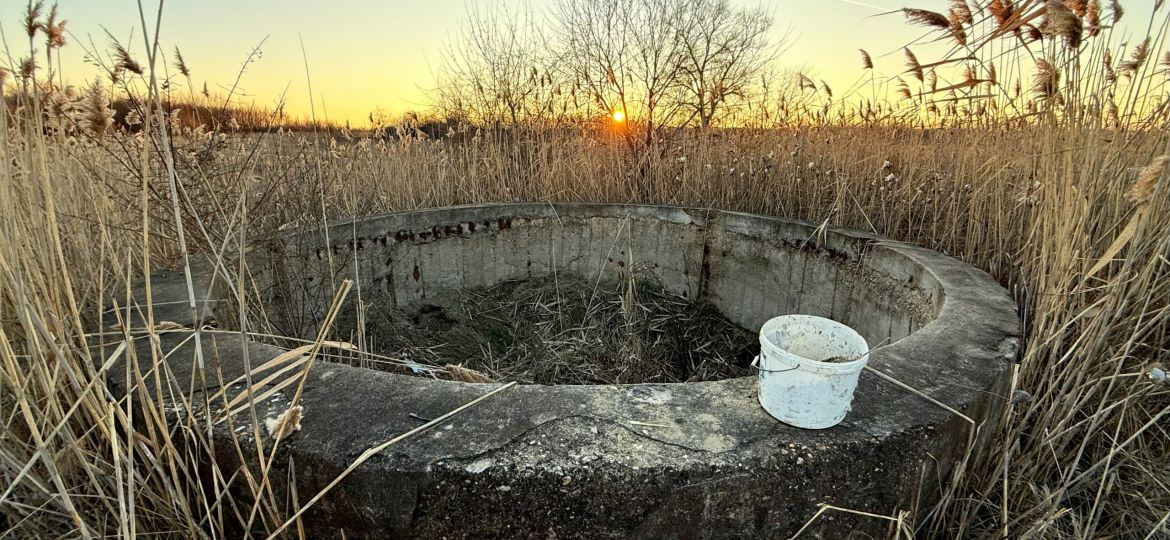
In Bundelkhand, the wells have been empty for weeks. The earth has split open under the sun, and the air hangs heavy with heat and dust. Climate change isn’t some distant emergency anymore; it’s already here, and it isn’t unfolding equally. In India, where caste continues to decide who has land, clean water, and shelter, the climate crisis only deepens these inequalities. But this isn’t just a story about survival or scarcity. It’s also about intimacy, about the quiet erosion of sexual and reproductive freedoms among communities that are already forced to fight for the basics. What happens to desire in a world where even drinking water feels like a privilege?
Land in India has never been neutral. It has always carried the weight of caste: deciding who owns it, who works it, and who gets pushed out. For Dalit and Adivasi communities, being denied land is not just about economic insecurity; it’s about being excluded from the conditions that make life liveable. When droughts wipe out crops or water sources dry up, it’s these communities that feel the impact first and also the hardest! The consequences ripple outwards: when there’s no steady income or access to food, people lose more than just stability. They lose privacy, control, and the space to make choices about their own bodies. A person who is worrying about the next meal or walking miles to collect water does not have the room to think about safety or desire.
These losses aren’t just numbers; they are a deciding factor in whether or not a family eats at the end of the day. The fight for land and water decides not just if there will be a meal, but whether it’s cooked out of choice or from whatever scraps can be gathered. For many Dalit and Adivasi households, that means cooking with what others deemed unworthy.
In Dalit Kitchens of Marathwada (Harper Collins Publishers India, 2024), Shahu Patole writes about meals built from what others throw away: fish bones, stale bread, bruised vegetables. His stories aren’t just about hunger; they’re about what it means to live in a world that constantly tells you your needs don’t matter. That kind of erasure goes beyond the kitchen. It creeps into every part of life, including sexuality. Climate change doesn’t just take homes or livelihoods, it chips away at the conditions where intimacy can exist. When you’re constantly negotiating survival, where is the space for choice? For tenderness? For anything that isn’t about getting through the day?
Displacement makes this even harder. As floods, droughts, and land grabs force people out of their homes, they often end up in crowded camps or temporary shelters with no real privacy. Families are squeezed into single rooms or tents, where even bathing becomes a careful negotiation. In these spaces, the idea of sexual agency feels far-fetched. For queer people, or for anyone who doesn’t fit into a so-called “normal” family structure, these spaces can be even more hostile, where visibility often invites scrutiny, and safety is far from guaranteed. Relief work rarely accounts for anyone outside the heteronormative traditional household. If you don’t belong to a family that looks a certain way, it’s easier to fall through the cracks.
But climate violence isn’t always loud. Sometimes, it’s quietly felt in what people are denied rather than what they lose overnight. Clean air, stable housing, working toilets, and access to healthcare. These basic needs are still out of reach for many Dalit and Adivasi communities, who live near garbage dumps, factories, or sewage-choked drains. Their homes often offer little protection from heat or floods. While upper-caste neighbourhoods install rainwater tanks or retreat to cooler places, ultimately, the burden of surviving a collapsing climate falls on those with the least to fall back on. And somehow, they’re still the ones labelled as “unclean,” and looked at with disgust and policed for how they live in conditions they didn’t create.
When people are denied clean water, safe shelter, or healthcare, it becomes easier to deny them agency over their own bodies too. Sexual and reproductive health can’t be separated from the material realities people live in. Even accessing basic things like contraception or menstrual products becomes a challenge in many rural or displacement settings. For queer people, trans individuals, or unmarried women, the situation is worse: healthcare is either nonexistent or actively hostile, pushing people further into silence.
Without privacy, without safety, without resources, how can someone make free choices about sex, relationships or parenthood? And yet, most climate conversations continue to focus on carbon footprints and technology, without asking who gets to survive with dignity and who doesn’t. If climate justice doesn’t centre caste, it risks reinforcing the same hierarchies it claims to challenge.
It’s not just space or safety that disappears after displacement; it’s also a sense of emotional stability. When people live under constant uncertainty, intimacy starts to feel like a risk. Desire becomes something you put off, something that doesn’t belong to people like you. There’s a kind of fatigue that comes from long-term insecurity, the kind that makes touch feel distant and trust even harder to build. In these moments, the right to feel close to someone, to want without fear, becomes another quiet casualty of both climate and caste.
A just response to climate change has to be more than just green policies and clean energy. It has to ask deeper questions about who is being left behind, and what kind of futures we’re making possible. Sexual and reproductive rights aren’t secondary concerns to be addressed once stability returns; they’re part of what makes life worth living in the first place. The freedom to want, to say no, to form relationships, to raise children or not, shouldn’t depend on where you live or what caste you were born into.
In the end, the climate crisis doesn’t just strip away land and resources; it narrows the space in which people can dream, connect, or even just rest. And that narrowing isn’t accidental. It’s shaped by caste, by histories of exclusion, by the slow violence of being told your life doesn’t count. To talk about climate justice, then, is to talk about who gets to feel safe, who gets to choose, who gets to want. Survival shouldn’t be the only goal. The right to desire: to feel, to touch, to imagine a different life, shouldn’t be a luxury. It should be a given.
References:
- Patole, Shahu. (2024) Dalit Kitchens of Marathwada. Translated by Bhushan Korgaonkar, HarperCollins India.
- Kumar, M., and Jena, A. Environmental Burden in Everyday Lives of Dalits: A Case Study of Sanand, Gujarat. Sociological Bulletin, vol. 73, no. 1, 2023, pp. 65–83. SAGE Publications, https://doi.org/10.1177/00380229231212894. Original work published 2024.
- Mehta, Lyla. (2009) Displaced by Development: Confronting Marginalisation and Gender Injustice. Sage Publications.
To read this article in Hindi, please click here
Cover image by Mihály Köles on Unsplash