

About the theme: The Self and Sexuality
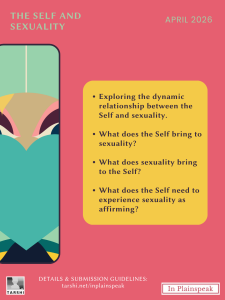
The Self that walks around with us, that says, “This is me”, what has it got to do with sexuality? Born of body, mind, heart, spirit, and experience, the Self is what we may think of as the beingness and the whatness of a person. It occupies a context, interacts with others, and is embedded in systems and structures of culture, society, economy, politics, etc. This Self, while it encompasses caste, class, ethnic, gender, sexual and other identities, is more than all of them. What does the Self bring to sexuality and what does sexuality bring to the Self? How does the Self engage with the body, personal values, other selves, external systems and structures, and so on, in order to experience sexuality as affirming?
We do not accept AI-generated or AI-modified content. For our detailed submission guidelines, visit: https://www.tarshi.net/inplainspeak/
डिजिटल अंतरंगता और यौनिकता |
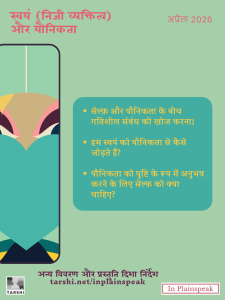
जो स्वयं / निजी व्यक्तित्व (सेल्फ़) हमारे साथ रहता है, जो कहता है, “यह मैं हूँ”, उसका यौनिकता से क्या लेना-देना है? शरीर, मन, हृदय, आत्मा और अनुभव से जन्मा, सेल्फ़ वह है जिसे हम – किसी के अस्तित्व और जैसे वे है – के रूप में सोच सकते हैं। यह एक संदर्भ रखता है, दूसरों के साथ बातचीत करता है, और संस्कृति, समाज, अर्थव्यवस्था, राजनीति आदि की प्रणालियों और संरचनाओं में अंतर्निहित है। इस सेल्फ़ में, जहाँ जाति, वर्ग, जातीय, जेंडर, यौनिक और अन्य पहचानें शामिल हैं, यह इस सब से कहीं अधिक है। सेल्फ़ यौनिकता में क्या लाता है और यौनिकता सेल्फ़ में क्या लाती है? यौनिकता को पुष्टि के रूप में अनुभव करने के लिए सेल्फ शरीर, व्यक्तिगत मूल्यों, अन्य स्वयं, बाहरी प्रणालियों और संरचनाओं, आदि के साथ कैसे जुड़ता है?
हम AI द्वारा निर्मित या AI द्वारा संशोधित सामग्री स्वीकार नहीं करते हैं। हमारे विस्तृत सबमिशन दिशानिर्देशों के लिए, देखें: https://www.tarshi.net/inplainspeak/
Email your ideas and drafts here
Deadline: 30th Mar, 2026